Construction License Checker
Answer these questions about your project to determine which type of contractor license you likely need.
Awaiting Input
Please answer the questions on the left to see which license type is required.
You’re staring at a quote from a contractor who seems great. The price is right, the portfolio looks solid, and they have all the reviews you’d hope for. But then you spot a tiny line in their credentials: licensed for non-commercial work only. You might think, "Well, I’m just building a small office addition or a rental property. Is that really different?" Spoiler alert: It absolutely is. And if you ignore this distinction, you could face fines, voided insurance claims, or a project that gets shut down halfway through.
This isn’t just bureaucratic red tape. The difference between residential and commercial construction licenses goes deep into how buildings are engineered, inspected, and maintained. If you’re planning any project that involves more than a single-family home occupied by its owner, you need to understand what this restriction means for your wallet and your timeline.
The Core Difference: Who Uses the Building?
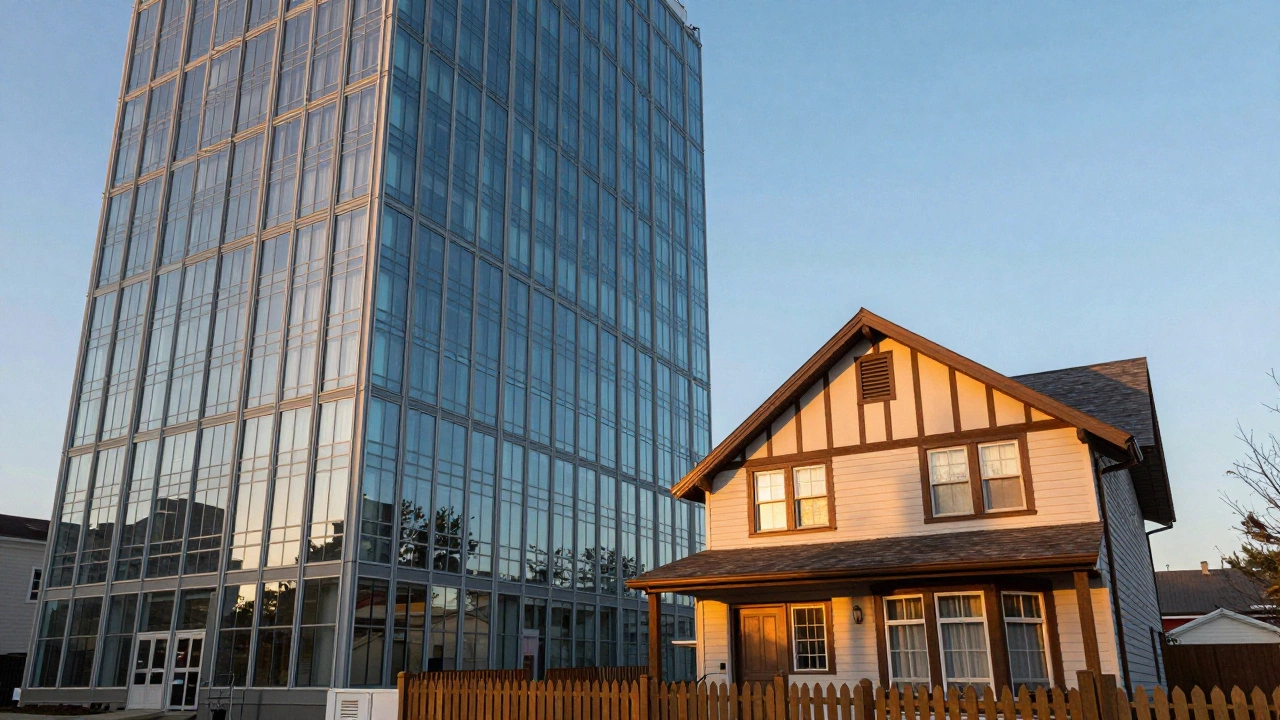
At its heart, the term "non-commercial" refers to structures where people live, not where they work or gather for business. In most jurisdictions, this covers single-family homes, duplexes (in some states), and sometimes condominium units owned by individuals. The logic here is about risk management. A family home has a predictable number of occupants-usually four to six people. A commercial building, like a retail store or an office block, might have hundreds of people moving through it daily, often without knowing the layout or emergency exits.
When a contractor holds a residential-only license, they are legally restricted to projects that fit specific occupancy criteria defined by state law. They can build your kitchen remodel or add a second story to your house. But if you try to hire them to build a coffee shop inside your house’s garage, you’re stepping outside their legal scope. Why does this matter? Because the building codes governing these two types of structures are fundamentally different.
Why Commercial Codes Are Stricter
It’s easy to assume that a wall is a wall and a roof is a roof. But in construction, context changes everything. Commercial buildings fall under stricter fire safety, accessibility, and structural load requirements. For instance, the International Building Code (IBC) dictates much higher standards for commercial spaces than the International Residential Code (IRC) does for homes.
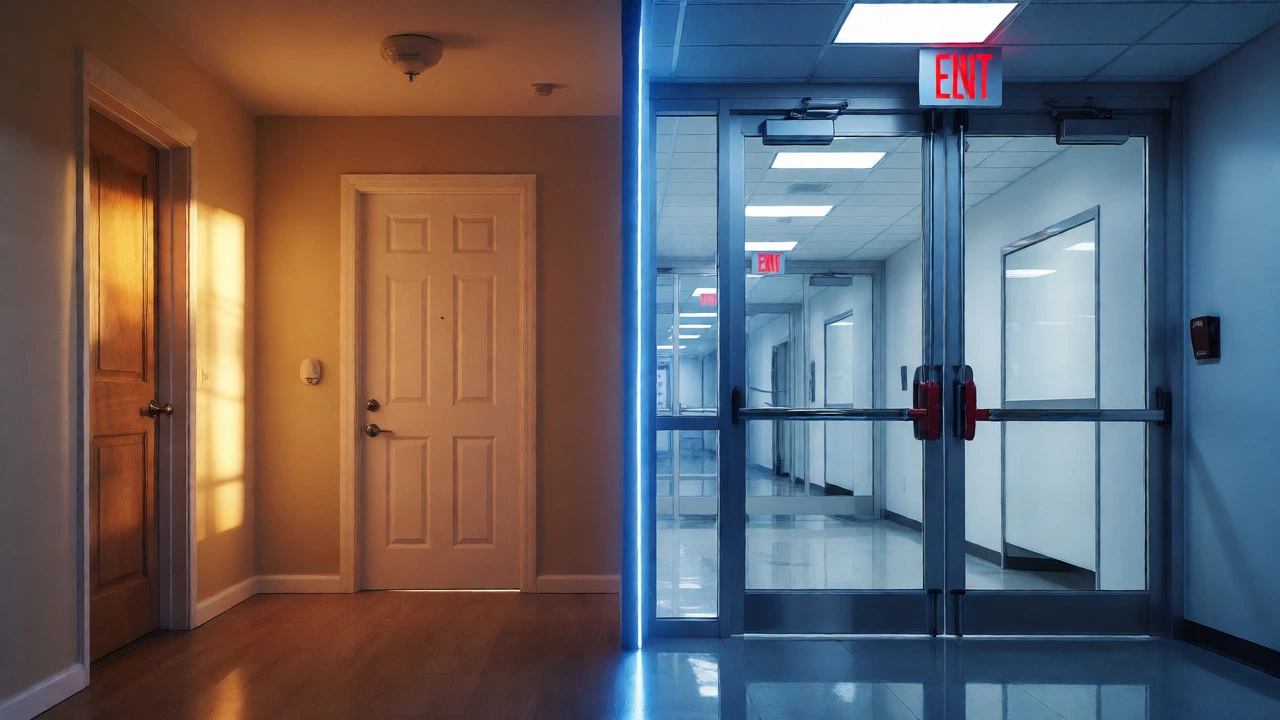
Think about egress. In a house, you have doors and windows. In a commercial space, you need clearly marked exit paths, illuminated signage, and door hardware that allows instant opening without keys or special knowledge. A licensed non-commercial contractor might not be trained-or even allowed-to install the specific type of panic bars required on commercial exit doors. They might use standard residential hinges instead of heavy-duty commercial-grade hardware that withstands thousands of openings per day.
Then there’s ADA compliance. The Americans with Disabilities Act mandates specific ramp slopes, door widths, and restroom configurations for public accommodations. A residential builder focuses on comfort and code minimums for living spaces. A commercial builder focuses on universal access for strangers. Mixing these up leads to expensive retrofits later.
The Insurance and Liability Trap
Here is where things get financially dangerous. Contractors carry liability insurance and workers’ compensation coverage tailored to their license class. A residential-only policy might exclude claims arising from commercial activities. If a worker gets hurt installing a storefront window for your bakery, and the contractor was working outside their license scope, their insurer might deny the claim. Who pays then? Often, it falls on the property owner.
Beyond injury, consider property damage. Commercial projects often require different bonding capacities. Bonds guarantee that the job will be completed according to contract terms. Commercial bonds are typically larger and more complex than residential ones. If a non-commercial licensed contractor takes on a big commercial job, they might lack the financial backing to finish if things go wrong. You could end up with a half-finished building and no recourse against the bond company because the original contract was technically invalid due to licensing violations.
How to Spot a Commercial Project in Disguise
Sometimes the line blurs. You might be converting your basement into a short-term rental (like an Airbnb). Or maybe you’re turning a detached garage into a yoga studio. These scenarios sit in a gray area that varies by location. To determine if you need a commercial license, ask yourself three questions:
- Does the public enter freely? If customers, clients, or tenants walk in without being invited personally, it’s likely commercial.
- Is there a sign? External signage advertising services usually triggers commercial zoning and code requirements.
- Are employees present? If staff work there regularly, it’s a workplace, which brings OSHA regulations into play alongside local building codes.
If you answer yes to any of these, do not hire a contractor limited to non-commercial work. Check your local municipal website for the specific definition of "Group B" or "Group M" occupancy classifications. These are technical terms used by inspectors to categorize buildings, but they directly dictate which license is valid.
Verifying Contractor Credentials
Don’t take a contractor’s word for it. Always verify their license status online through your state’s contractor licensing board. Look for the exact classification code. In California, for example, a "C-10" is electrical, but you also need to check if they hold a general engineering license versus a residential specialty. In Texas, the system is less rigid but still distinguishes between residential and commercial experience for certain permits.
Ask for proof of current insurance specifically covering commercial risks. Request a certificate of insurance (COI) that lists your project address as the job site. If the COI says "Residential Only," walk away. It’s a small step that saves massive headaches. Also, ask if they subcontract out the commercial-specific elements. Some residential builders partner with commercial firms for the rough-in or finishing stages. Ensure those subs are properly licensed too.
Comparison: Residential vs. Commercial Licensing Requirements
| Feature | Non-Commercial (Residential) License | Commercial License |
|---|---|---|
| Typical Projects | Homes, garages, decks, kitchens | Offices, stores, warehouses, apartments |
| Governing Code | International Residential Code (IRC) | International Building Code (IBC) |
| Fire Safety | Standard smoke detectors, basic egress | Sprinkler systems, fire-rated walls, alarm panels |
| Accessibility | Not strictly mandated for private homes | Mandatory ADA compliance |
| Insurance Risk | Lower liability exposure | Higher liability due to public traffic |
What Happens If You Ignore the Rule?
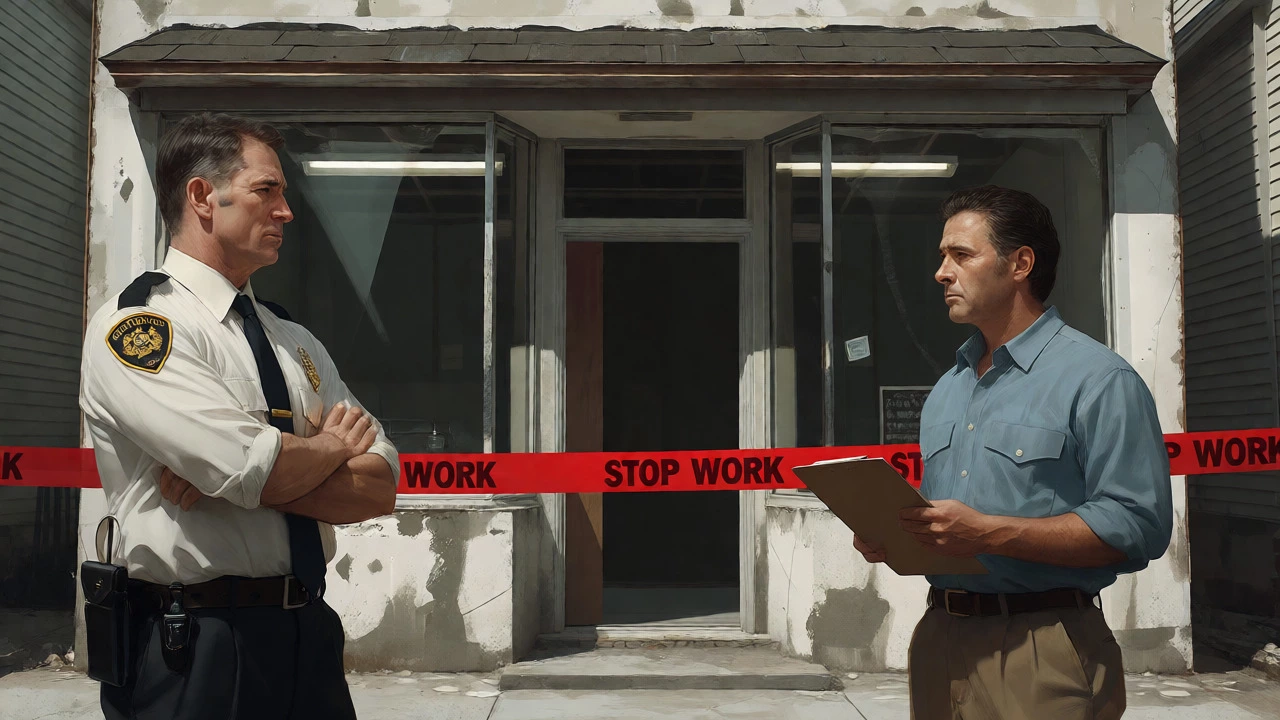
Municipalities are cracking down on unpermitted or misclassified work. If an inspector shows up and sees a commercial-style HVAC unit installed by a residential-only contractor, they can issue a stop-work order. This halts progress immediately. You’ll pay for the delay, the re-inspection fees, and potentially the cost of hiring a new, qualified contractor to fix the paperwork and physical issues.
In extreme cases, the city can force you to tear out work done incorrectly. Imagine having to rip out finished drywall because the wiring didn’t meet commercial ampacity standards. That’s a worst-case scenario, but it happens. Furthermore, when you sell the property, buyers’ agents and lenders will review permits. Unpermitted commercial work done by a non-commercial licensee can scare off buyers or lower your appraised value.
Frequently Asked Questions
Can a residential contractor do light commercial work?
Generally, no. Most states draw a hard line based on building size and occupancy type. However, some jurisdictions allow residential contractors to handle small mixed-use buildings under a certain square footage, provided they obtain the correct permit. Always check local ordinances before assuming flexibility exists.
What if my contractor lies about their license?
You are responsible for verifying credentials. If a contractor performs work outside their licensed scope, the contract may be voidable, meaning they cannot legally sue you for payment. Conversely, if you knowingly hired them for ineligible work, you might bear the brunt of fines. Verification via state databases is free and quick.
Do multi-family apartments count as commercial?
Yes, in most contexts. While they contain residences, buildings with five or more units are typically classified as Group R-2 occupancies under the IBC, requiring commercial-level safety features like sprinklers and wider corridors. A purely residential license often excludes these larger complexes.
Is a home office considered commercial?
Usually, no. If the office is within the footprint of the main dwelling and used by residents, it remains residential. However, if you have separate entrances, external signage, or significant foot traffic from non-residents, local zoning might classify it as commercial, triggering different code requirements.
How do I find a properly licensed commercial contractor?
Search your state’s contractor board for "General Engineering" or "Building General" classifications. Look for keywords like "commercial experience" in their profiles. Ask for references from similar-sized commercial projects, such as retail build-outs or office renovations, to ensure they have relevant expertise.