Stage Curtain Anatomy Explorer
Explore how stage curtains work by changing the show state. See which layer is physically closest to you (the audience) at any given moment.
Show State
Current Status:
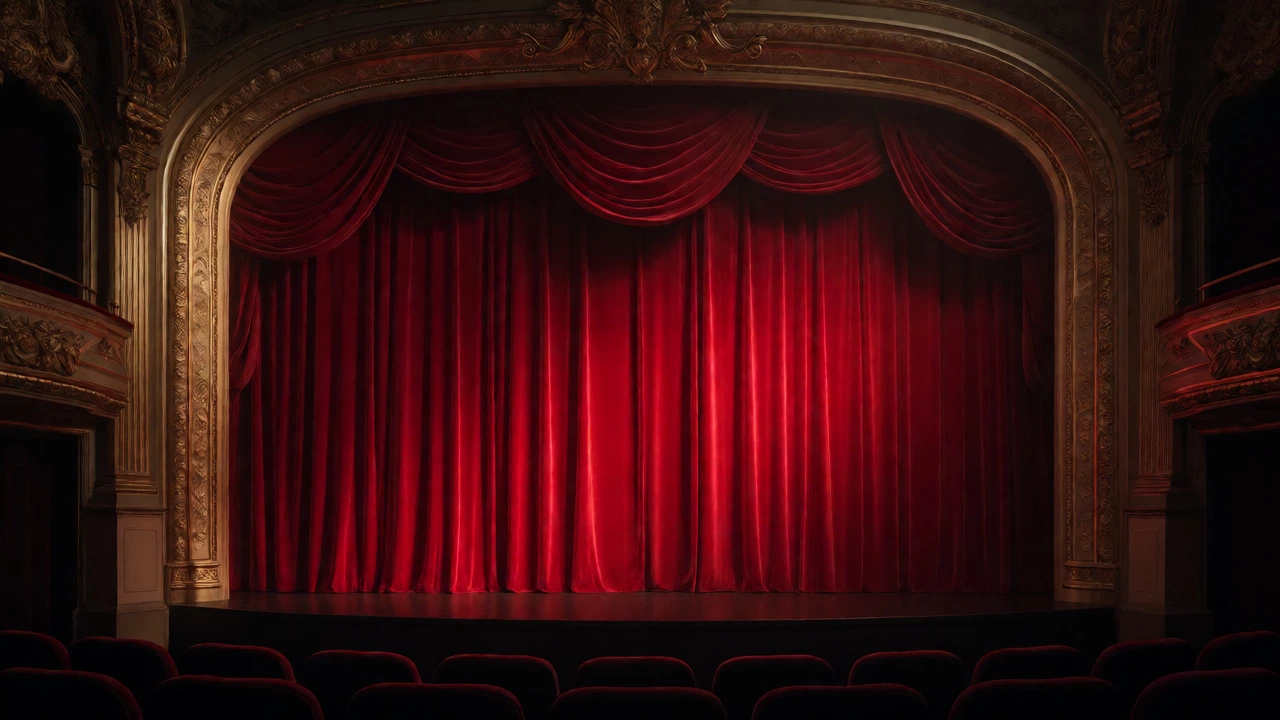
The Main Curtain is closed. It is the closest barrier between you and the stage. You cannot see the actors or set.
Pro Tip: During Performance, the first set of Legs becomes the closest visible element if they are not fully pulled back.
You are sitting in the dark. The lights dim. A heavy velvet barrier rises or parts, revealing the world you came to see. But have you ever stopped to think about what that specific piece of fabric actually is? It’s not just "a curtain." In professional theater and event production, every layer of drapery has a name, a function, and a position relative to the audience. Knowing which curtain is closest to you isn't just trivia; it changes how you perceive the depth of the stage, where the magic happens, and why some shows feel intimate while others feel distant.
Most people assume there is only one curtain. There isn’t. A standard proscenium stage can have four or five distinct types of curtains layered between your eyes and the actors. The answer to "what is closest" depends entirely on whether the show is in progress, paused, or hasn't started yet. Let’s break down the anatomy of the stage from your seat outward.
The Main Curtain: The Proscenium Drape
When you ask what curtain is closest to the audience during a pause or before the show starts, the answer is almost always the Proscenium Curtain, also known as the Main Rag or House Curtain. This is the big one. The grand drape. It sits at the very front of the stage opening, directly behind the proscenium arch (the decorative frame around the stage). If you are looking straight ahead, this is the first thing blocking your view of the performance space when the show is not active.
This curtain serves two main jobs:
- Concealment: It hides the set, props, and actors from the audience during scene changes or intermission.
- Transition: Its movement (opening, closing, flying out) signals the start and end of acts.
Because it is positioned right at the edge of the stage floor, nearest to the orchestra pit or front row seats, it physically occupies the smallest distance between the viewer and the stage deck. However, once the show begins, this curtain usually flies up into the fly tower or pulls back completely. So, while it is the closest curtain when closed, it disappears from view during the actual performance.
The Masking Curtains: Legs and Borders
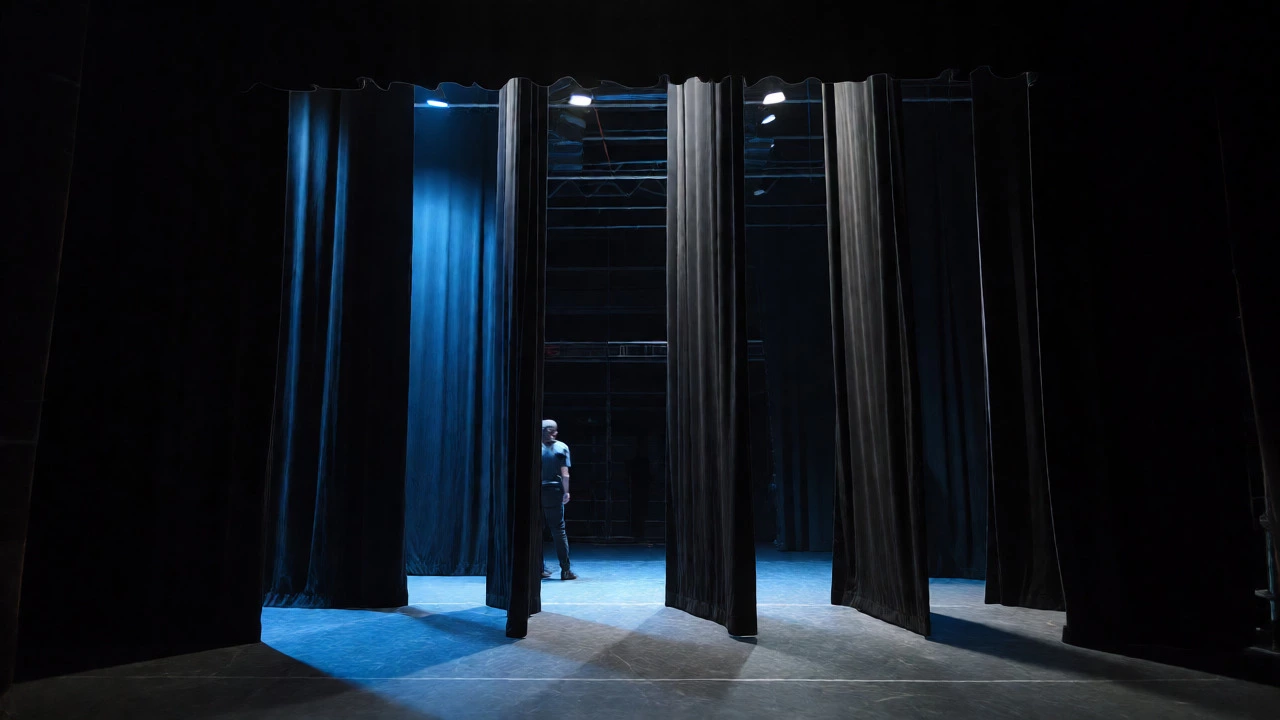
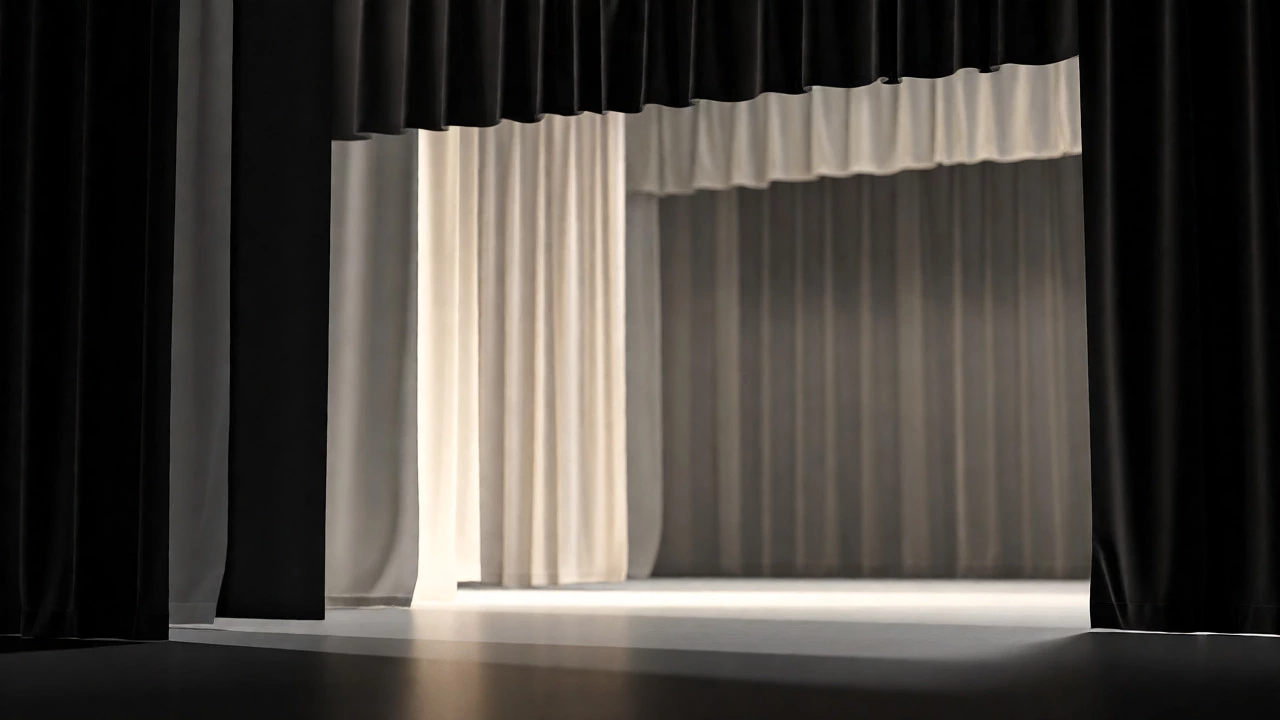
Once the main curtain opens, what do you see on the sides? You might notice narrow strips of black fabric hanging vertically at the left and right edges of the stage. These are called Legs. They are paired with horizontal strips called Borders. Together, they form the Masking System.
Are these closer to you than the backdrop? Yes. Legs are hung in series, getting progressively further away from the audience. The first pair of legs is often quite close to the proscenium arch, sometimes just a few feet behind where the main curtain used to be. Their job is to hide the wings-the areas off-stage where actors wait and props are stored.
Why does this matter to you? If an actor walks too far to the side, they disappear behind a leg. This creates the illusion that the stage extends infinitely sideways, even though it’s bounded by walls. From the audience perspective, the first set of legs defines the visible width of the stage. If you sit in a side box seat, you might actually be looking past the first leg, seeing the backstage area, which breaks the fourth wall unintentionally.
The Traveler vs. The Teaser
Sometimes, instead of a single main curtain, theaters use a Traveler. This is a curtain that splits in the middle and slides horizontally along a track. Like the main rag, it is positioned at the front of the stage. When open, it gathers at the extreme left and right edges, essentially becoming part of the masking system.
Above the traveler, you might see a shorter curtain called a Teaser. This hangs horizontally across the top of the stage opening. It doesn’t go all the way to the floor. Its purpose is to lower the visual height of the stage, hiding the grid above and focusing your eye on the action below. While the teaser is technically higher up, its bottom edge is still closer to the audience than any scenic element behind it.
Here is a quick comparison of the primary front-of-stage elements:
| Curtain Type | Position Relative to Audience | Primary Function | Visibility During Show |
|---|---|---|---|
| Main Curtain (Rag) | Closest (Front of House) | Hides entire stage | Hidden (Flown/Pulled) |
| First Legs | Very Close (Just behind Arch) | Masks side wings | Visible (Static) |
| Teaser | Close (Top of Opening) | Masks overhead grid | Visible (Static) |
| Scrim | Mid-Stage | Transitions/Illusion | Variable |
The Scrim: The Illusionist’s Tool
Deeper into the stage, you might encounter a Scrim. This is a special gauze-like fabric. It is not opaque like velvet. It looks solid when lit from the front, but becomes transparent when lit from behind. Scrims are typically hung further back than the legs and the main curtain line.
While scrims are crucial for creating magical effects-like ghosts appearing or scenes fading in-they are rarely the closest curtain to the audience during active play. They exist to create depth. If you see a scrim, you know you are looking through multiple layers of staging. The first set of legs is still closer to you than the scrim.
Context Matters: Home Theater vs. Professional Stage
If you are reading this because you are designing a home theater or a small community stage, the rules shift slightly. In a residential setting, you likely don’t have a fly tower to raise a massive main rag. Instead, you might use a Valance and Side Panels. The valance is the top horizontal trim. Side panels hang vertically.
In this context, the side panels are often the closest elements framing the screen or stage. Unlike professional theater where legs are blacked out to disappear, home decor curtains are often designed to be seen. They add texture and color. Here, the "closest curtain" is a design choice rather than a functional necessity for hiding backstage chaos.
Consider the acoustic impact. Heavy velvet drapes absorb sound. Thin sheers reflect it. In a small room, placing thick curtains close to the audience (behind them) or framing the stage tightly affects clarity. If you want speech to be crisp, avoid having heavy fabric hanging loosely in front of the speakers. Keep the front-most layers tight and taut.
How Lighting Changes Perception of Distance
Distance in theater is psychological. A bright white cyclorama (backdrop) at the back of the stage can make the stage feel miles wide. Conversely, a low-hanging teaser can make a high-ceilinged theater feel cozy.
The curtain closest to the audience is often the most lit. Why? Because it frames the view. Designers use light to guide your eye past the front layers and into the scene. If the front curtain is brightly lit while the stage is dark, your focus stays on the fabric, not the story. This is common during pre-show announcements. Once the lights dim and the house curtain moves, your brain recalibrates. The darkness makes the remaining visible elements-like the first legs-seem less intrusive, allowing you to peer deeper into the stage.
Practical Tips for Audience Members
Next time you are at a play, look for these clues to identify the layers:
- Check the Floor: Look at the gap between the stage floor and the bottom of the vertical side curtains. If there is a black strip running along the floor edge, that’s the base of the masking system.
- Watch the Sides: If an actor enters from stage left, do they emerge from behind a black wall? That’s a leg. If they walk onto an empty space, the leg might be pulled back or absent.
- Observe the Top: Can you see the ceiling grid? If yes, there is no teaser. If the top is blacked out, a teaser is present, lowering the visual horizon.
Understanding these terms helps you appreciate the craft. You’re not just watching actors; you’re watching a complex machine of fabric and light working to manipulate your perception of space.
Frequently Asked Questions
What is the difference between a main curtain and a house curtain?
In many contexts, these terms are used interchangeably to refer to the large curtain at the front of the stage. However, "House Curtain" specifically refers to the state of the curtain being closed during intermission or before the show starts, effectively separating the "house" (audience) from the stage. "Main Curtain" or "Grand Drape" refers to the physical object itself, regardless of its position.
Why are stage curtains usually black?
Black curtains, particularly those used for masking (legs and borders), are chosen because they absorb light rather than reflecting it. This makes them visually disappear against the dark background of the stage wings, ensuring the audience focuses on the lit action center stage rather than the structural elements holding the scenery.
Can I see the backstage area from my seat?
Yes, if you sit in extreme side seats (often called "box seats" or "wing seats"). You may be positioned outside the angle covered by the first set of masking legs. From this angle, you can see actors waiting in the wings and props stored off-stage. This is why these tickets are often cheaper; the sightlines are compromised.
What is a 'fly' in theater terms?
To "fly" something means to raise or lower it using ropes and pulleys into the fly tower (the space above the stage). The main curtain is often flown up to reveal the stage. Other elements like scrims, drops (backdrops), and lighting pipes are also flown. This allows for rapid scene changes without moving scenery across the floor.
Does the type of curtain affect sound quality?
Absolutely. Heavy fabrics like velvet and velour absorb high-frequency sounds, reducing echo and reverb. Lighter fabrics like muslin or silk reflect more sound. In acoustically challenging venues, designers choose curtain materials to balance clarity and warmth. A fully open stage with hard surfaces will sound brighter and more reverberant than one draped in heavy velvet.