Sideboard vs. Console Table Selector
Not sure if you need a deep sideboard or a slim console? Answer three quick questions to get a personalized recommendation based on current 2026 design trends.
Fill out the form to see which piece of furniture fits your lifestyle best.
Walk into a showroom today, and you might think the sideboard is dead. Open-concept layouts, minimalist aesthetics, and the rise of floating shelves have pushed this classic piece out of many homes. But here’s the twist: while the bulky, dark-wood monoliths of the 1980s are gathering dust in attics, the concept of the sideboard is experiencing a quiet renaissance. It hasn’t disappeared; it has just changed its clothes.
If you’re debating whether to reclaim floor space or embrace functional decor, you need to look past the stigma attached to "grandma's china cabinet." The question isn't really if people use them anymore-it's how they’re using them differently in 2026. Let’s break down why this piece of furniture designed for storing tableware and serving food remains relevant, where it fits in modern homes, and when you should actually skip it.
The Evolution from Buffet to Design Statement
To understand the current status of the sideboard, we have to distinguish it from its older sibling, the buffet. Historically, these terms were used interchangeably, but designers now draw a line based on height and placement. A traditional buffet was often taller, meant for self-service during large gatherings, and frequently placed against a wall in formal dining rooms. The modern sideboard, by contrast, is lower, sleeker, and treated as a decorative anchor rather than just utility storage.
In 2026, the trend leans heavily toward "quiet luxury" and multi-functional spaces. Homeowners aren't looking for massive cabinets that dominate a room. They want pieces that offer hidden storage for clutter-like mismatched napkins, extra chargers, or board games-while displaying curated art or plants on top. This shift has revived interest in mid-century modern designs, which naturally feature the low-profile silhouette of a sideboard. Brands like West Elm and CB2 report steady sales in credenzas and sideboards because they fit the contemporary desire for clean lines without sacrificing capacity.
Why Modern Homes Still Need Hidden Storage
You might ask, "If I don't host Thanksgiving dinner every week, why do I need a place to store plates?" That’s a fair point. But consider what actually lives in your dining area. It’s rarely just fine china. It’s the mail pile, the remote controls, the kids' homework, and the random assortment of candles and matches. Without a closed-storage solution, these items end up on the dining table itself, turning a sleek surface into a junk drawer with legs.
A sideboard solves the visual noise problem. By hiding the mundane behind doors, you maintain the aesthetic integrity of an open-plan living space. In apartments where the dining zone merges with the living room, this separation is crucial. You can’t put a bookshelf in the middle of a flow path, but a low sideboard acts as a subtle divider. It defines the eating area without blocking sightlines or light. This zoning function is one of the primary reasons urban dwellers keep buying them, even if they never serve a meal off the top.
Sideboard vs. Console Table: Making the Right Choice
Confusion often stems from comparing sideboards to console tables. Both sit against walls, both offer surface display space, and both look similar at first glance. However, their purposes diverge significantly. If you’re trying to decide between the two, look at your depth requirements and storage needs.
| Feature | Sideboard / Credenza | Console Table |
|---|---|---|
| Depth | Deep (15-20 inches) | Shallow (10-14 inches) |
| Storage Type | Closed cabinets, drawers, adjustable shelves | Open shelves, small drawers, or none |
| Primary Function | Storing bulky items (linens, dishes, media) | Displaying decor, holding keys/mail |
| Best For | Dining rooms, living room backs, home offices | Hallways, entryways, narrow spaces |
If you have less than 12 inches of clearance between your sofa back and the wall, a sideboard will feel cramped. In those tight quarters, a console table is the smarter pick. But if you have the footprint, the sideboard wins on utility. You simply cannot hide a stack of magazines or a basket of blankets behind a thin console leg. The enclosed volume of a sideboard provides a "catch-all" capability that keeps high-traffic areas tidy.
Where Are People Putting Them Now?
The days of placing a sideboard strictly under a window in a formal dining room are fading. Today’s placements are more creative and driven by floor plan constraints. Here are three common scenarios where sideboards thrive in current interiors:
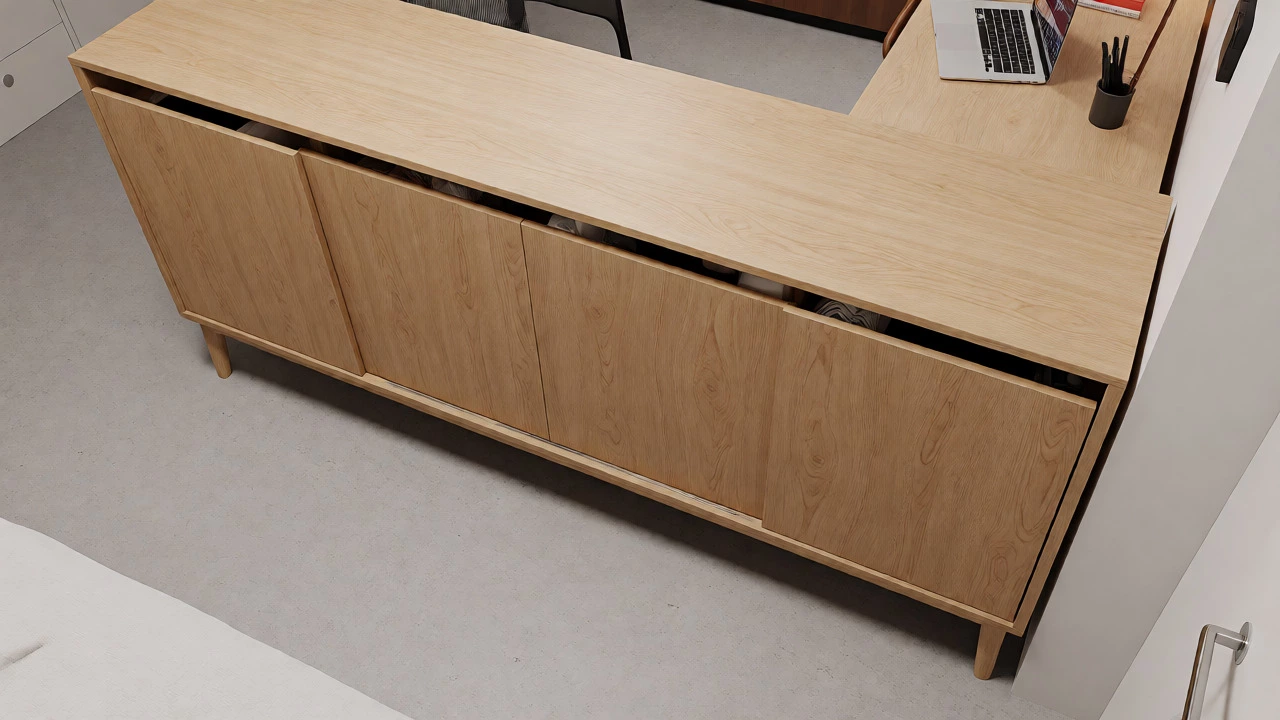
- The Living Room Divider: In studio apartments or lofts, a long sideboard placed perpendicular to the main seating area creates a psychological boundary between the "work/lounge" zone and the "sleep/eat" zone. It allows for a TV mount above it or art display, doubling as a media console.
- The Home Office Anchor: With remote work becoming permanent for many, the dining room often doubles as an office. A sideboard offers file storage and printer housing that looks nicer than plastic bins. When clients video call, the background looks organized and intentional.
- The Bedroom Dresser Alternative: Some homeowners swap traditional dressers for wide, low sideboards in master bedrooms. They offer wider surface area for lamps and jewelry trays, and the horizontal orientation makes the room feel larger compared to tall vertical chests.
This versatility proves that the demand hasn’t vanished; it has migrated. You won’t see them labeled "Dining Room Furniture" in search results as often because users are searching for "media consoles," "credenzas," or "storage benches." But physically, they are the same object, repurposed for modern life.
Material and Style Trends for 2026
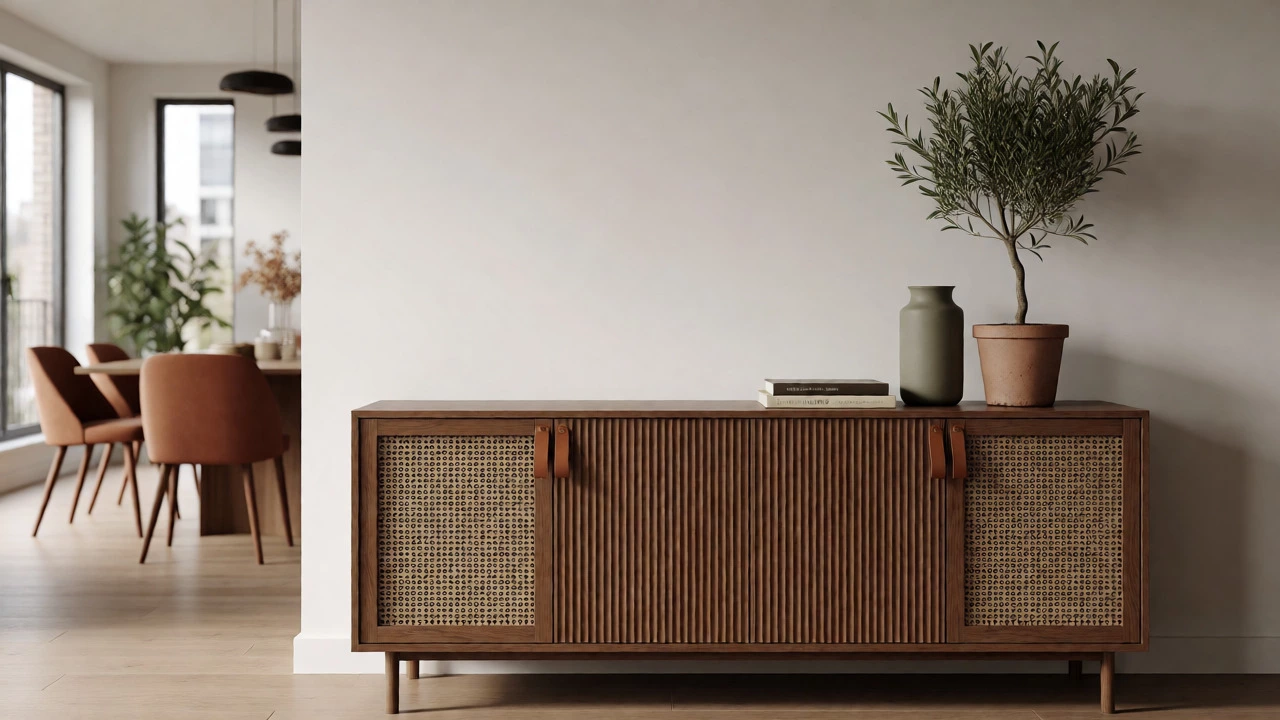
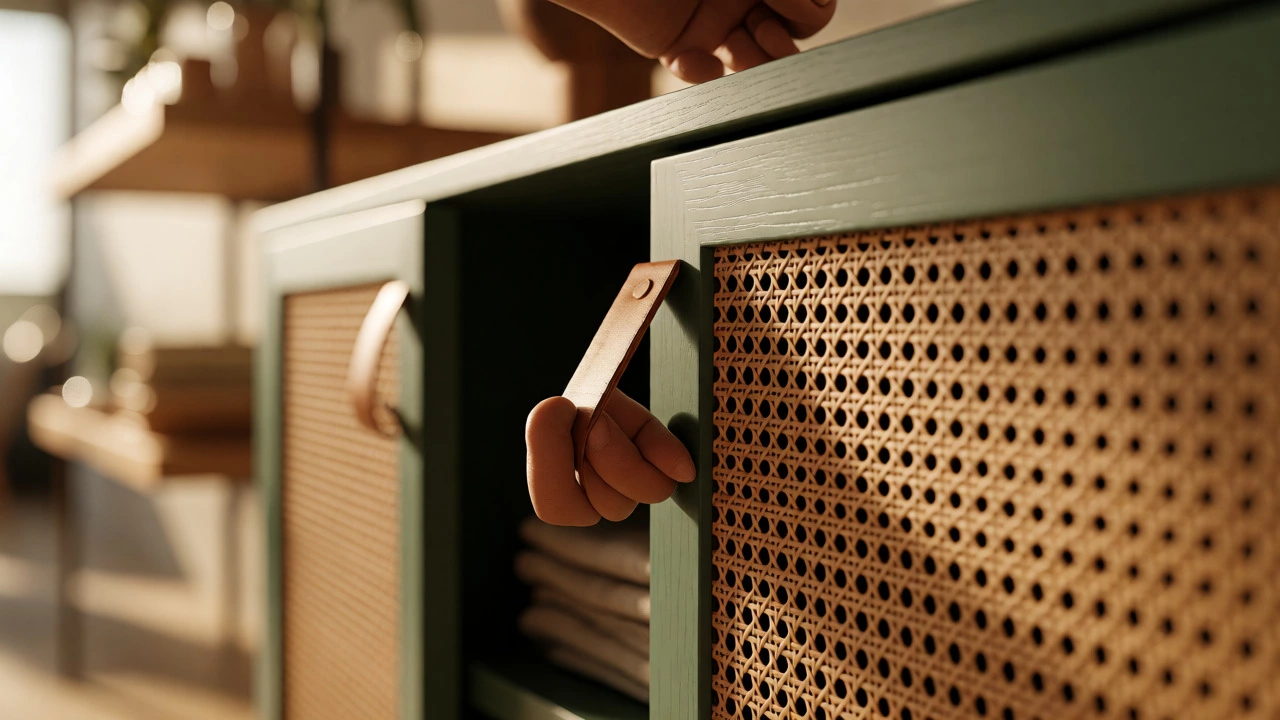
If you are shopping for a sideboard now, ignore the heavy oak and mahogany finishes of the past. The current market favors lighter woods, mixed materials, and textured fronts. Rattan, cane webbing, and fluted wood panels are popular because they add texture without adding visual weight. These porous materials allow light to pass through, preventing the piece from looking like a solid block of darkness in a bright room.
Color palettes have also shifted. While white and black remain staples, there is a surge in earthy tones like terracotta, sage green, and warm walnut. Matte finishes are preferred over high-gloss lacquers, aligning with the broader move toward organic, tactile interiors. Hardware choices matter too. Integrated pulls or leather straps are replacing bulky metal knobs, maintaining the streamlined profile that modern buyers crave.
When to Skip the Sideboard Entirely
Despite their benefits, sideboards aren't for everyone. If you live in a historic home with intricate moldings, a modern, boxy credenza might clash with the architecture unless carefully curated. Similarly, if you truly hate cleaning around furniture legs, the gap between the floor and the bottom of a sideboard can become a dust trap. In these cases, floating wall units or built-in cabinetry might be better investments.
Also, consider your hosting habits. If you never entertain and prefer minimalism, a sideboard might just become another surface to clutter. Ask yourself: Do I have items that need hiding? If the answer is no, save the money and the square footage. But if you find yourself constantly moving things from the table to the couch, you likely need the containment a sideboard provides.
What is the difference between a sideboard and a credenza?
While often used interchangeably, a credenza typically refers to a low, long storage unit with sliding doors or simple cabinets, often used in offices or living rooms. A sideboard traditionally implies a piece specifically designed for dining rooms, often featuring deeper storage for dishes and linens. However, in modern retail, the distinction is largely semantic; both serve the same function of low-profile, enclosed storage.
How deep should a sideboard be for a dining room?
Standard depths range from 15 to 20 inches. For smaller dining rooms or hallways, look for shallow options around 15 inches to avoid obstructing walkways. Deeper models (18-20 inches) are better for storing larger platters or stacked books but require more floor space.
Can I use a sideboard in a small apartment?
Yes, especially if you choose a light-colored or glass-fronted model to maintain openness. Place it against a wall to define a specific zone, such as separating the kitchen from the living area. Look for designs with tapered legs to create a sense of airiness and reduce visual bulk.
Are sideboards still expensive?
Prices vary widely. Mass-produced particleboard options start around $200, while solid wood or designer pieces can exceed $2,000. Because they are versatile, investing in quality construction is often worth it since you can move them between rooms if your layout changes.
What should I put on top of a sideboard?
Follow the rule of thirds. Combine items of varying heights, such as a tall lamp, a medium-sized vase, and a stack of coffee table books. Add a mirror or artwork on the wall above to reflect light and draw the eye upward, balancing the horizontal length of the furniture.