Commercial Construction Estimator
Project Details
Quick Facts
- Cost Premium: Commercial builds typically cost 20-40% more than residential per square meter.
- Key Factors: Specialized labor, durable materials, complex HVAC systems, and higher insurance requirements drive up costs.
- Permitting: Expect longer approval times with detailed engineering reports required.
You’re looking at a blueprint or a site plan, and the term commercial construction pops up. But what does it actually mean? Is your new retail shop considered commercial? What about that multi-unit apartment complex you’re planning? The line between residential and commercial isn’t always drawn in straight lines. In fact, getting this classification wrong can cost you thousands in fines, delayed permits, or even forced demolition.
In Melbourne and across Australia, the definition hinges on how the space is used, who occupies it, and the specific regulations set by local councils and state bodies like the Building Commission Victoria. Understanding these distinctions early saves headaches later.
The Core Definition: Profit vs. Living
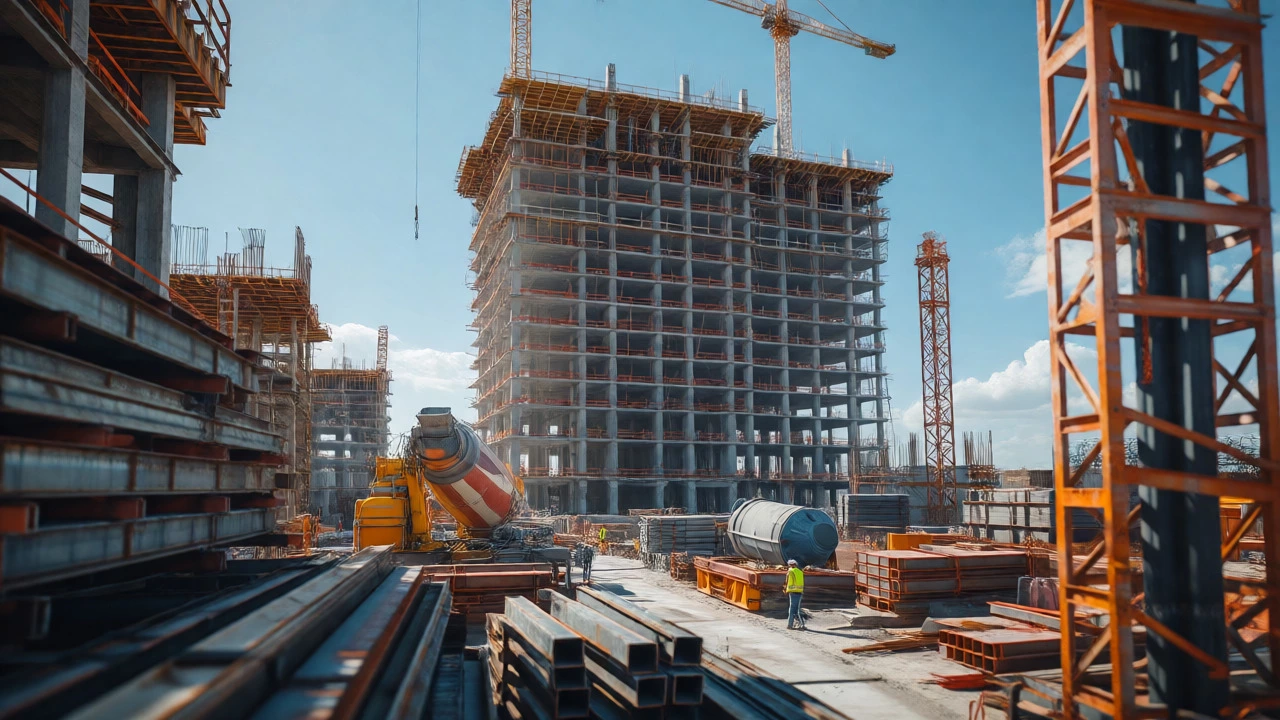
At its simplest, commercial construction is the process of designing and building structures intended for business activities, profit generation, or public use. This stands in direct contrast to residential construction, which focuses on buildings designed primarily for people to live in.
If money changes hands within the walls-whether through sales, services, or leases-it’s likely commercial. A single-family home where you live? Residential. A duplex where you rent out one side? That rental income pushes it into a gray area, often requiring commercial-grade standards for the rented portion. A warehouse storing goods for sale? Definitely commercial.
The key differentiator is intent. Residential buildings are sanctuaries; commercial buildings are engines of economic activity. This fundamental difference drives every other aspect of the project, from the materials used to the safety systems installed.
Common Types of Commercial Buildings
When we talk about commercial construction, we aren’t just talking about skyscrapers. The category is broad and includes several distinct types of structures:
- Retail Spaces: Shops, malls, supermarkets, and showrooms. These require high foot traffic management, large display windows, and specific loading dock access.
- Office Buildings: From small professional suites to large corporate towers. These focus heavily on HVAC efficiency, data cabling infrastructure, and ergonomic design.
- Industrial Facilities: Warehouses, factories, and distribution centers. These prioritize durability, heavy-load flooring, and ventilation for machinery or chemicals.
- Hospitality Venues: Hotels, restaurants, and bars. These have strict hygiene requirements, complex plumbing needs, and fire safety codes due to high occupancy.
- Healthcare Centers: Clinics, hospitals, and dental offices. These require specialized medical gas piping, sterile environments, and accessibility compliance beyond standard norms.
- Mixed-Use Developments: Buildings that combine residential units with commercial spaces (e.g., apartments above a cafe). These are complex because they must satisfy both residential and commercial codes simultaneously.
Residential vs. Commercial: Key Differences
Why does the classification matter so much? Because the rules change drastically. Here is a breakdown of how commercial construction differs from residential projects in practice:
| Feature | Residential Construction | Commercial Construction |
|---|---|---|
| Building Codes | NCC Volume One (simplified) | NCC Volume Two (strict performance-based) |
| Fire Safety | Smoke alarms, basic exits | Sprinkler systems, fire doors, emergency lighting, evacuation plans |
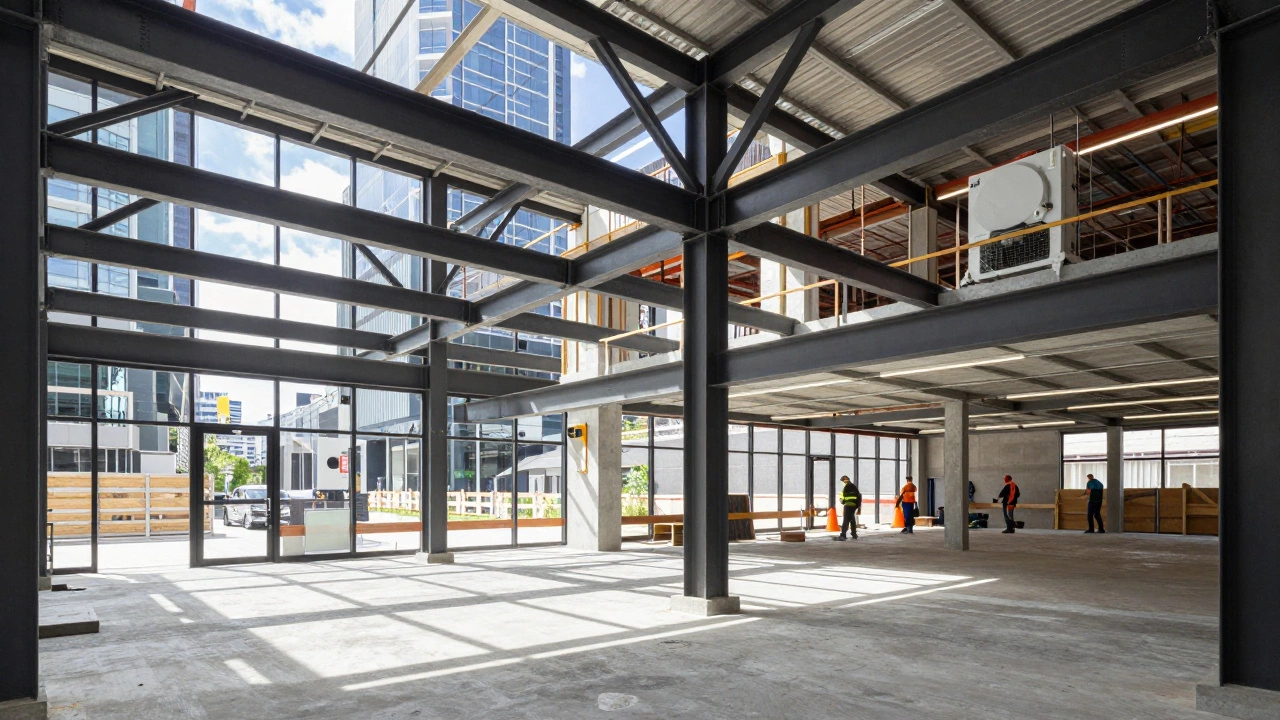
| Materials | Wood framing, drywall, carpet | Steel/concrete, gypsum board, tile/hard flooring |
| Occupancy Load | Low (family size) | High (public access requires wider corridors, more exits) |
| Accessibility | Basic ramp if needed | Strict ADA-equivalent standards (ramps, elevators, wide doorways) |
| Permitting Process | Faster, less documentation | Slower, requires detailed engineering reports |
For example, a residential kitchen might use wood studs for walls. A commercial restaurant kitchen, however, often requires steel studs or masonry to withstand heat, moisture, and higher impact risks. The National Construction Code (NCC) in Australia dictates these differences based on the building’s "Class" rating.
Understanding Building Classes in Australia
In Australia, the NCC categorizes buildings into classes. This is where the technical definition lives. Knowing your class helps you understand what regulations apply.
- Class 1: Single dwelling houses and low-rise boarding houses. (Residential)
- Class 2: Multi-unit buildings like apartments and flats. (Often treated with commercial-level scrutiny for common areas)
- Class 3: Permanent guest accommodations like hotels and motels. (Commercial)
- Class 5: Office buildings. (Commercial)
- Class 6: Shops, restaurants, cafes, and showrooms. (Commercial)
- Class 7: Storage or trade facilities (warehouses). (Commercial)
- Class 8: Factories. (Commercial)
- Class 9: Healthcare, educational, and assembly buildings (hospitals, schools, theaters). (Commercial/Public)
If your project falls into Class 3 through 9, you are firmly in commercial territory. Even some Class 2 buildings, particularly those with shared amenities like gyms or pools, face commercial construction standards for those specific areas.
Zoning Laws and Local Council Regulations
Even if your building is technically commercial, your local council might not allow it. Zoning laws dictate what can be built where. In Melbourne, for instance, you cannot just convert a suburban house into a retail store without checking the zone.
Zoning laws are regulations that control land use and development within specific geographic areas. They separate industrial zones from residential neighborhoods to protect quality of life. Before breaking ground, you must verify:
- Land Use Permit: Does the zone permit commercial activity?
- Setback Requirements: How far must the building be from property lines?
- Parking Ratios: Commercial buildings usually require significantly more parking spaces per square meter than residential ones.
- Signage Restrictions: Commercial properties often need approval for external signage, which involves additional fees and design guidelines.
Ignoring zoning can lead to a stop-work order. Always consult with a town planner or your local council’s planning department before finalizing designs.
The Cost Implications of Commercial Classification
Let’s talk numbers. Commercial construction is generally more expensive per square meter than residential. Why? Because the standards are higher. You’re paying for:
- Specialized Labor: Electricians and plumbers working on commercial sites often charge higher rates due to the complexity of the work (e.g., three-phase power, large-diameter pipes).
- Durable Materials: Commercial flooring must withstand thousands of footsteps daily. Industrial-grade tiles or polished concrete cost more than laminate or carpet.
- Complex Systems: HVAC systems in commercial buildings are larger and more intricate, often requiring dedicated mechanical rooms and rooftop units.
- Insurance and Bonds: Contractors need higher liability insurance for commercial jobs, costs which are passed on to the client.
A rough rule of thumb: expect commercial construction costs to be 20-40% higher than comparable residential builds, depending on the finish level and location.
Who Needs to Be Involved?
Residential projects might get away with a general contractor and an architect. Commercial projects require a broader team:
- Structural Engineer: Essential for ensuring the building can support heavier loads and meet seismic/wind codes.
- Mechanical/Electrical/Plumbing (MEP) Engineers: Design the complex utility systems required for business operations.
- Fire Safety Consultant: Ensures compliance with strict fire egress and suppression standards.
- Town Planner: Navigates zoning and permit approvals.
- Quantity Surveyor: Manages budgets and contracts, crucial for controlling costs in large-scale projects.
Asking the right professionals to join your team early prevents costly redesigns down the line.
FAQ
Is a duplex considered commercial construction?
It depends on the usage. If you live in one unit and rent out the other, it may still be classified as residential under certain conditions, but the rental aspect introduces commercial elements. However, if the duplex is part of a larger investment portfolio or managed as a business entity, it often triggers commercial lending and stricter building code requirements for common areas. Check with your local council, as definitions vary by municipality.
Can I build a commercial space in a residential zone?
Generally, no. Most residential zones prohibit traditional commercial uses like retail stores or factories. However, many modern zoning laws allow for "home-based businesses" or light commercial activities (like a consulting office) within residential homes, provided there is no significant increase in traffic, noise, or visual impact. Always check your specific local zoning map and consult a town planner.
What is the biggest difference in fire safety between residential and commercial buildings?
Commercial buildings typically require active fire protection systems, such as automatic sprinklers and fire alarm systems connected to monitoring services. Residential buildings usually rely on passive measures like smoke detectors and clear exit paths. Commercial buildings also need fire-rated doors and walls to compartmentalize fires, preventing them from spreading quickly in high-occupancy spaces.
Do I need a commercial license to run a business from my home?
Yes, most local councils require a business license regardless of where you operate. Additionally, if your home-based business involves customers visiting your property, you may need to reclassify your property use, which could involve changing your insurance policy and meeting specific health and safety standards. Operating without proper licensing can result in fines.
How long does the permitting process take for commercial construction?
The timeline varies widely based on the project size and local council workload. For a small commercial renovation, it might take 4-8 weeks. For a new large-scale commercial building, the permitting phase can take 6 months to over a year. Early engagement with planners and engineers can streamline this process by addressing potential issues before submission.