New Build TV Mount Safety Calculator
Enter your setup details to determine the best mounting strategy for your new build home.
You just got the keys to your brand-new home. The paint is fresh, the floors are spotless, and you're ready to hang that massive 65-inch screen you've been eyeing for months. But then it hits you: New builds often use lightweight materials like plasterboard or drywall, which can feel suspiciously hollow behind the surface. Can you actually put a heavy TV on these walls without bringing the whole thing down?
The short answer is yes, but with caveats. Unlike older homes with solid brick or timber frames, modern construction methods prioritize speed and insulation, sometimes at the cost of raw structural density. If you treat a new build wall exactly like an old Victorian one, you might end up with a very expensive hole in your living room. Here’s how to do it right.
Why New Build Walls Are Different
Most Australian new builds utilize steel framing or timber studs clad with plasterboard (often called gyprock). This system is fantastic for thermal efficiency and noise reduction, but it creates a specific challenge for DIYers: the wall itself isn't load-bearing. The strength lies entirely in the vertical studs behind the board.
If you drill into the plasterboard between the studs, you’re essentially hanging a 15kg TV on paper and gypsum. Standard plastic anchors might hold a picture frame, but they will slowly tear out under the leverage of a cantilevered TV arm. In a new build, precision is non-negotiable. You aren't just looking for "solid"; you need to locate the actual timber or steel spine of the house.
Locating Studs in Modern Construction
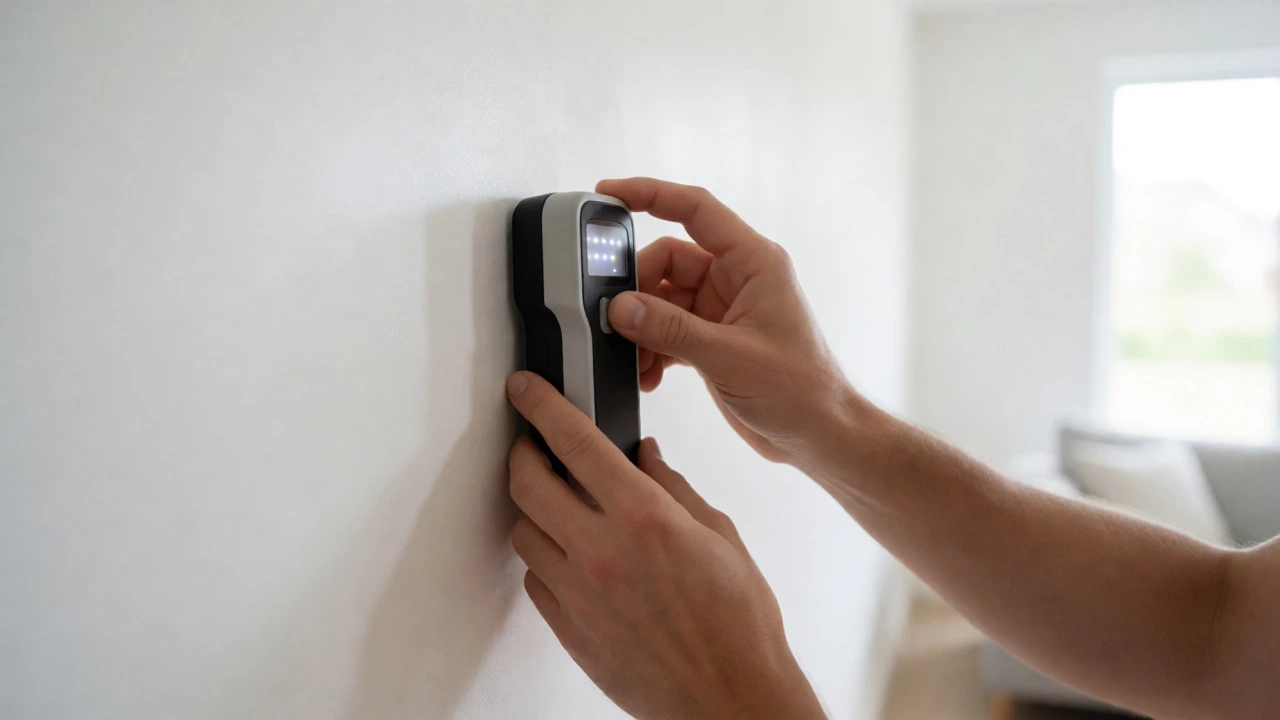
Finding studs used to be a guessing game involving knocking on walls. In a new build, this method fails because the cavity behind the board is uniform. You need tools. A basic magnetic stud finder works well if the builders used screw heads close to the surface, but many now use glue or specialized fasteners that don't trigger magnets.
For steel-framed homes, common in many Melbourne suburbs, you need a stud finder specifically calibrated for metal. These devices detect changes in density or magnetic fields caused by the steel studs. For timber frames, a high-quality electronic stud finder with depth adjustment is essential. Don't cheap out here; a $30 device might miss the edge of a stud, leading to a crooked mount.
| Tool Type | Best For | Reliability Rating | Cost Estimate (AUD) |
|---|---|---|---|
| Magnetic | Older timber frames with exposed screws | Low for new builds | $10 - $20 |
| Electronic (Standard) | Timber stud new builds | Medium-High | $40 - $80 |
| Steel/Metal Specific | Steel-framed houses (common in Aus) | High | $60 - $120 |
| Radar/Wall Scanner | Detecting pipes, wires, and studs | Very High | $150+ |
The Danger Zone: Cables and Pipes
One of the biggest risks in a new build isn't the weight of the TV; it's what's hiding inside the wall. Builders run electrical wiring, data cables, and sometimes water pipes through the same cavities where your studs live. Drilling blindly into a new wall can slice through a live wire or puncture a hot water line.
Always check your builder's plan if available. Most new builds come with a set of electrical schematics. Look for power outlets directly below where you want to mount the TV. Wires usually run vertically from the outlet up to the ceiling or horizontally to the next junction box. Avoid drilling directly above a socket unless you have confirmed the path with a cable detector.
Choosing the Right Anchors and Screws
Once you've found the studs, hardware selection becomes critical. Standard masonry screws won't work in timber, and standard wood screws might strip out in steel.
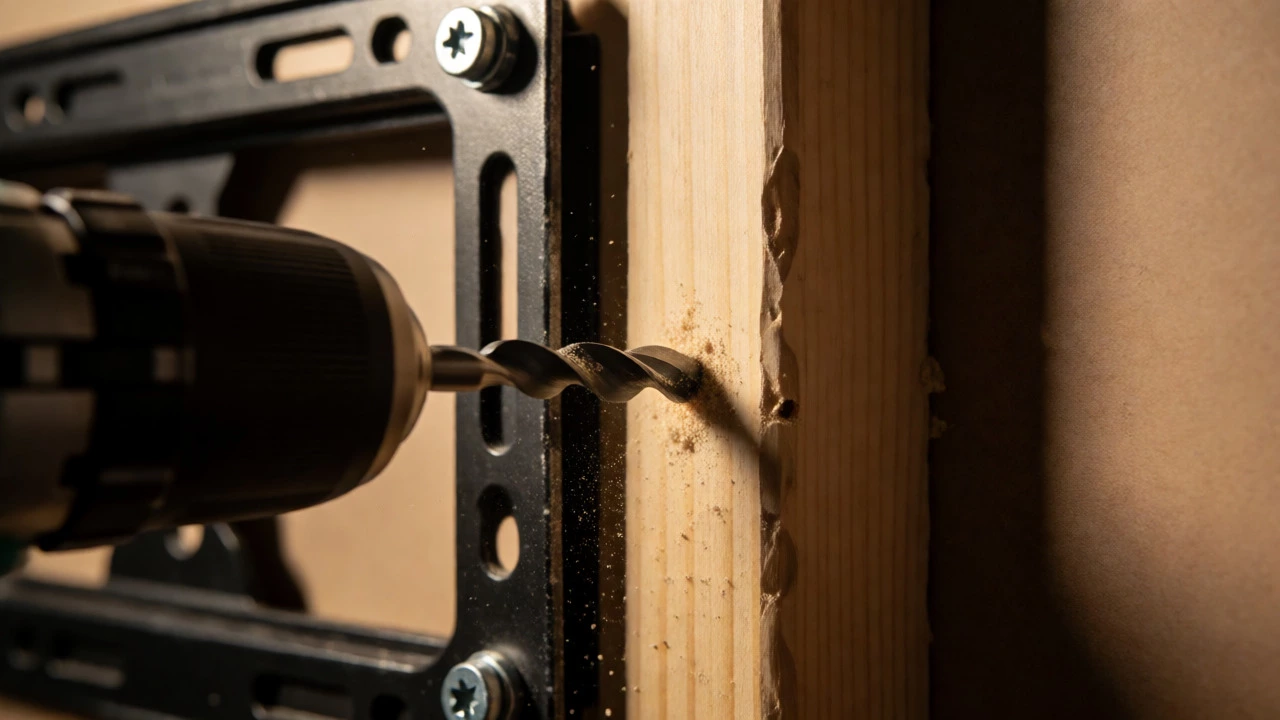
- For Timber Studs: Use long, coarse-thread wood screws (at least 75mm-100mm). They grip the timber firmly. Pre-drill a pilot hole slightly smaller than the screw shank to prevent splitting the stud.
- For Steel Studs: You need self-tapping sheet metal screws or toggle bolts designed for thin-gauge steel. Never use standard wood screws in steel; they will simply spin without holding.
- For Plasterboard Only (Last Resort): If you absolutely cannot hit a stud (rare for TVs), use heavy-duty toggle anchors rated for at least 20kg per anchor. However, most manufacturers void warranties if you don't mount to studs.
Weight Limits and Mount Types
Check the VESA pattern on the back of your TV and match it to your bracket. More importantly, check the weight rating of the bracket against the combined weight of the TV and the bracket itself. A 65-inch LED TV typically weighs between 15kg and 20kg. Add another 2kg-3kg for the mount. Your total load is roughly 22kg.
A single timber stud can easily support this weight if screwed correctly. However, if you are using a full-motion arm that extends far from the wall, leverage increases significantly. The force pulling down on the top screws multiplies as the TV moves away from the wall. In these cases, hitting two studs is highly recommended. If your desired location only has one stud, consider a fixed tilt mount rather than a full-articulating arm.
Step-by-Step Installation Guide
- Mark the Center: Find the center point of your desired viewing area. Use a laser level to draw a horizontal line.
- Scan for Studs: Run your stud finder across the line. Mark the edges of each stud found. Verify by drilling a small test hole in an inconspicuous spot if unsure.
- Check for Obstructions: Use a cable detector over the marked areas to ensure no live wires are present.
- Drill Pilot Holes: Drill into the center of the studs at the height of your mounting holes. Keep the drill perpendicular to the wall.
- Attach the Bracket: Screw the wall plate into the studs. Ensure it is perfectly level before tightening fully.
- Hang the TV: Lift the TV (get help!) and hook it onto the bracket. Secure any safety locks provided by the manufacturer.
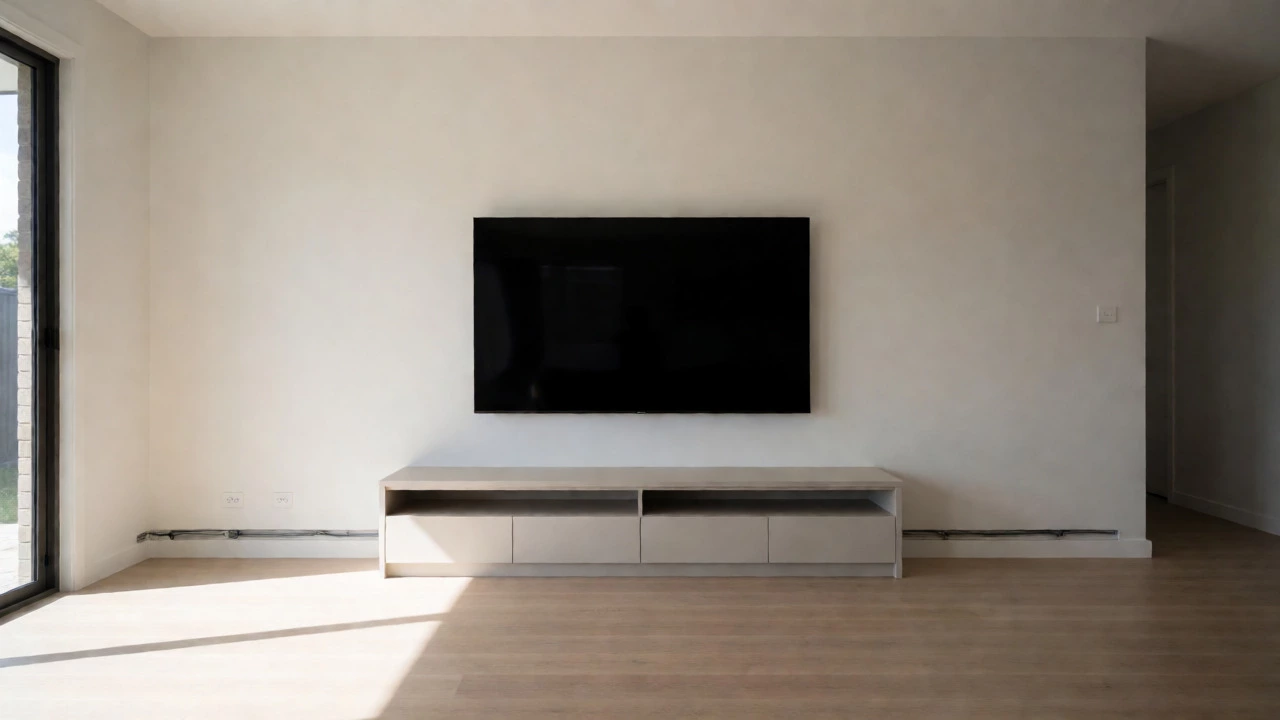
- Cable Management: Feed cables through the wall if pre-wired, or use cord covers along the baseboard. Do not pinch cables behind the TV mount.
When to Call a Professional
If you own a premium OLED TV costing over $2,000, or if your wall contains complex features like double-brick veneers or hidden insulation baffles, hiring a handyman might save you stress. In Australia, licensed handymen charge between $80 and $150 per hour. For a straightforward install, expect to pay around $150-$250 flat rate. It’s cheap insurance compared to replacing a cracked screen.
Also, consider calling a pro if you plan to hide cables inside the wall. Cutting open a new build wall to fish wires requires patching and repainting skills that can ruin the pristine finish if done poorly. Many new builds already include a "TV box" or conduit for this purpose-check yours!
Can I mount a TV on plasterboard without studs?
It is possible but risky for large TVs. You must use specialized heavy-duty toggle anchors rated for the specific weight. However, most manufacturers recommend mounting to studs for stability and safety, especially for larger screens over 55 inches.
How do I find studs in a steel-framed house?
You need a stud finder specifically designed for metal detection. Standard electronic finders may struggle with steel. Alternatively, tap the wall; steel studs often produce a different sound than timber, though this is less reliable. Always verify with a magnet or metal scanner.
What happens if I drill into a pipe?
If you hit a water pipe, you will likely see immediate moisture or hear rushing water. Turn off the main water supply immediately. If you hit an electrical wire, the breaker should trip. If it doesn't, turn off the power at the switchboard before proceeding.
Do new builds have special requirements for TV mounts?
Not necessarily special requirements, but the construction method (lightweight framing) demands more precise stud location. Older brick homes allow for more forgiving anchoring options. New builds require exact alignment with vertical supports.
Can I move the TV later without damaging the wall?
Yes, but you will have holes. Plasterboard is easy to patch with filler and sandpaper. Since new builds often use textured paint, matching the texture can be tricky. Using a larger mount plate can sometimes cover existing holes if you are shifting the position slightly.