Living Room Sofa Estimator
Room Dimensions & Usage
Enter your room dimensions and select a usage type to receive a personalized sofa recommendation.
Your Ideal Setup:
You walk into a living room and something feels off. It’s not the color of the walls or the rug; it’s the seating. Maybe there are three bulky sofas crammed together like sardines, leaving zero room for your knees to bend. Or perhaps there’s one lonely two-seater floating in a sea of empty carpet, making the space feel cold and unwelcoming. The question isn’t just about comfort-it’s about balance. How many sofas should actually be in a living room? The answer isn’t a single number written in stone. It depends entirely on how you use the space, the dimensions of your room, and the vibe you’re trying to create.
Most people default to the "one big sofa" rule because it’s easy. But that often leads to awkward conversations where everyone is staring at the back of someone else’s head. On the other end of the spectrum, some homeowners try to mimic a hotel lobby with multiple matching couches, which can make a cozy family room look like a waiting area. So, how do you find the sweet spot? Let’s break down the logic behind sofa counts, so you can stop guessing and start designing a space that actually works for your life.
The One-Sofa Rule: When Less Is More
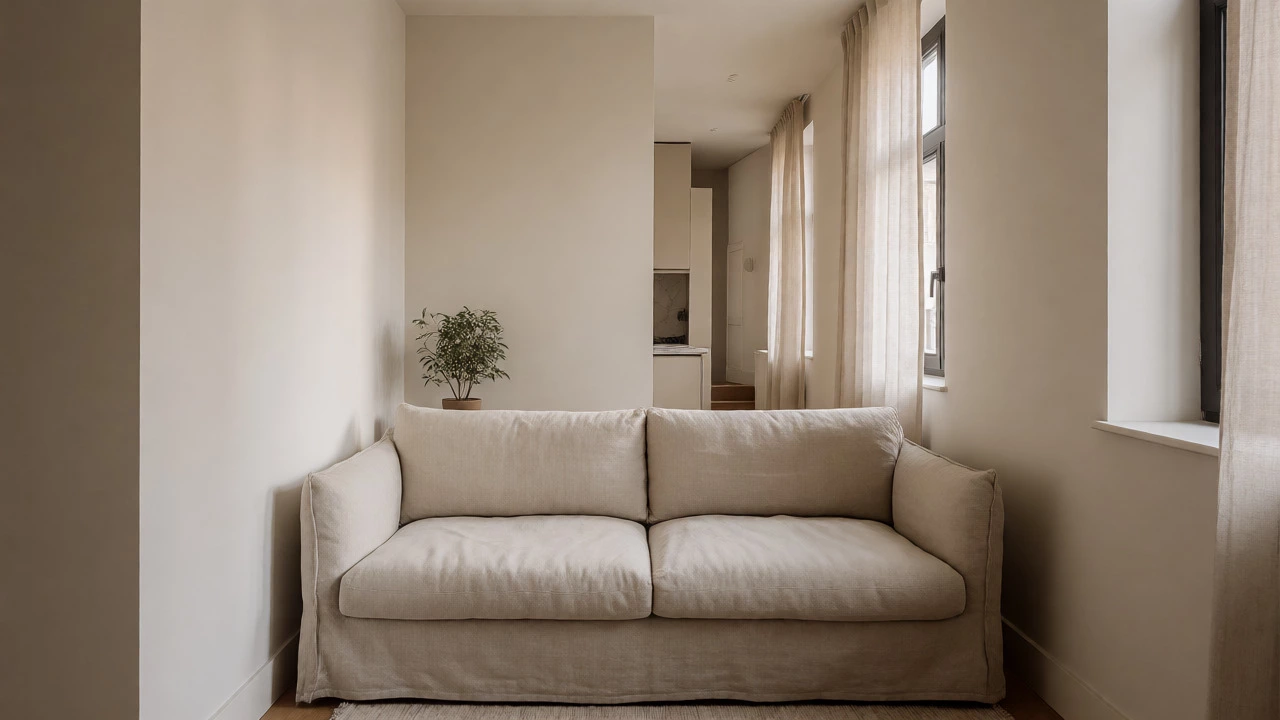
Sofa is a upholstered seat designed for multiple people, typically featuring a backrest and armrests. In most standard Australian homes, especially in Melbourne apartments or smaller suburban houses, one well-chosen sofa is often enough. This approach works best if your primary goal is maximizing floor space or if you have a small footprint under 15 square meters.
Why stick to one? Because it simplifies traffic flow. You don’t have to navigate around three different legs of furniture to get from the door to the kitchen. It also forces you to invest in quality. Instead of buying three cheap frames that sag after a year, you put that budget into one high-quality piece that lasts a decade. However, a single sofa can feel isolating if you host guests frequently. To fix this without adding another couch, mix in other types of seating. An accent chair, a pouf, or even a sturdy ottoman can provide extra spots without crowding the visual field.
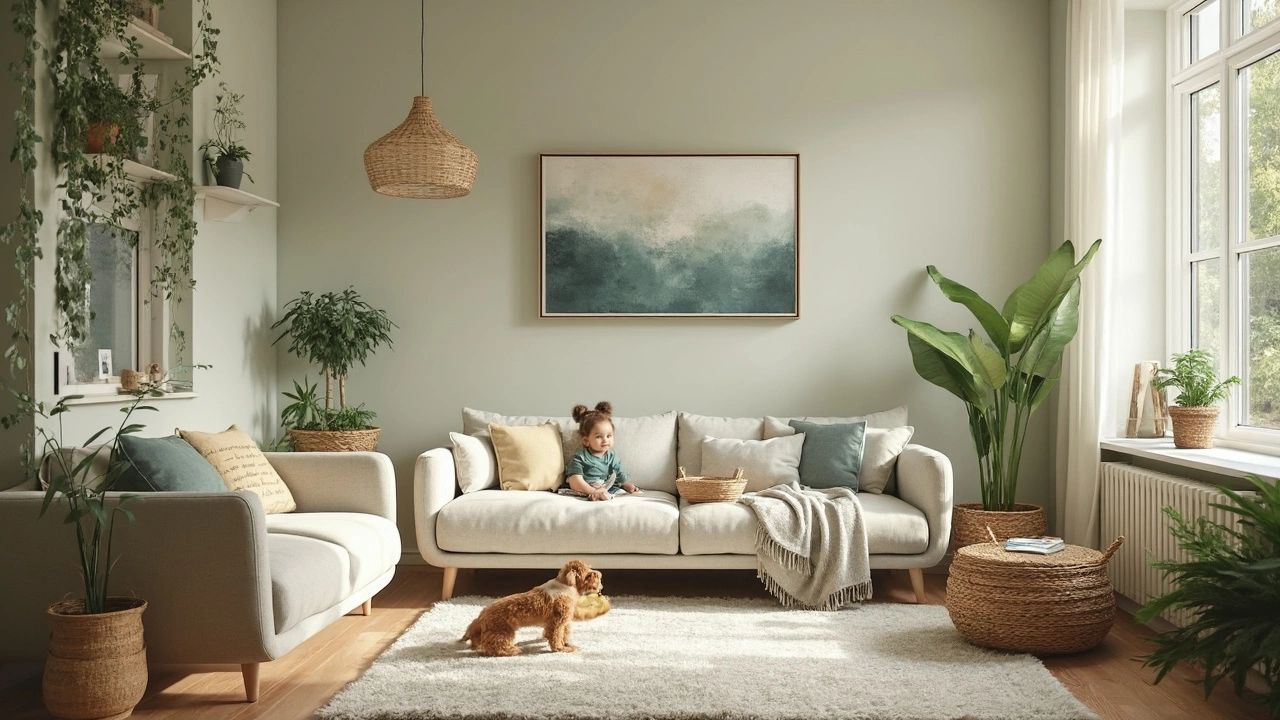
Think about the "conversation triangle." If you have one sofa facing a TV, where do your friends sit when they visit? They might perch on the armrests or stand around awkwardly. Adding a pair of armchairs perpendicular to the sofa creates a U-shape that encourages interaction. This setup keeps the sofa count low but boosts the seating capacity significantly.
The Two-Sofa Setup: Balancing Symmetry and Flow
Two sofas are the gold standard for medium-to-large living rooms, particularly those over 20 square meters. This configuration allows you to define zones within an open-plan space. For instance, in a combined living and dining area, placing two sofas back-to-back can subtly separate the relaxation zone from the eating zone without needing a wall.
There are two main ways to arrange two sofas:
- L-Shape Configuration: Place one sofa against the longest wall and the second perpendicular to it. This anchors the corner of the room and creates a natural boundary. It’s perfect for watching TV together while still allowing eye contact between seats.
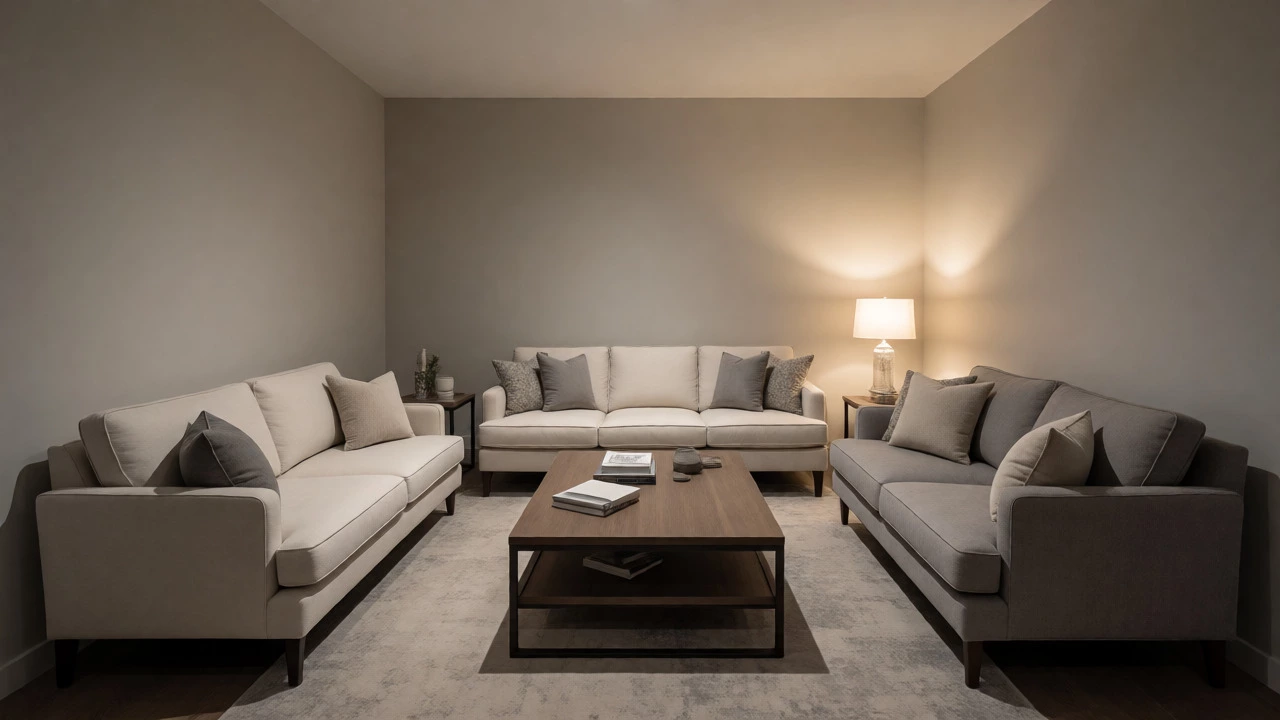
- Facing Each Other: Position the sofas parallel to each other. This is ideal for conversation-heavy households. It kills the dominance of the TV and makes the room feel more formal and intimate. Just ensure you leave at least 45-60 cm between the tables in front of them so people can pass through comfortably.
A common mistake here is using two identical large sectionals. That usually results in a massive block of fabric that dominates the room. Instead, try pairing a larger three-seater with a smaller two-seater loveseat. The size difference adds visual interest and prevents the room from looking like a showroom duplicate.
The Three-Sofa Challenge: Large Spaces and Luxury Vibes
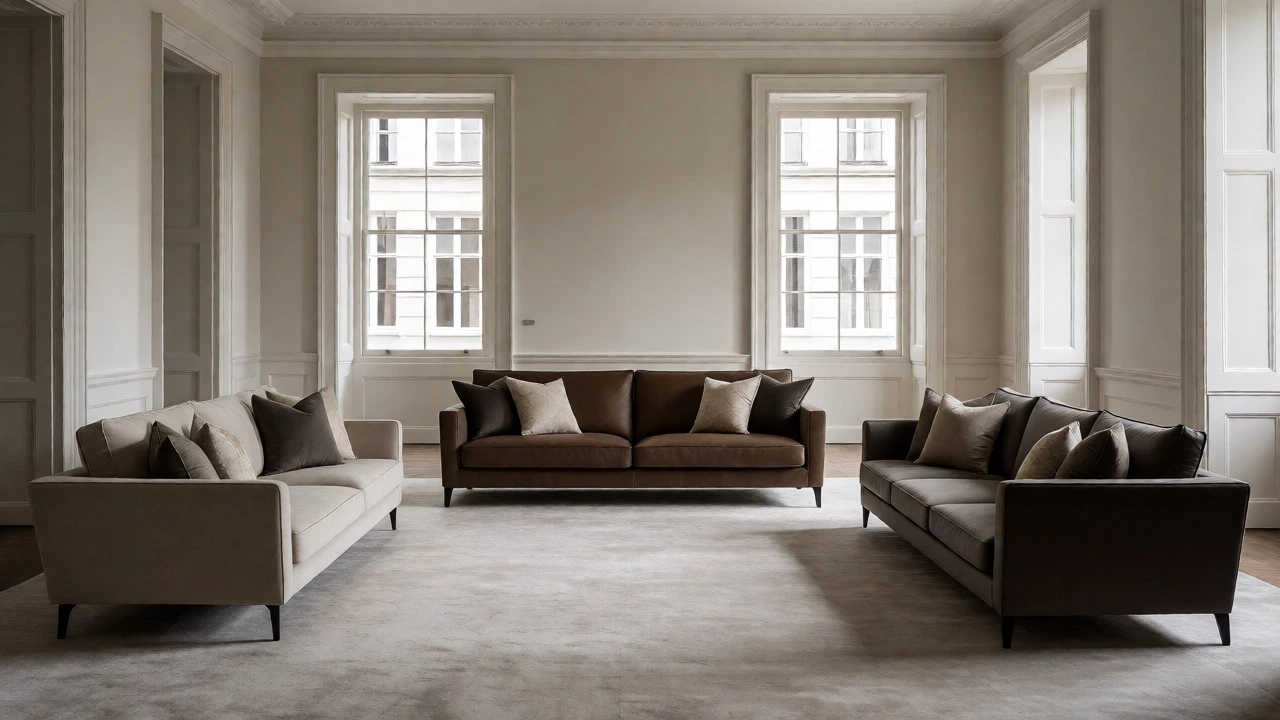
Do you ever need three sofas? Yes, but only if you have serious square footage. We’re talking about heritage homes with grand parlors or modern open-plan villas where the living area exceeds 30 square meters. In these cases, three sofas can help fill the void and create multiple functional areas.
Imagine a large rectangular room. You could place one sofa along the long wall, and then position two smaller sofas facing each other at the far end. This creates two distinct "rooms" within one space-one for lounging and one for chatting. Alternatively, you might use three sofas in a triangular formation around a central coffee table. This maximizes conversation but requires careful spacing to avoid blocking pathways.
The risk with three sofas is clutter. If every seat faces inward, you lose sightlines to windows or doors. Always check the negative space-the empty areas between furniture. If you can’t walk freely between pieces without turning sideways, you’ve gone too far. Remember, the goal is to enhance the architecture, not hide it.
Measuring Up: How Space Dictates Sofa Count
Before you buy anything, grab a tape measure. Not the digital laser kind-use a physical tape to get accurate readings. Here’s a simple heuristic I use when consulting clients in Melbourne:
| Room Size (sqm) | Recommended Sofa Count | Best Layout Strategy |
|---|---|---|
| Under 12 | 1 | Wall-mounted or compact loveseat + chairs |
| 12 - 18 | 1 or 2 | L-shaped sectional or 1 sofa + 2 chairs |
| 18 - 25 | 2 | Parallel arrangement or L-shape with chaise |
| Over 25 | 2 or 3 | Zoned layouts with distinct focal points |
These numbers aren’t rigid laws, but they’re solid starting points. Notice how the recommendation shifts based on function. If your living room doubles as a playroom for kids, fewer sofas mean more floor space for toys. If it’s primarily for entertaining adults, more seating takes priority.
Beyond the Sofa: Mixing Seating Types
Here’s a secret designers love: you don’t need to solve every seating problem with a sofa. Sometimes, the answer to "how many sofas" is "fewer than you think," compensated by other furniture. Mixing textures and forms adds depth to the design.
Consider replacing one sofa with a pair of statement armchairs. This breaks up the monotony of large upholstered blocks. Armchairs are easier to move, perfect for reading nooks, and can be angled differently depending on the activity. If you have a window with a great view, put a comfortable chair there instead of extending the sofa line. It draws attention outward rather than keeping everyone focused on the center of the room.
Ottomans are another unsung hero. They serve as footrests, extra seats, or even side tables when topped with a tray. In a tight space, an ottoman offers flexibility that a fixed sofa cannot. You can push it aside when you need floor space for yoga or board games, then pull it back in when guests arrive.
Practical Tips for Finalizing Your Layout
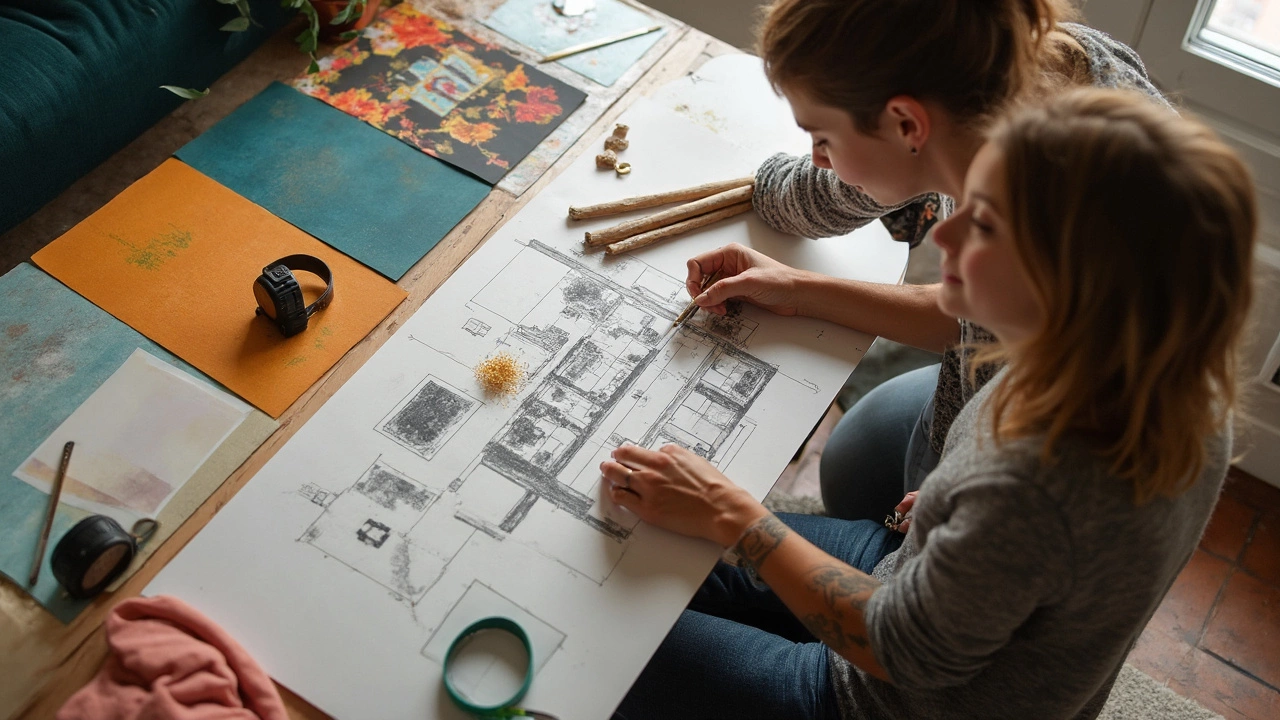
Once you’ve decided on the number, test it out before committing to the purchase. Use painter’s tape to mark the outlines of potential sofas on your floor. Walk the paths you’d normally take. Do you bump into the imaginary arms? Can you reach the light switch easily? Does the layout block sunlight?
Also, consider your lifestyle. Are you a solo dweller who hosts rarely? One sofa is plenty. Do you have a large family that watches movies together every night? A large sectional or two sofas might be necessary. If you work from home and use the living room as a secondary office, ensure there’s a spot with good lighting and privacy-maybe a single armchair tucked into a corner.
Finally, think about maintenance. More sofas mean more dust traps, more spills, and more cleaning. In a busy household, leather or performance fabrics might be worth the investment if you choose multiple pieces. If you opt for fewer sofas, you can afford higher-end materials that require more care but offer superior comfort.
Is it okay to have two sofas in a small room?
Yes, if they are scaled correctly. Two small two-seater sofas can fit in a small room better than one large three-seater because they allow for flexible arrangements and keep the perimeter clear. Ensure you leave at least 75cm of walking space between them.
Should all sofas in a living room match?
No, and they shouldn't. Matching sets can look dated and impersonal. Mix styles, colors, and textures to create visual interest. For example, pair a neutral linen sofa with a velvet accent chair or a leather loveseat. Keep a cohesive color palette to maintain harmony.
How much space should be between two facing sofas?
Leave about 1.2 to 1.5 meters between the fronts of two facing sofas. This allows for a coffee table in the middle while ensuring people can cross their legs or stretch out without touching knees. If the room is narrow, skip the coffee table and reduce the gap slightly.
Can I use a sectional instead of multiple sofas?
Absolutely. A modular sectional can replace two sofas in many layouts. It provides continuous seating and can be rearranged. However, sectionals are heavy and hard to move, so ensure the configuration suits your long-term needs before buying.
What if my living room is L-shaped?
L-shaped rooms benefit from zoning. Place one sofa along the longer leg of the 'L' and use chairs or a smaller sofa in the shorter leg. This utilizes the awkward corner effectively and creates two distinct functional areas within the single room.