Zen Bathroom Transformation Checklist
Assess your current space against the core principles of Zen design. Check off completed steps or planned actions to see your Serenity Score.
Lighting & Color
Natural Materials
Decluttering & Storage
Sensory & Nature
🧘 Namaste!
Your bathroom is now a true Zen Sanctuary. You have successfully integrated lighting, materials, decluttering, and sensory elements to create a space for deep relaxation.
You walk into your bathroom after a long day, and instead of seeing cluttered shelves and harsh fluorescent lights, you feel an immediate drop in blood pressure. That is the power of a Zen Bathroom. It isn't just about looking good; it's about creating a sanctuary that lowers stress hormones and invites mindfulness. You don't need a massive renovation budget or a Japanese architect to achieve this. In fact, most of the impact comes from subtraction rather than addition.
Why Your Current Bathroom Feels Chaotic
Most bathrooms are designed for function first, often at the expense of peace. We pack them with plastic bottles, bright colors, and visual noise. The human brain processes visual information constantly. If your peripheral vision is filled with colorful shampoo labels and tangled cords, your nervous system stays in a low-level state of alert. To fix this, we need to shift the focus from "storage" to "sanctuary." This involves changing three core elements: lighting, materiality, and layout.
The Foundation: Lighting and Color Palette
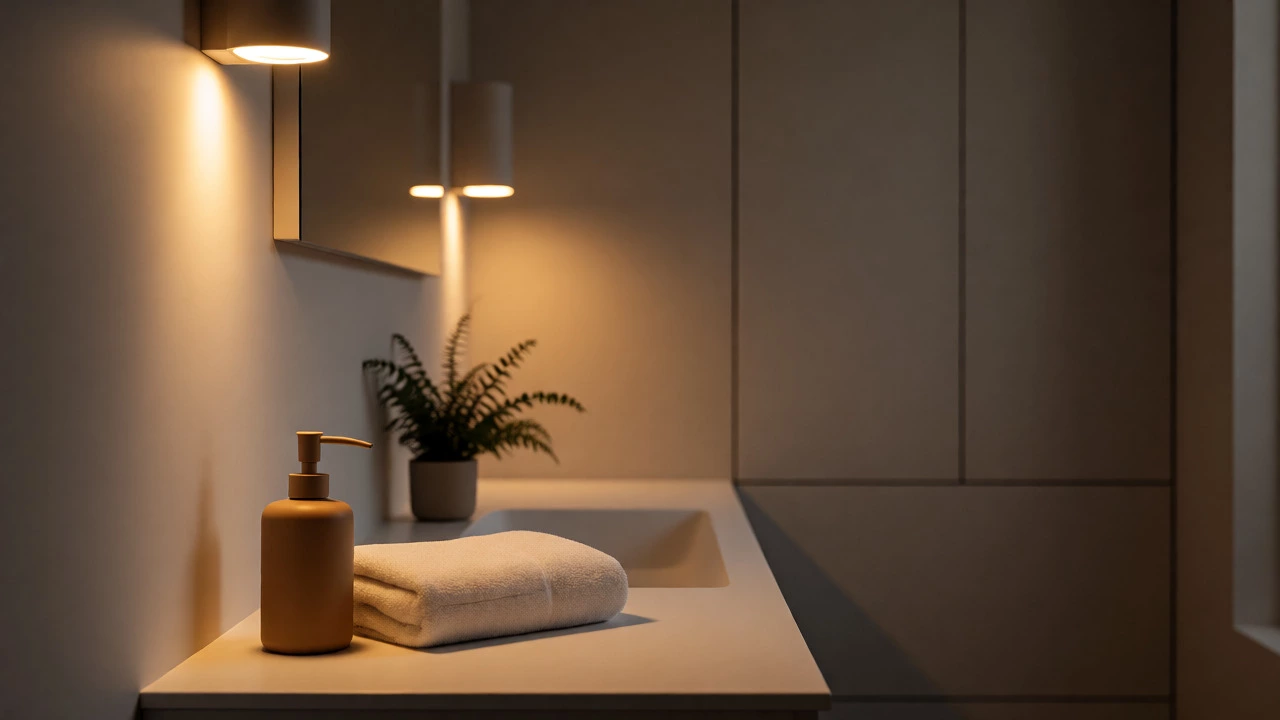
Lighting is the fastest way to change the mood of a room. Overhead ceiling lights cast shadows under the eyes and create a clinical, hospital-like atmosphere. For a true Zen Bathroom, you want layered, indirect lighting. Think of it as painting with light rather than flooding the space.
Start by swapping out cool-white bulbs (4000K-5000K) for warm white ones (2700K-3000K). This mimics sunset light and triggers melatonin production, helping you wind down. Next, eliminate the single overhead source if possible. Install sconces on either side of the mirror for flattering, shadow-free light during grooming. Add a dimmer switch-this is non-negotiable. Being able to lower the light intensity to 10% transforms the room from a utility space to a relaxation zone instantly.
Color plays a huge role here too. Stick to a monochromatic or analogous palette. Whites, creams, soft grays, and earthy taupes reflect light softly and make small spaces feel larger. Avoid high-saturation colors like neon green or hot pink. If you want color, bring it in through nature, such as the green of a potted fern or the brown of wooden accents.
Materials Matter: Bringing Nature Indoors
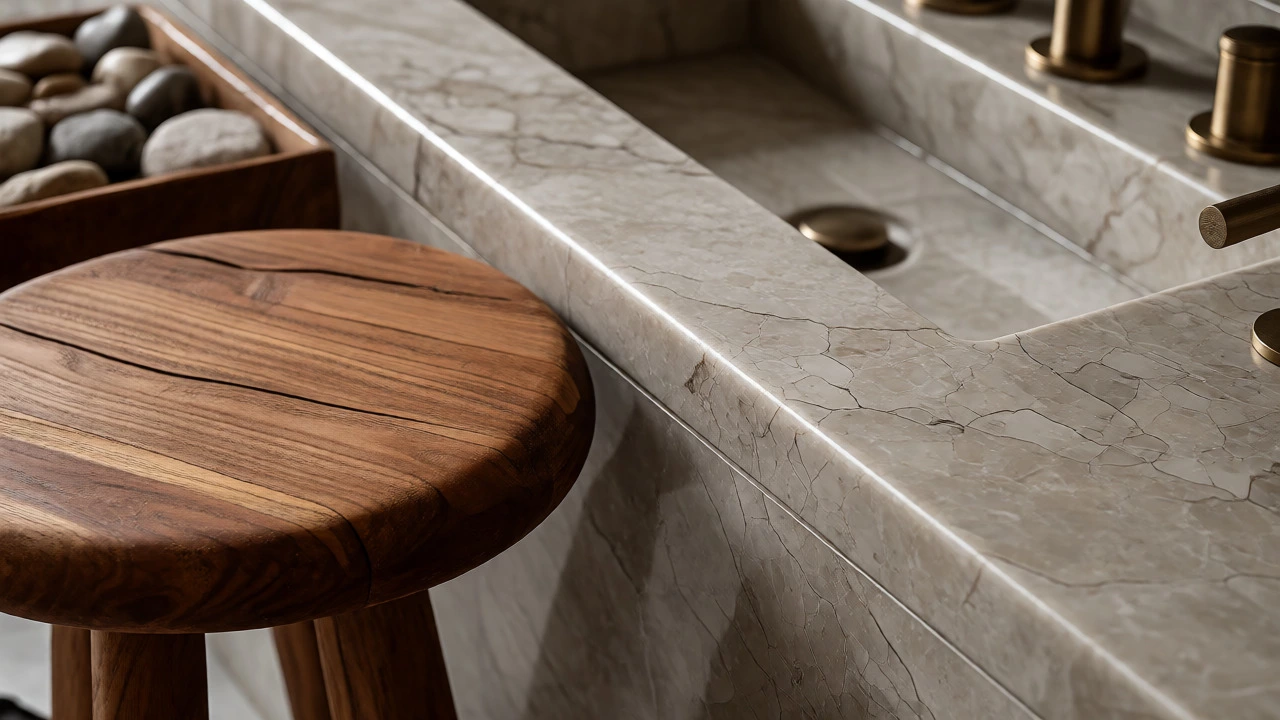
A zen environment relies heavily on natural textures. Synthetic materials like glossy ceramic, chrome, and plastic can feel cold and sterile. Instead, introduce warmth and organic irregularity. Wood is the primary tool here. Teak, bamboo, or cedar are excellent choices because they resist moisture and have natural oils that prevent warping. A simple teak stool or a bamboo bath mat adds tactile comfort without taking up visual space.
Stone is another key player. River rocks, slate, or honed marble add weight and grounding. You don't need a full stone wall. A tray of smooth river stones next to the sink or a pebble-lined shower floor provides sensory feedback when you step on it. These materials age gracefully, developing a patina that feels lived-in rather than worn out.
| Material | Vibe | Maintenance | Best Use |
|---|---|---|---|
| Teak Wood | Warm, Organic | Low (Oils naturally) | Stools, Shelving, Mats |
| Honed Marble | Calm, Luxurious | Medium (Needs sealing) | Vanity Tops, Floors |
| Matte Porcelain | Neutral, Clean | Very Low | Tiles, Bathtubs |
| Brushed Brass | Soft Metallic | Low (Hides fingerprints) | Faucets, Handles |
Decluttering: The Art of Subtraction
You cannot have a calm mind in a chaotic space. The biggest enemy of a zen bathroom is visual clutter. Every toothbrush, razor, and half-empty lotion bottle competes for your attention. The rule of thumb: if it doesn't belong in the room, remove it. If it belongs but looks messy, hide it.
Invest in closed storage. Open shelving looks great in magazines, but it requires constant styling. Closed cabinets allow you to shove the daily chaos away behind clean lines. Use uniform dispensers for soap, shampoo, and conditioner. Decanting products into matching amber glass or matte black bottles creates a cohesive look. This small swap costs less than $50 and instantly elevates the perceived value of the room.
Keep surfaces clear. Aim for only three items on the vanity counter: a soap dispenser, a hand towel, and perhaps one decorative element like a small plant or candle. Everything else goes in drawers or baskets. This "less is more" approach reduces cleaning time and mental load.
Sensory Details: Scent, Sound, and Touch
A zen experience engages all five senses. Visuals are just the start. Scent is powerful; our olfactory bulb connects directly to the limbic system, which controls emotion and memory. Avoid synthetic air fresheners that smell like chemicals. Instead, use essential oil diffusers with eucalyptus, lavender, or sandalwood. Eucalyptus opens the sinuses and feels refreshing, while lavender promotes sleep. Place a few drops in the shower corner so the steam releases the scent naturally.
Sound matters too. Hard surfaces like tile and glass reflect sound, making bathrooms echoey. Soften the acoustics with textiles. A thick cotton rug or a linen shower curtain absorbs noise. If you enjoy music, install a waterproof Bluetooth speaker or use a dedicated bathroom radio. Silence is also acceptable, but background noise like running water or a white noise machine can mask external disturbances.
Touch is the final layer. Swap thin, scratchy towels for plush, high-GSM (grams per square meter) cotton options. Heavier towels feel luxurious and dry faster. Consider heated floors if your budget allows; stepping onto warm tile in winter is a subtle luxury that changes how you perceive the entire space.
Greenery: Living Elements
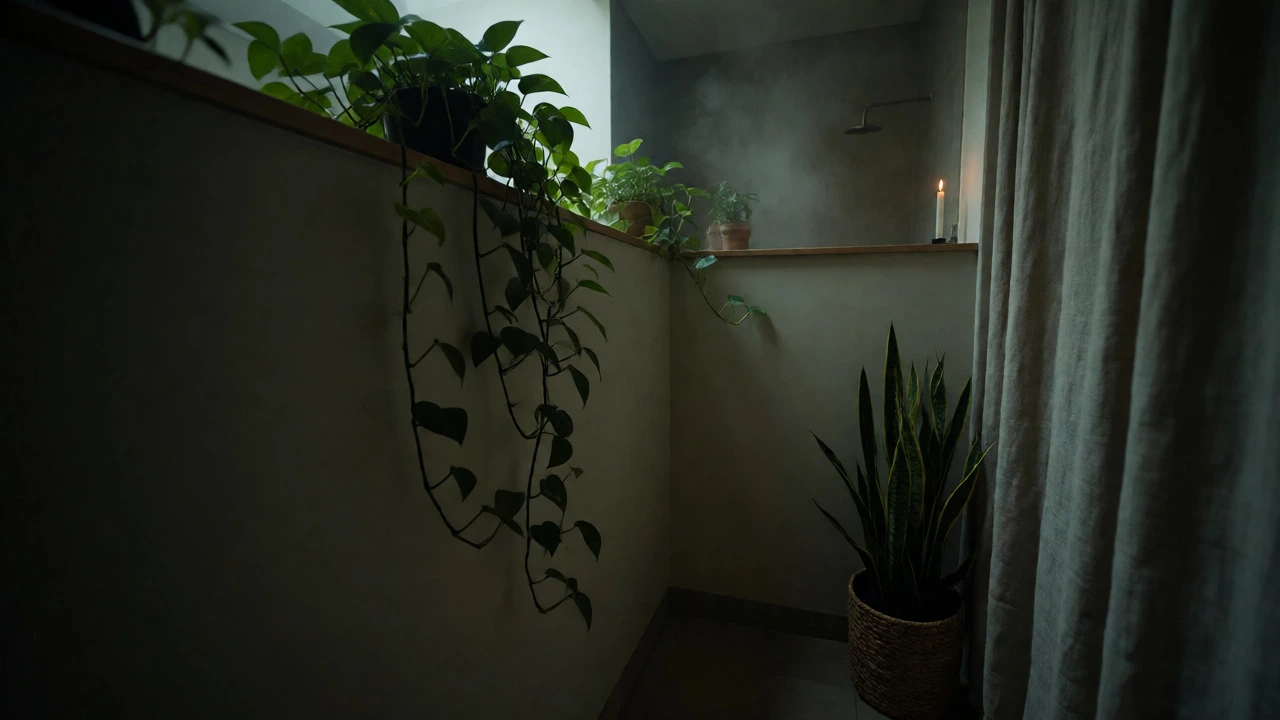
Nature brings life to static rooms. Plants improve air quality and add dynamic shapes that break up rigid architectural lines. Choose plants that thrive in humidity and low light. Ferns, pothos, snake plants, and orchids are excellent choices for bathrooms. They don't require direct sunlight and love the moisture from showers.
Placement is key. Hang a trailing pothos from a shelf so its vines cascade down. Place a snake plant in a corner to draw the eye upward. Or set a small bonsai on the windowsill for a focal point. Ensure pots match your material palette-ceramic, terracotta, or woven baskets work best. Avoid shiny plastic pots, which clash with the natural aesthetic.
Mindful Practices: Using the Space
Design sets the stage, but behavior completes the scene. A zen bathroom is meant to be used slowly. Try leaving your phone outside the door. Use the extra ten minutes to practice deep breathing or simply sit in silence. Take shorter, hotter showers to save water and energy, focusing on the sensation of the water rather than rushing through the task.
Incorporate rituals. Light a candle before your evening shower. Fold your towel neatly after use. These small acts of care reinforce the idea that this space is sacred. Over time, the physical environment trains your brain to associate the bathroom with rest rather than routine.
What is the ideal lighting temperature for a zen bathroom?
The ideal color temperature is between 2700K and 3000K, known as warm white. This range mimics natural sunset light, reducing eye strain and promoting relaxation. Avoid cool whites (4000K+) which can feel clinical and stimulating.
Can I create a zen bathroom in a small space?
Yes, small spaces are actually easier to declutter. Focus on vertical storage, use large mirrors to reflect light and expand the view, and stick to a light, neutral color palette to avoid visual heaviness.
Which plants survive best in humid bathrooms?
Boston Ferns, Pothos, Snake Plants, Peace Lilies, and Orchids thrive in high humidity and low light conditions typical of bathrooms. They help filter indoor air pollutants and add organic texture.
Do I need expensive fixtures for a zen look?
No. Simplicity is key. You can achieve the look by hiding existing clutter, adding natural wood accents, using warm lighting, and incorporating plants. Expensive fixtures often add visual complexity that contradicts the minimalist philosophy.
How do I maintain a zen bathroom?
Adopt a "clean as you go" habit. Wipe down surfaces immediately after use to prevent water spots. Return items to their designated hidden storage spots right after use. Regularly prune plants and replace dried flowers to keep the space feeling alive and cared for.