
Kitchen Work Triangle Calculator
Enter your three measurements to check if your kitchen follows the work triangle principle. Each side must be between 1.2m and 2.7m, with a total perimeter under 6.7m.
- Ideal range 1.2m - 2.7m per side
- Maximum perimeter 6.7m total
Ever felt like your kitchen is working against you? You’re washing dishes, then sprinting to the fridge for ingredients, then darting back to the stove-only to realize you left the cutting board on the other side of the room. It’s not you. It’s the layout.
The smart kitchen doesn’t just look good. It moves with you. The sink, stove, and fridge form the kitchen work triangle-the backbone of every functional kitchen. Get this right, and cooking becomes effortless. Get it wrong, and you’re doing laps every time you make toast.
Why the Work Triangle Still Matters
The kitchen work triangle isn’t a trend. It’s a proven design principle from the 1940s, backed by decades of real-world use. The idea is simple: place your three main work zones-sink, stove, and fridge-so they form a triangle with each side between 1.2 and 2.7 meters long. The total perimeter should be under 6.7 meters.
Why these numbers? Too close, and you bump elbows while cooking. Too far, and you waste steps. A 2023 study by the National Kitchen & Bath Association found that households with properly sized work triangles used 30% less energy moving between zones and reported 40% higher satisfaction with their cooking experience.
This isn’t about aesthetics. It’s about reducing fatigue. If you cook three times a week, you’re making at least 150 trips between these points every month. Multiply that by five years? That’s over 9,000 steps you could save.
Where to Put the Sink
The sink is your cleanup hub. It’s where you rinse veggies, wash hands, and load the dishwasher. That means it needs access to water, drainage, and counter space on both sides.
Best spot? Near the window. Natural light helps you see food bits you missed, and a view makes dishwashing less tedious. It also lets you keep an eye on kids or the backyard while you work.
But don’t just plop it anywhere. Make sure you have at least 60 cm of counter space on one side for draining wet dishes, and another 60 cm on the other side for prep work before washing. If you’re installing a double bowl, put the larger bowl closest to the stove-this is where you’ll dump pasta water.
Avoid putting the sink in a corner unless you’re using a pull-out faucet. You’ll waste space and struggle to reach the back. And never place it directly across from the fridge. That creates a cold-wet zone where condensation builds up and your food gets damp.
Where to Put the Stove
The stove is your command center. It needs space to breathe. You’ll be holding hot pots, stirring with one hand, and opening cabinet doors with the other. You need room to move.
Place it against an interior wall if possible. Exterior walls can cause uneven heating and make your oven work harder. Keep it away from drafty windows or doors-wind can blow out a gas flame or mess with your oven’s temperature.
Leave at least 45 cm of counter space on one side for setting down hot pans. On the other side, aim for 60 cm if you plan to use a cutting board or prep tray. This is where you’ll rest a sizzling skillet while you grab a spoon.
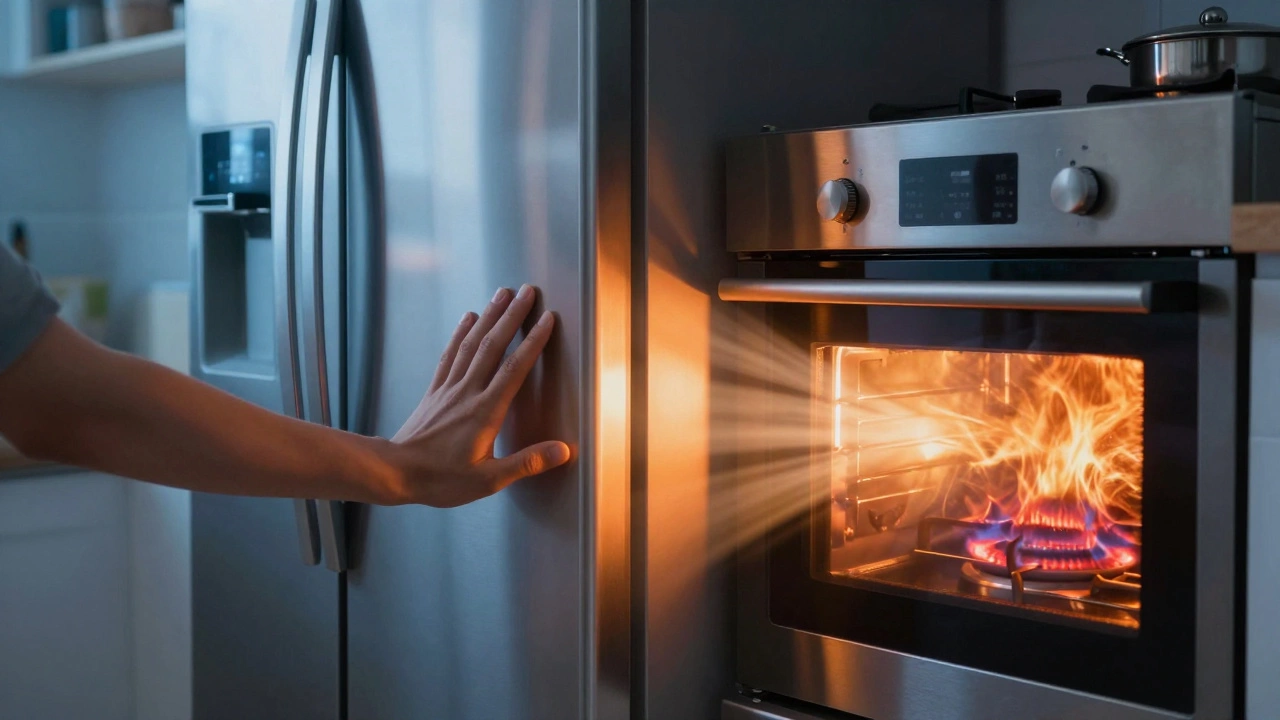
Never put the stove next to the fridge. Heat from the stove makes the fridge compressor work overtime. That’s not just inefficient-it shortens the fridge’s lifespan. The same goes for placing it under a window with direct sun. Summer heat can push oven temps higher than they should be.
And if you have kids? Keep the stove at least 1.2 meters from high-traffic paths. A bump from a running toddler can mean a spilled pot of boiling water.

Where to Put the Fridge
The fridge is your pantry’s extension. You open it constantly-sometimes 10 to 20 times a day. That means it needs to be easy to reach, but not in the way.
Place it near the entrance to the kitchen. That’s where you bring in groceries. No need to carry bags across the whole room just to unload milk and eggs. You should be able to walk from the door to the fridge in under five steps.
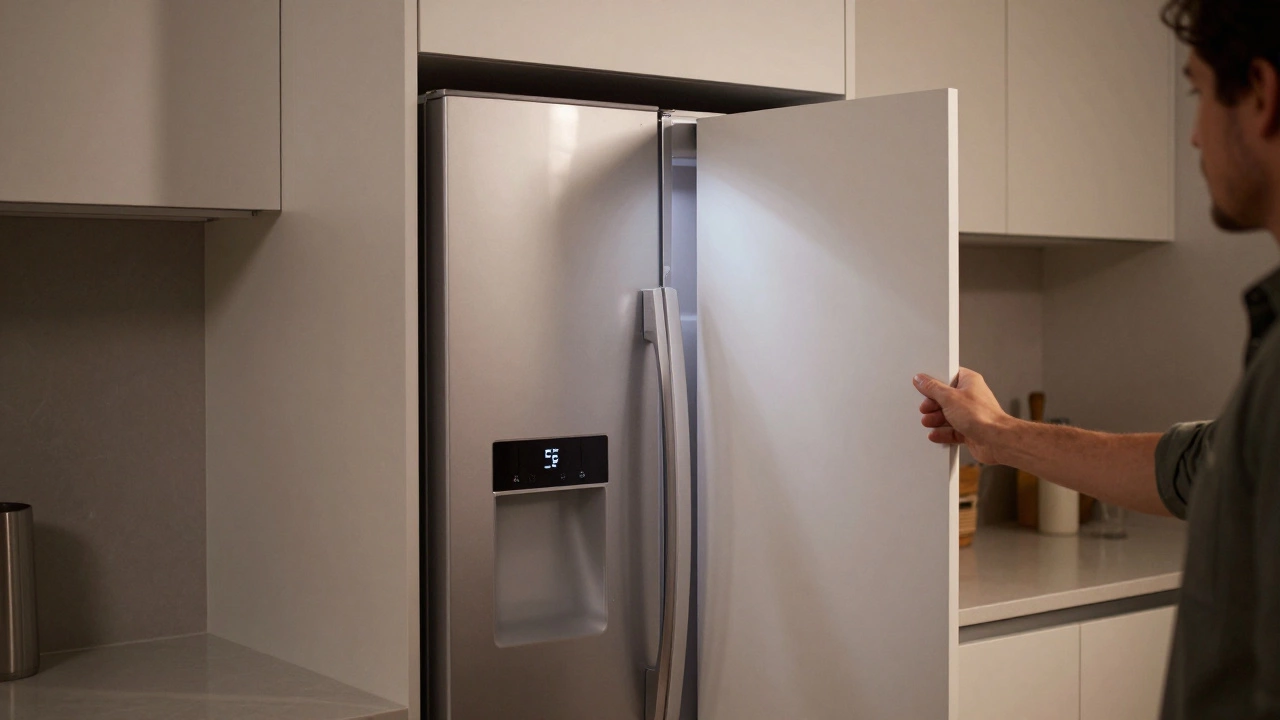
But don’t jam it into a corner or squeeze it between cabinets. Leave at least 5 cm of clearance on the sides and back for airflow. Overheating kills compressors. And if you’re using a built-in fridge, make sure the door opens fully without hitting cabinets or the island.
Keep it away from the oven, dishwasher, or any heat source. Even a toaster nearby can raise the internal temperature by 2-3°C. That’s enough to spoil dairy faster and make your energy bill creep up.
Also, avoid placing it directly opposite the sink. Moisture from washing hands or dishes can condense on the fridge door, leading to mold around the seal. That’s a hygiene issue and a repair cost waiting to happen.
Putting It All Together: The Ideal Layouts
There are three kitchen layouts that nail the work triangle every time.
- L-shaped: Sink on one wall, fridge on the perpendicular wall, stove on the same wall as the sink. This is perfect for small to medium kitchens. It’s compact, keeps everything within reach, and leaves the center open for movement.
- U-shaped: Sink on one leg, fridge on another, stove on the third. Ideal for larger kitchens. You get tons of counter space and storage. The triangle stays tight, and multiple people can work without bumping.
- Galley: Sink and fridge on one wall, stove on the opposite. This works great in narrow homes. The triangle runs the length of the kitchen. Just make sure the walkway is at least 1.2 meters wide-otherwise, you’ll feel trapped.
Avoid the island-only layout unless you have a huge space. If your fridge, sink, and stove are all on the island, you’ll be spinning in circles. The triangle gets broken, and you lose storage and counter space.

Common Mistakes to Avoid
Even pros mess this up. Here’s what goes wrong most often:
- Putting the fridge in the corner. You can’t open the door fully. You’ll end up pulling out everything just to grab the butter.
- Placing the sink under a window with no counter space. No room to dry dishes. You’ll be stacking wet bowls on the counter.
- Putting the stove next to the dishwasher. Heat and steam from the dishwasher can warp the stove’s control panel over time.
- Ignoring door swing. A fridge door that opens into the walkway? You’ll be dodging it every time you walk past.
- Forgetting about lighting. If your sink is in shadow, you’ll miss food bits. Install under-cabinet LEDs.
Also, don’t just copy an Instagram kitchen. Those setups are made for photos, not for Tuesday night stir-fry with three kids begging for snacks. Real kitchens need to handle chaos, not just look clean.
Real-World Tip: Test Before You Build
Before you commit to cabinetry, mark the spots with tape on the floor. Use a measuring tape to check distances. Then, pretend you’re making dinner. Walk from the fridge to the sink to the stove. Do you have to twist your body? Are you stepping over a rug? Is the path blocked by a chair?
If you’re remodeling, do this test in your current kitchen. Time how many steps you take between those three points over one meal. If it’s more than 15, you’ve got a problem.
People who test their layout before building save an average of $2,800 in future frustration-no need to rip out cabinets because the fridge door hits the island.
Final Thought: It’s Not About Perfection-It’s About Flow
You don’t need a magazine-worthy kitchen. You need one that works when you’re tired, hungry, and juggling laundry and a crying baby.
The best kitchens aren’t the most expensive. They’re the ones where you never think about the layout. You just open the fridge, grab what you need, wash it, cook it, and eat. No extra steps. No detours. No stress.
Get the triangle right, and your kitchen stops being a chore. It becomes the heart of your home-quietly, efficiently, and without asking for anything in return.
Can I put the fridge next to the dishwasher?
It’s not recommended. Dishwashers release heat and steam during and after cycles. That extra warmth forces your fridge to work harder to stay cool, which increases energy use and can shorten the compressor’s life. Keep at least 15 cm of space between them, or better yet, place them on opposite walls.
How far should the sink be from the stove?
The ideal distance is between 1.2 and 2.7 meters. This lets you easily move a pot from the stove to the sink without stretching or turning awkwardly. If the distance is under a meter, you risk bumping into each other. Over 3 meters, and you’re wasting energy walking back and forth.
Should the fridge be near the entrance to the kitchen?
Yes. Since you’re bringing groceries in from the garage or front door, placing the fridge close to the kitchen entrance saves steps and reduces fatigue. You shouldn’t have to carry heavy bags across the whole kitchen just to unload them. This also makes it easier to grab snacks or drinks without interrupting cooking.
Is an island kitchen bad for the work triangle?
Not inherently, but it’s easy to mess up. If all three points-sink, stove, fridge-are on the island, you lose the triangle structure. You’ll be circling the island instead of moving in a smooth path. The best island kitchens keep the fridge and sink on the perimeter walls, with the stove on the island. That keeps the triangle intact and gives you space to move.
What if my kitchen is L-shaped and small?
L-shaped kitchens are ideal for small spaces. Place the sink and stove on one wall, and the fridge on the perpendicular wall. Keep the distances under 2.4 meters. Use pull-out drawers and wall-mounted shelves to maximize space. You don’t need a big kitchen to have an efficient one-just smart placement.