Dining Table Centerpiece Planner
Centerpiece Calculator
Why This Works
Following these guidelines ensures your centerpiece enhances your dining experience without blocking conversations or meal service. The recommendations balance functionality with visual appeal, creating a welcoming atmosphere that supports your table's purpose.
Remember: low and wide is the new rule for modern dining spaces. Your centerpiece should encourage connection, not obstruct it.
Most people buy a beautiful dining table-solid wood, sleek metal, or a modern glass top-but then leave the middle empty. It looks like an island with no destination. You don’t need to fill every inch, but a well-chosen centerpiece makes the space feel lived-in, welcoming, and intentional. It’s not about filling space. It’s about creating a moment.
Start with what works for your space
Your dining table isn’t just a surface for meals. It’s where conversations happen, kids do homework, and guests gather. The centerpiece should support that, not fight against it. If your table seats eight, you need room for plates, glasses, and serving dishes. That means the centerpiece can’t be taller than 12 inches or wider than a third of the table’s length. Anything bigger blocks eye contact and turns dinner into a game of peek-a-boo.
Think about your table’s shape. A long rectangular table can handle a linear arrangement-like a row of candles or a low tray with fruit. A round table? Go for symmetry. A single large vase, a cluster of orbs, or a circular tray with layered elements works best. Square tables are flexible, but avoid cluttering the corners. Keep it centered, clean, and calm.
Low and wide is the new rule
Years ago, tall floral arrangements ruled the dining room. Think towering lilies or candelabras that blocked your view of Aunt Carol. Today, the trend is all about low-profile centerpieces. Why? Because people want to talk, not shout across a floral wall. Modern dining rooms prioritize connection, not decoration.
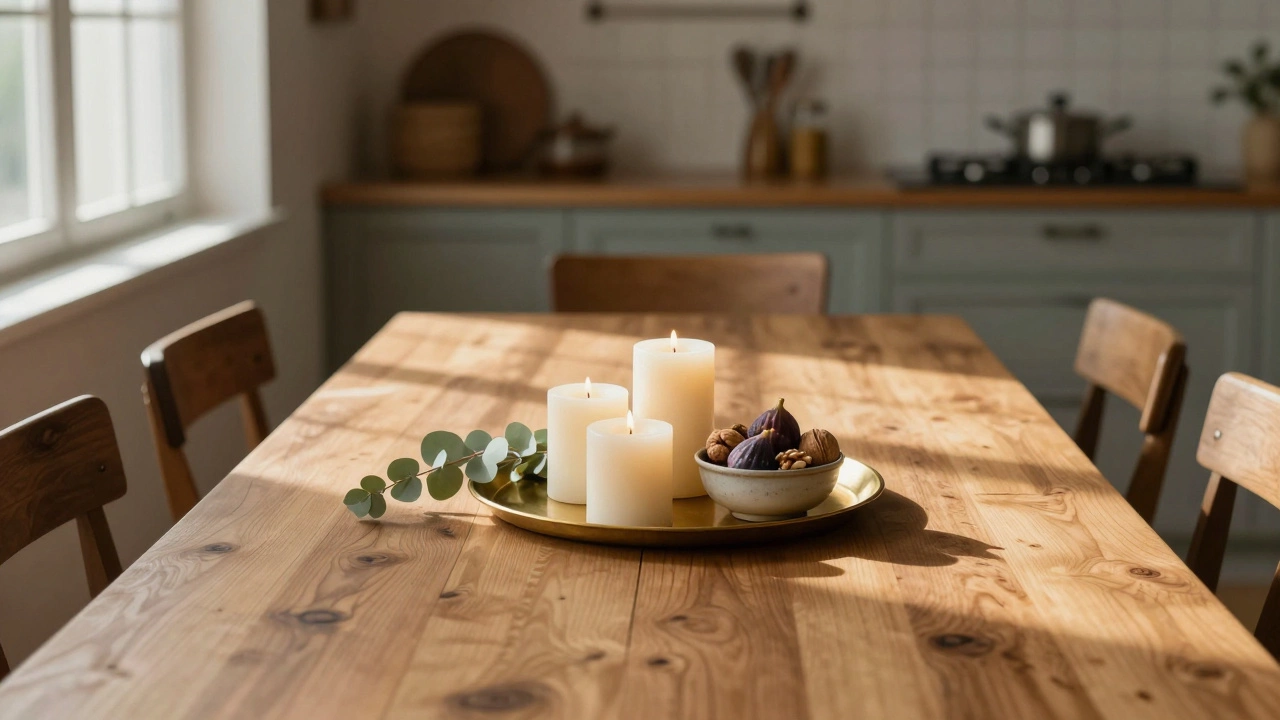
Try a long, shallow tray. Lay it down the center of your table. On top, place three small candles-unscented, so they don’t interfere with food. Add a few sprigs of eucalyptus or dried lavender. Tuck in a small bowl of walnuts or figs. It’s subtle. It smells nice. It doesn’t get in the way. And when you’re done eating, you can just slide the tray aside and use the space for serving platters.
Another favorite: a wooden cutting board with a stack of napkins, a small bowl of sea salt, and a single sprig of rosemary. It’s functional, seasonal, and doubles as a bread plate when needed. This isn’t just decor-it’s part of the experience.
Seasonal touches that don’t feel forced
Changing your centerpiece with the seasons doesn’t mean buying new stuff every three months. It means swapping out small elements you already own.
Spring? A shallow dish of white pebbles with a few fresh tulips tucked in. Summer? A ceramic bowl filled with lemons or limes-bright, fresh, and smells like a backyard BBQ. Fall? A wooden box with pinecones, a cinnamon stick or two, and a single beeswax candle. Winter? A cluster of glass votives with tea lights, surrounded by a ring of pine branches.
Don’t overdo it. One or two seasonal elements are enough. A whole table full of pumpkins in October? That’s Halloween, not dining. Keep it simple. Keep it real.
Functional items that double as decor
The best centerpieces aren’t just pretty-they’re useful. Think about what you use every day and make it look intentional.
- A ceramic pitcher filled with water and a few floating candles-looks elegant, and you can refill it after dinner.
- A small stack of your favorite cookbooks, opened to a recipe page, with a wooden spoon resting on top.
- A woven basket with folded linen napkins and a small jar of honey or jam.
- A tray with coasters, a salt grinder, and a small bowl of olives or almonds.
These aren’t decorations. They’re tools that just happen to look good. And when you’re hosting, they make life easier. Guests don’t need to ask where to find napkins or salt. It’s right there.
What to avoid
Not every pretty thing belongs on your dining table.
First, avoid anything that smells too strong. Scented candles, potpourri, or essential oil diffusers can clash with food. You don’t want your steak to taste like lavender.
Second, skip anything too fragile or high-maintenance. Glass sculptures? Beautiful, but one clumsy elbow and you’re cleaning up shards during dessert. Plastic figurines? They look cheap. Stick to natural materials-wood, ceramic, glass, stone, fabric.
Third, don’t use your centerpiece as a catch-all. No remote controls, no mail, no kid’s homework. This is a dining space, not a drop zone. Keep it clean. Keep it calm.
Real examples from real homes
In a Melbourne farmhouse-style kitchen, a long wooden table has a brass tray with three small terracotta pots-each holding a different herb: thyme, rosemary, and mint. The pots are low, so you can still see across the table. When guests arrive, they’re invited to snip a sprig for their drink.
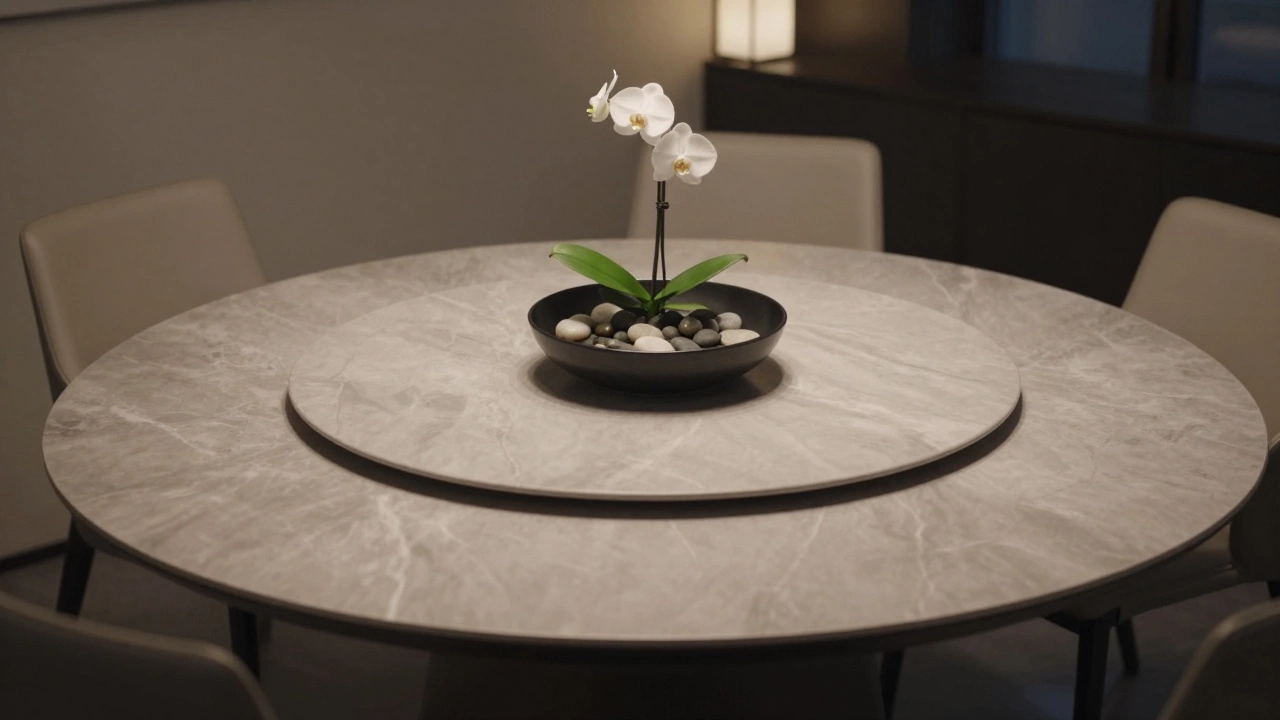
Another home, in a modern apartment, uses a single black ceramic bowl filled with smooth river stones and a single white orchid. It’s minimalist. It lasts weeks. It doesn’t need watering. And it looks expensive without costing much.
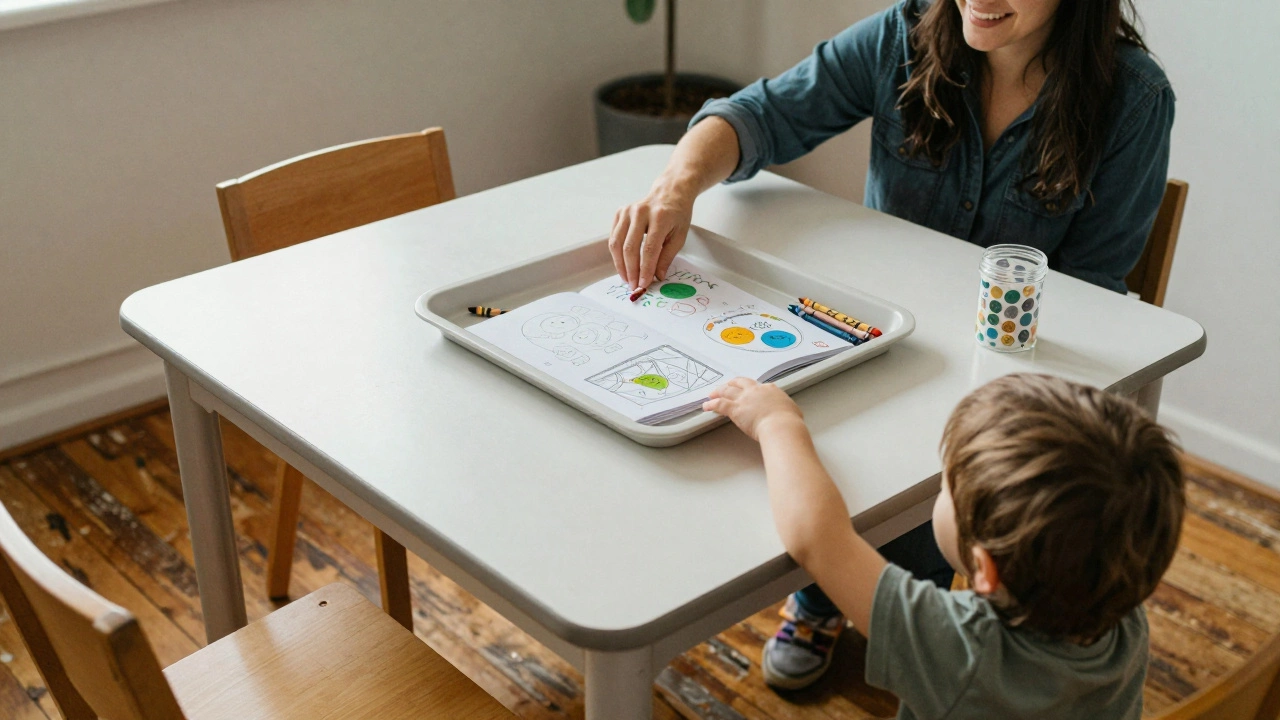
And then there’s the family with three kids. Their table has a wide, shallow tray with a stack of coloring books, crayons, and a small jar of stickers. It’s not fancy, but it’s perfect. Kids are happy. Parents are relaxed. The table becomes part of the family’s rhythm, not just a place to eat.
It’s not about perfection
The most beautiful dining tables aren’t the ones with the most stuff. They’re the ones that feel like home. A centerpiece shouldn’t scream. It should whisper.
Start with one thing. A single candle. A bowl of fruit. A folded napkin. Then, live with it for a week. See how it feels during meals. Does it help? Does it distract? Does it make the space feel warmer?
You don’t need to match your table to a magazine. You just need to make it yours.
Can I use a vase with flowers in the middle of my dining table?
Yes-but keep it low. Tall flowers block conversation and make serving hard. Choose a short, wide vase and use just a few stems. Fresh flowers are lovely, but dried or faux flowers last longer and still look elegant. Avoid strong scents like lilies or roses if you’re serving food.
What if my table is small?
Small tables need even less. A single candle, a small bowl of oranges, or a single book with a coaster underneath works perfectly. The goal isn’t to fill space-it’s to add warmth. Less is more when space is limited.
Should I use a table runner?
A runner can help define the center, especially on long tables. But don’t layer it over a tray or centerpiece-it can look messy. Use a runner if you want texture, then keep the center simple. A linen runner with a single candle and a few stones underneath looks polished and calm.
Are candles safe on dining tables?
Yes, if you use the right kind. Choose unscented, dripless candles in sturdy holders. Never leave them unattended. Pillar candles or votives in glass containers are safest. Tea lights in small metal cups are great for low, clustered arrangements. Avoid tall, thin candles that could tip over.
How often should I change my centerpiece?
There’s no rule. Change it when it starts to feel stale. For some, that’s every week. For others, it’s every season. The best approach is to notice when it no longer adds joy. If you stop noticing it, it’s time for a swap. Keep it simple-swap out one or two items instead of rebuilding everything.