

Tier 1 Contractor Verification Tool
Verify Your Contractor
Enter information about a contractor you're considering to determine if they meet the key criteria of a true Tier 1 contractor. This tool helps you identify contractors who have the proper structure, insurance, and accountability for your project.
When you’re planning a big home renovation or a new build, you’ll likely hear the term tier 1 contractor. But what does it actually mean? And why does it matter to you as a homeowner or project owner? This isn’t just industry jargon-it’s a key part of how construction projects are organized, funded, and delivered. Skip the buzzwords. Let’s cut to the chase.
What Exactly Is a Tier 1 Contractor?
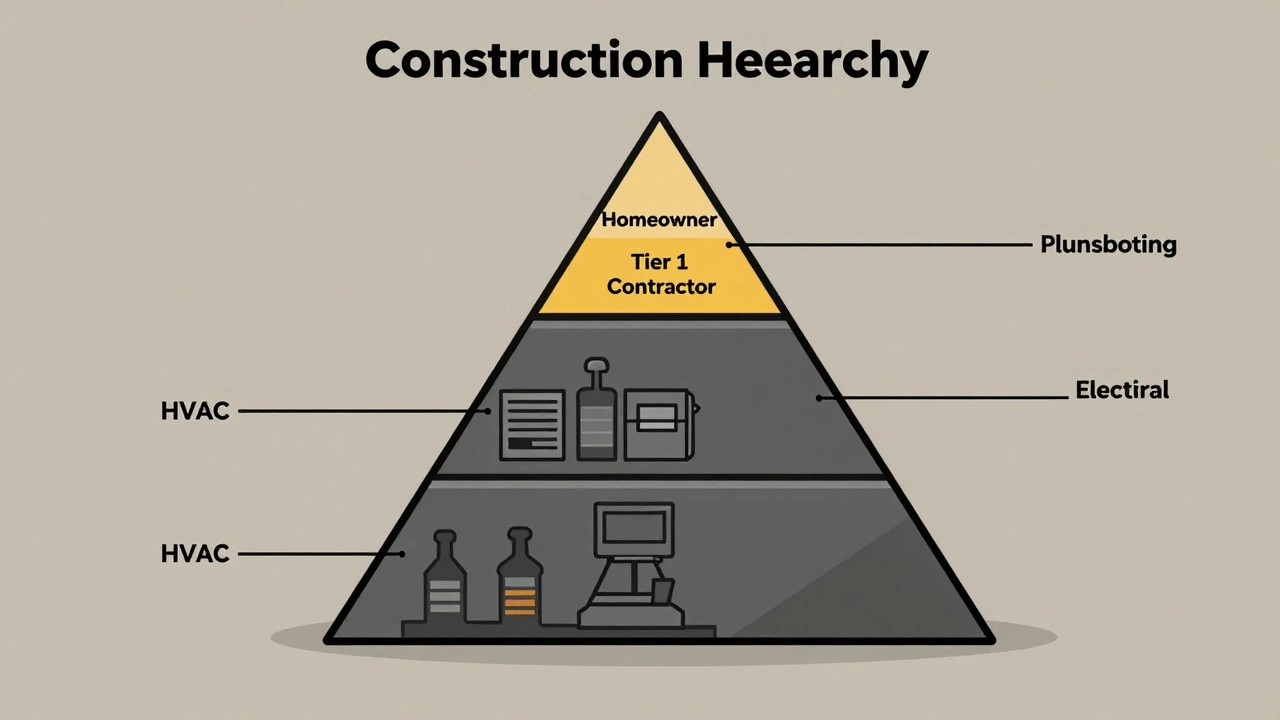
A tier 1 contractor is the main contractor hired directly by the project owner-whether that’s a homeowner, a business, or a government agency. They’re the ones who sign the primary contract and take full responsibility for getting the job done. Think of them as the quarterback of the construction team. They don’t necessarily do all the work themselves. Instead, they manage everyone else: electricians, plumbers, framers, roofers, and more.
These contractors are often called general contractors or prime contractors. The term "tier 1" just puts them at the top of the food chain. Below them are tier 2 and tier 3 subcontractors, who work under the tier 1 contractor’s direction. Tier 2 might be a specialized firm like a HVAC installer. Tier 3 could be a local electrician hired by that HVAC company. The tier 1 contractor answers directly to you, the client. Everyone else answers to them.
Why Tier 1 Contractors Matter
You might wonder: why not hire each trade directly? Why go through one middleman? The answer is control and accountability. When you hire a tier 1 contractor, you’re not just hiring a person-you’re hiring a system. They handle scheduling, permits, inspections, material delivery, and safety compliance. If a pipe bursts because a subcontractor messed up the install, you don’t chase down five different crews. You call the tier 1 contractor, and they fix it. That’s the whole point.
Projects without a clear tier 1 contractor often run into delays, budget overruns, and finger-pointing. I’ve seen homes where the roofer blamed the framing crew, the electrician blamed the plumber, and no one took responsibility. That’s what happens when you skip the tier 1 structure. It’s chaos.
What Makes a Tier 1 Contractor Different From Others
Not all general contractors are tier 1. Here’s what sets them apart:
- Direct contract with the client-They’re the only ones you sign a legal agreement with.
- Full project oversight-They manage timelines, budgets, and quality across every phase.
- Licensing and insurance-Tier 1 contractors carry general liability insurance, workers’ comp, and often bond their projects. This protects you if something goes wrong.
- Financial responsibility-If a subcontractor doesn’t get paid and files a lien, the tier 1 contractor is legally on the hook to resolve it.
- Access to materials and pricing-They buy in bulk, have vendor relationships, and pass savings on to you.
Compare that to a handyman who does a few jobs themselves or a small crew that only handles one trade. Those aren’t tier 1. They’re either tier 2 or 3-or just independent workers.
Who Uses Tier 1 Contractors?
Tier 1 contractors aren’t just for luxury homes. They’re essential for:
- Major home remodels (kitchen, bathroom, whole-house)
- New single-family home construction
- Small commercial builds (retail spaces, offices, clinics)
- Public projects like schools or community centers
In commercial construction, tier 1 contractors often handle contracts worth millions. In residential work, they typically manage projects from $100,000 up. Anything below that? You might be dealing with a general contractor who isn’t operating as a true tier 1-maybe they’re just coordinating a few subs without the full infrastructure.
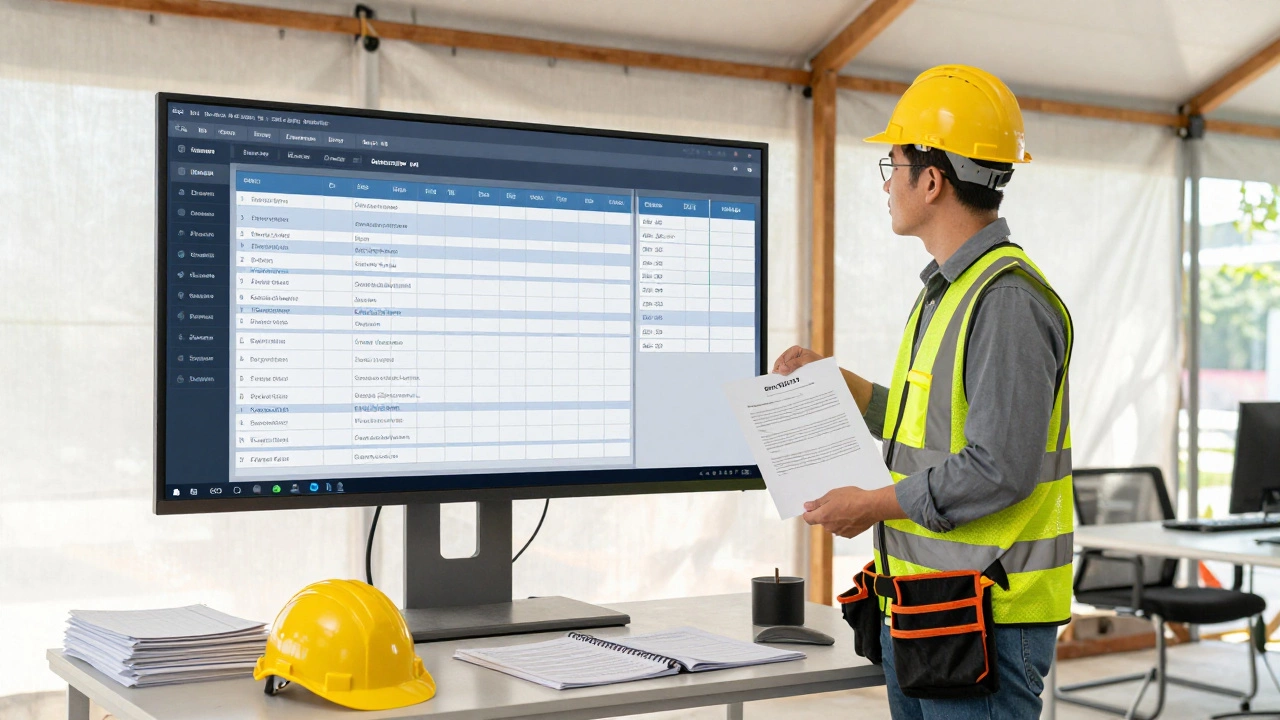
How to Spot a Real Tier 1 Contractor
Not everyone who says "I’m a general contractor" is a tier 1. Here’s how to tell:
- Ask for their prime contract template. A tier 1 will have a formal agreement that clearly states they’re the primary party responsible.
- Check their license number-it should be active and match the state’s contractor board database. In California, for example, a valid CSLB license is mandatory.
- Request proof of bonding and insurance. A tier 1 contractor will have a certificate of insurance (COI) showing at least $1 million in general liability and active workers’ comp.
- Ask how they handle subcontractor payments. Tier 1 contractors use pay-when-paid or pay-if-paid clauses to protect themselves and you.
- Look for a project management team. Real tier 1 firms have project managers, schedulers, and admin staff-not just a guy with a truck.
If they can’t produce any of these, they’re likely a middleman or a solo operator. You’re better off with a proper tier 1.
Common Misconceptions
People often confuse tier 1 contractors with these:
- Architects-They design. Tier 1 contractors build.
- Project managers-They coordinate, but don’t take legal responsibility.
- Design-build firms-These can be tier 1, but only if they hold the primary contract and manage all construction.
- Home builders-Some are tier 1, but many are just volume builders with standardized plans and little customization.
Don’t assume a name means a role. A "design-build company" might be a tier 1, but only if they’re the ones signing the contract with you and managing every trade on-site.
What Happens If You Skip the Tier 1?
Let’s say you try to hire your own electrician, plumber, and carpenter directly. Sounds like a way to save money, right? Maybe. But here’s what often happens:
- Your electrician shows up before the framing is done-now you’ve got to reschedule everything.
- The plumber uses a different pipe type than the architect specified-now the inspector rejects the permit.
- A subcontractor doesn’t get paid and puts a lien on your property.
- No one takes responsibility when the basement leaks.
These aren’t rare scenarios. They’re standard outcomes when you bypass the tier 1 structure. The cost of fixing mistakes like this often doubles the original savings.
Tier 1 Contractors in the Real World
Take a recent project in Austin, Texas. A homeowner wanted a 3,000-square-foot custom home. They hired a tier 1 contractor with 15 years of experience. The contractor brought in 18 subcontractors over 11 months. The project finished on time, within 2% of budget, and passed all inspections on the first try.
Why? Because the tier 1 contractor had:
- A dedicated project manager on-site five days a week
- Pre-approved vendor lists for materials
- A digital scheduling system that tracked every trade’s progress
- A system for daily site inspections and quality checks
That’s not magic. That’s process. And it only exists because the tier 1 contractor took full responsibility.
How to Choose the Right Tier 1 Contractor
Here’s what actually works:
- Look for contractors with 5+ years of continuous operation. Avoid ones who just started last year.
- Ask for three recent project references. Call them. Ask: "Did the contractor handle problems without drama?"
- Check their Better Business Bureau rating and state contractor board record. No complaints? Good. Multiple complaints? Walk away.
- Get a detailed proposal-not just a quote. It should list all subcontractors, materials, timelines, and payment schedules.
- Never pay more than 10% upfront. Reputable tier 1 contractors tie payments to milestones.
Don’t pick based on who’s cheapest. Pick based on who’s most organized, most transparent, and most accountable.
| Feature | Tier 1 Contractor | General Contractor (Not Tier 1) | Handyman / Solo Operator |
|---|---|---|---|
| Direct contract with client | Yes | Possible | No |
| Manages multiple subcontractors | Yes | Sometimes | No |
| Carries general liability insurance | Yes | Often | Rarely |
| Project bonding required | Yes | Varies | No |
| Handles permits and inspections | Yes | Usually | No |
| Legal responsibility for all work | Yes | Partial | None |
Final Thought: It’s Not About Size-It’s About Structure
A tier 1 contractor doesn’t have to be a huge company. Some of the best are small, family-run businesses with 10-15 employees. What matters is that they operate like a true general contractor-with systems, accountability, and legal backing. If they’re the only one you sign a contract with, they’re your tier 1. If you’re managing three different trades yourself? You’re not saving money-you’re taking on a full-time job you didn’t sign up for.
Is a tier 1 contractor the same as a general contractor?
Yes, in most cases. The term "general contractor" is often used interchangeably with "tier 1 contractor." But not all general contractors are tier 1. A tier 1 contractor is the one who signs the primary contract with the client and takes full legal responsibility for the project. Some general contractors act more like coordinators without the insurance, bonding, or management structure that defines a true tier 1.
Do I need a tier 1 contractor for a small bathroom remodel?
For a small bathroom remodel under $20,000, you might not need a full-tier 1 contractor. A licensed and insured general contractor who handles all the trades can be enough. But if you’re doing any structural changes, plumbing reroutes, or electrical upgrades, you still want someone who carries liability insurance and can pull permits. Skipping that can lead to costly mistakes or insurance issues down the road.
Can a tier 1 contractor also be the architect?
Some companies offer design-build services, meaning they have both architects and contractors on staff. In that case, they can act as the tier 1 contractor while also handling design. But the architect role and contractor role are still separate. The tier 1 contractor is the entity legally responsible for construction-not the design. Even in design-build firms, you’re signing a contract with the contractor side of the business.
What happens if a tier 1 contractor goes out of business mid-project?
If a tier 1 contractor goes out of business, you’re protected by their bond. Most states require tier 1 contractors to carry a contractor’s bond. This bond acts like insurance for the client. If the contractor disappears, you can file a claim against the bond to cover costs of hiring a replacement. The bond also ensures subcontractors and suppliers get paid. Always verify the bond is active before signing a contract.
How do I verify a contractor is truly a tier 1?
Ask for three things: their contractor license number (check it on your state’s licensing board website), a certificate of insurance showing $1 million in general liability, and a copy of their standard prime contract. A true tier 1 contractor will have all three ready. If they hesitate or can’t produce them, they’re not operating as a tier 1.
If you’re planning a project that matters-whether it’s your dream kitchen or a new home-don’t cut corners on structure. A tier 1 contractor isn’t a luxury. It’s your best defense against delays, cost overruns, and legal trouble. Choose wisely.