Refrigerator Overhang Calculator
Find out if your refrigerator's overhang from cabinets is within optimal design parameters. This tool helps determine if your fridge is sticking out too far, which could affect kitchen functionality and traffic flow.
When you’re designing a kitchen or replacing an old fridge, one question always comes up: how far should a refrigerator stick out from cabinets? It’s not just about looks-it affects how you move around the kitchen, whether the doors swing open properly, and even how easy it is to clean behind the unit. Get it wrong, and you’ll be constantly bumping into the fridge or struggling to open the pantry door. Get it right, and your kitchen flows like it was built for real life.
Standard Cabinet Depth vs. Refrigerator Depth
Most kitchen cabinets are built to a standard depth of 24 inches. That’s the measurement from the wall to the front edge of the cabinet door. Refrigerators, on the other hand, aren’t all the same. A typical counter-depth fridge sits around 24 to 27 inches deep, which means it might line up almost perfectly with your cabinets. But a standard-depth fridge? Those are usually 30 to 34 inches deep. That’s 6 to 10 inches of extra bulk sticking out.That overhang isn’t just a design quirk-it’s functional. Deeper fridges have more storage space, better insulation, and often better cooling performance. But that extra depth means you need to plan for it. If your cabinets are 24 inches deep and your fridge is 32 inches, you’re looking at an 8-inch protrusion. That’s the width of a large cutting board. It’s enough to block a walkway, catch your hip when you’re carrying groceries, or make it impossible to open a nearby drawer without hitting the fridge door.
The Ideal Overhang: 1 to 2 Inches
The sweet spot for most kitchens is having the fridge stick out just 1 to 2 inches beyond the cabinet fronts. This isn’t about aesthetics alone-it’s about usability. At this depth, the fridge door swings open without hitting adjacent cabinets or drawers. It’s also easy to reach into the back of the fridge without stretching awkwardly. And when you’re wiping down the countertops, you don’t have to duck around a giant appliance.How do you get there? You have two options. The first is to choose a counter-depth refrigerator. These models are designed to match standard cabinet depth, usually sitting at 24 to 25 inches deep. They’re popular in modern kitchens because they create a clean, built-in look. The second option is to adjust your cabinet layout. If you’re installing a standard-depth fridge, you can build your cabinets to be slightly deeper-26 or 27 inches-to reduce the overhang. This works especially well if you have a peninsula or island with cabinets on both sides.
Why 3 Inches or More Is a Problem
A fridge sticking out more than 3 inches from the cabinets starts to cause real problems. First, it breaks the visual flow of the kitchen. Instead of looking intentional, it looks like an afterthought. Second, it eats up valuable floor space. In a small kitchen, that extra 4 inches can mean the difference between being able to open both the fridge and the pantry door-or having to choose one.Third, and this is something people forget until it’s too late: it interferes with door swings. Most fridge doors open 90 to 110 degrees. If your cabinet is only 24 inches deep and your fridge is 34 inches deep, the door will swing into the walkway. If there’s a wall or another appliance on the other side, you might not be able to open the fridge fully. That means you can’t pull out a full tray of food or reach the back shelf without moving the fridge-which is heavy, awkward, and risks damaging the floor or the unit itself.
And don’t forget about cleaning. A fridge sticking out far from the cabinets creates a gap where crumbs, dust, and spills collect. That space is hard to reach, and over time, it becomes a breeding ground for mold or pests. You’ll end up pulling the fridge out every few months just to clean behind it-something you don’t want to do if it’s bolted in or has water lines attached.
Counter-Depth Fridges: Are They Worth It?
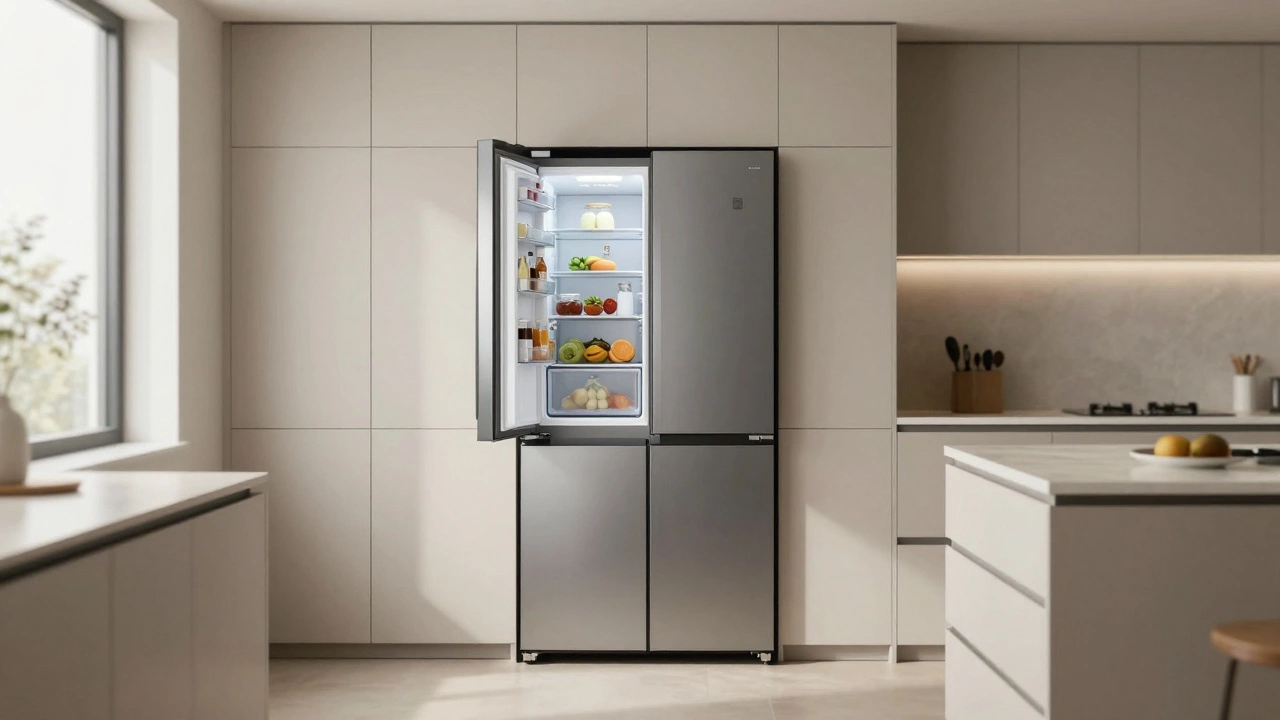
Counter-depth refrigerators have become the go-to choice for new kitchens and renovations. They’re designed to sit flush-or nearly flush-with cabinetry, typically sticking out only 1 to 2 inches. They’re also often narrower, which helps in tighter spaces. Many models now offer the same storage capacity as full-depth units, thanks to smart internal organization and taller shelves.But they’re not perfect. Counter-depth fridges usually cost $500 to $1,500 more than standard models. You also lose a bit of depth in the main compartment, which can make it harder to store large items like turkeys or pizza boxes. And if you’re replacing an old fridge, you might need to adjust your cabinetry or flooring to accommodate the new dimensions.
Still, if you value a streamlined look and smooth workflow, they’re worth the investment. Brands like Samsung, LG, and Bosch offer counter-depth models with French doors, bottom freezers, and even smart features-all at depths that work with standard cabinets.
What About the Fridge Door Swing?
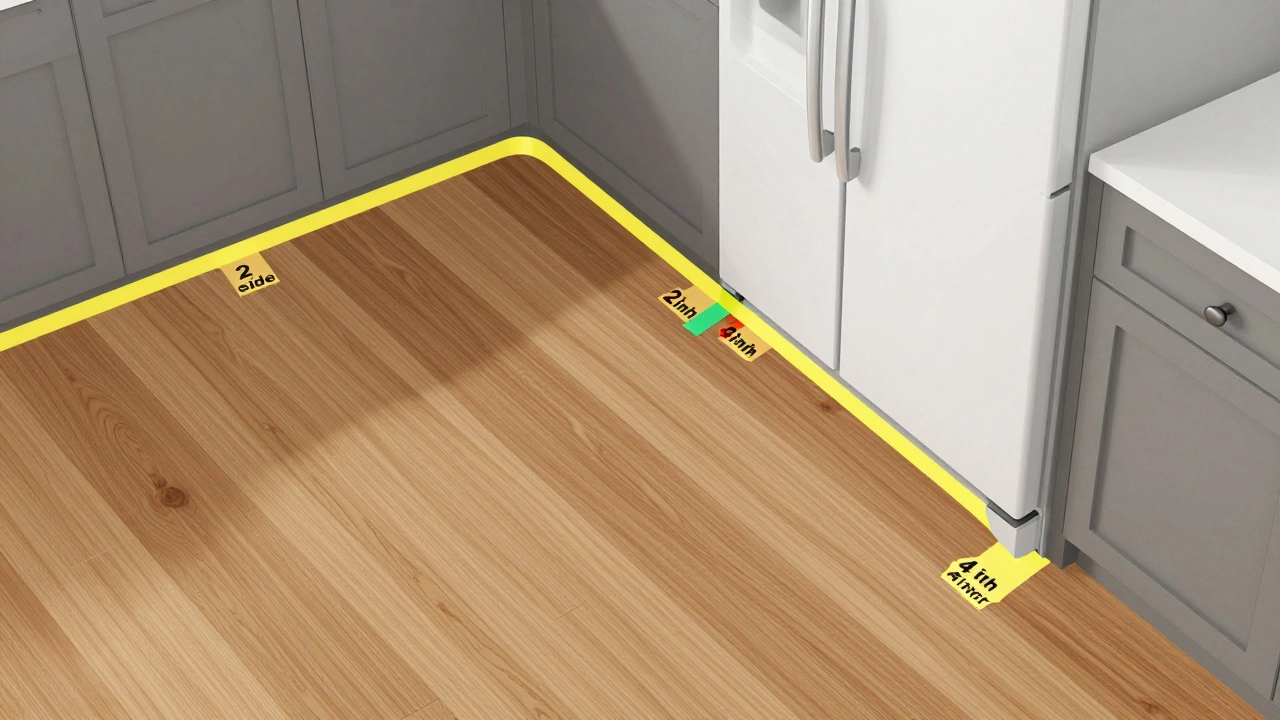
The fridge door’s swing path matters just as much as its depth. Even if your fridge sticks out only 1 inch, if it’s tucked into a corner or next to a wall, you might still have trouble opening it fully. Always check the manufacturer’s specs for door swing clearance. Most fridges need at least 2 inches of side clearance and 3 to 4 inches of front clearance to open completely.Here’s a simple test: Use painter’s tape to mark the fridge’s footprint on your floor. Then, open the door to 90 degrees. Walk around it. Does it hit anything? Can you pull out a full drawer without bumping into the cabinet? If not, adjust the placement. Sometimes moving the fridge 6 inches away from the wall makes all the difference.
Real-World Example: Melbourne Kitchen Renovation
A client in Hawthorn, Melbourne, had a 1980s kitchen with a 32-inch-deep fridge sticking out 8 inches past the cabinets. The walkway was barely 30 inches wide. Every time she opened the fridge, she had to move her coffee maker. The pantry door wouldn’t open fully. She ended up buying a counter-depth LG model (24.5 inches deep) and had her cabinets reconfigured to 25 inches. The result? A 6-inch gain in floor space, smoother traffic flow, and a kitchen that finally felt modern. She didn’t spend extra on luxury features-just got the right fit.Checklist: Before You Buy or Install
- Measure your cabinet depth from the wall to the front edge.
- Check the fridge’s exact depth (not just the model name-look at the spec sheet).
- Confirm the door swing clearance: 2 inches on each side, 3-4 inches in front.
- Plan for 1 to 2 inches of overhang if using a standard-depth fridge.
- If going counter-depth, ensure your cabinetry is 24-25 inches deep.
- Leave 1 inch of space behind the fridge for airflow and ventilation.
- Don’t forget the water line and plug location-move them if needed before installation.
What If You’re Stuck With a Deep Fridge?
You bought the fridge. The cabinets are already built. The overhang is 6 inches. What now? You can’t always fix the depth, but you can fix the problems.- Install a toe kick extension to make the base level with the fridge. It hides the gap and makes cleaning easier.
- Use a pull-out shelf or drawer next to the fridge for items you access often. This reduces the need to open the fridge door wide.
- Replace the cabinet door next to the fridge with an open shelf or wire basket. It creates visual breathing room.
- Use a small LED strip under the cabinet to highlight the fridge’s edge-it turns a flaw into a design feature.
Don’t accept a kitchen that doesn’t work just because you’ve already spent the money. Small adjustments can make a big difference.