Stone House Durability Estimator
How long will your stone house last?
Select options and click Calculate
When you build a house, you’re not just buying a home-you’re investing in something meant to outlast generations. So what material actually lasts the longest? The answer isn’t what most people think. It’s not steel, not modern composites, and definitely not vinyl siding. The real winner is stone.
Stone: The Original Forever Material
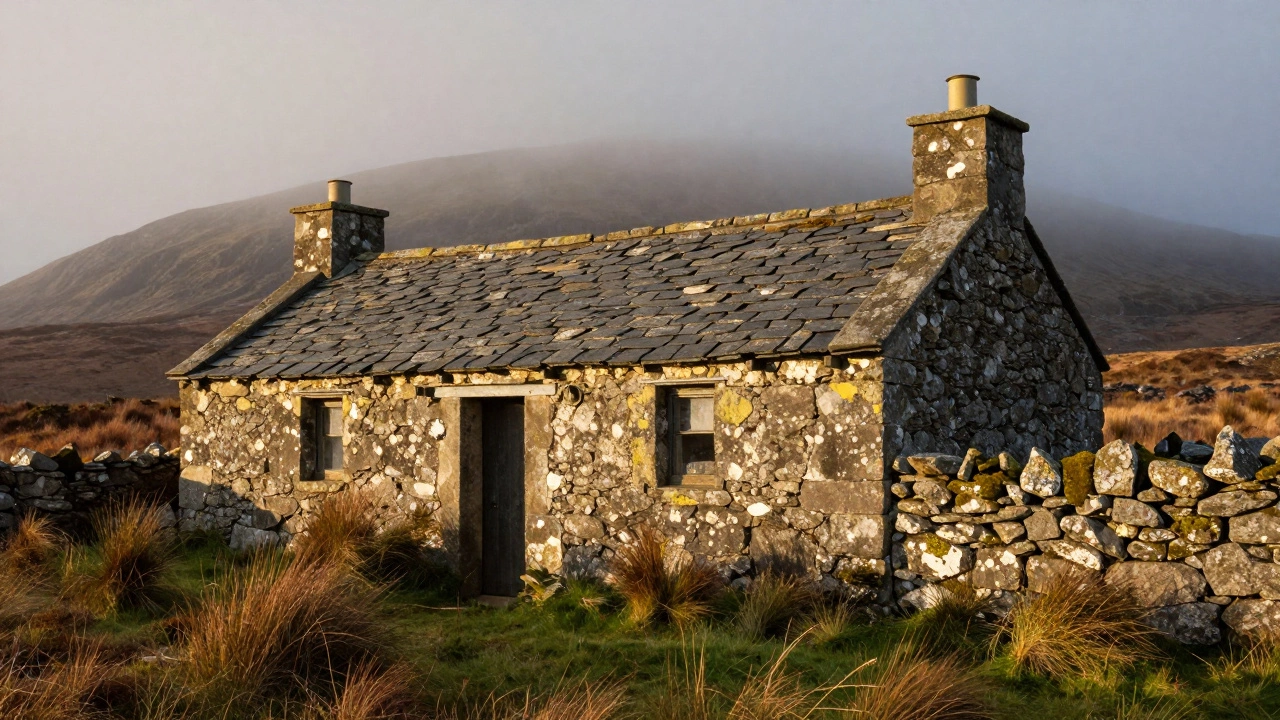
Stone has been used to build homes for over 10,000 years. The oldest standing houses in the world-like those in Çatalhöyük, Turkey, or the megalithic structures in Malta-are made of stone. These buildings have survived earthquakes, floods, fires, and centuries of weather. Modern stone homes, built with proper mortar and drainage, easily last 500 to 1,000 years. Some European cottages built in the 1200s are still occupied today.
Unlike wood or metal, stone doesn’t rot, rust, or warp. It doesn’t need paint or sealants to survive. A well-built stone wall can handle freezing winters, heavy rain, and even salt spray near the coast. In places like the Scottish Highlands or the Italian Alps, stone houses are the norm-not because they’re trendy, but because they’re the only thing that survives the climate.
Concrete: The Modern Contender
Concrete is often called the most used material on Earth, and for good reason. It’s strong, affordable, and versatile. But how long does it really last? The answer depends on how it’s made and how it’s maintained.
Standard reinforced concrete in a dry climate can last 75 to 100 years. But in coastal areas or places with freeze-thaw cycles, it can crack and spall in as little as 30 to 40 years if not properly mixed or sealed. The key is the mix ratio. High-strength concrete with low water-cement ratios, silica fume additives, and proper curing can push lifespan to 150 years or more.
The Hoover Dam, built in 1936, is made of over 3.25 million cubic yards of concrete. It’s still holding back the Colorado River with no major structural issues. That’s 90 years of constant stress-and it’s not even close to failing. But most homes aren’t built like dams. Most use cheaper mixes and thinner reinforcement, which means they won’t last nearly as long.
Brick: Reliable, But Not Eternal
Brick has been a favorite for centuries because it’s fireproof, low-maintenance, and looks good. A well-made clay brick house can easily last 100 to 150 years. In cities like Boston, Philadelphia, and Melbourne, you’ll find brick terraces from the 1800s still standing strong.
But brick has a weakness: mortar. The mortar between bricks is usually the first thing to fail. Over time, it crumbles from moisture, frost, or poor installation. Repointing-that is, replacing old mortar with new-can extend a brick house’s life by another 50 to 100 years. But if you ignore it, water gets in, the bricks absorb it, and they start to spall. Once that happens, you’re looking at expensive repairs.
Modern brick homes built with engineered bricks and waterproof membranes hold up better. But even then, they’re not in the same league as solid stone.
Steel and Timber: The Short-Term Players
Steel framing is common in commercial buildings and some modern homes. It doesn’t burn, and it’s termite-proof. But steel rusts. In humid climates, even coated steel can corrode in 30 to 50 years. Salt air near the ocean accelerates this. There are steel-frame homes in Australia that started showing rust after just 25 years.
Wood is the most common building material in North America and parts of Australia. It’s cheap, easy to work with, and renewable. But it’s also the most fragile. Termites, rot, mold, and fire all target wood. Even pressure-treated lumber starts to degrade after 40 to 60 years. In Australia’s humid north, untreated timber can rot in under 20 years.
There are exceptions-like the 800-year-old wooden temples of Japan, built with cedar and intricate joinery that avoids nails. But those are masterpieces of craftsmanship, not standard construction. For most people, wood is a 50-year material at best.
What About New Materials? Composite Panels, Hempcrete, Cross-Laminated Timber?
There’s a lot of buzz around new materials. Hempcrete is touted as sustainable. Cross-laminated timber (CLT) is being used in tall buildings. Fiber-reinforced polymer panels claim to be indestructible.
Here’s the truth: none of them have stood the test of time. Hempcrete has been around since the 1990s. The oldest hempcrete homes are barely 30 years old. We don’t know if they’ll last 200 years. CLT is even newer. The first CLT apartment buildings in Europe were finished in the 2010s. We’re still waiting to see how they hold up in 100 years.
These materials have benefits-carbon capture, speed of build, insulation-but longevity? Not proven. Stone and brick have 1,000 years of data. New materials have 30.
The Real Winner: Stone, Done Right
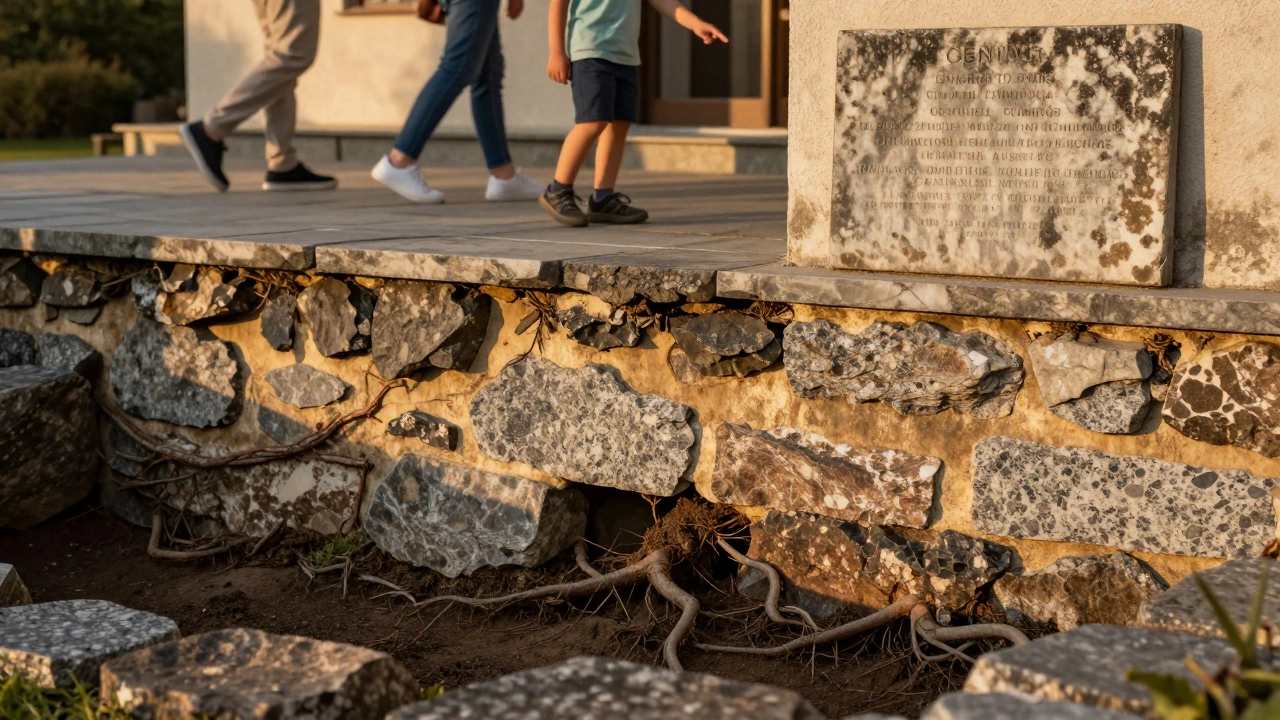
Stone isn’t just the oldest material-it’s the only one that gets stronger with age. Limestone, granite, sandstone, and slate don’t degrade like other materials. They weather slowly, developing a patina that protects them. A granite foundation laid in 1840 in Melbourne’s inner suburbs is still holding up today, no repairs needed.
The trick is construction. Stone must be laid with proper drainage, a solid foundation, and non-corrosive mortar. Lime mortar, used in historic buildings, is more flexible than modern cement. It lets walls breathe, preventing trapped moisture that causes damage. Modern cement, while stronger, can trap water and crack stone over time.
Building with stone is more expensive upfront. It takes skilled labor. But if you’re building a house you want your great-grandchildren to live in, the cost pays off. A stone house doesn’t need replacement. It needs care.
What About Climate? Does It Matter?
Yes. But not in the way you think.
In humid, rainy climates like Melbourne or Seattle, stone handles moisture better than wood or steel. In desert regions like Arizona, stone stores cool air and reduces cooling costs. In cold, snowy areas like Canada or Scandinavia, thick stone walls provide thermal mass that keeps homes warm in winter and cool in summer.
The only climate where stone struggles is where there’s extreme freeze-thaw cycling combined with poor drainage. But that’s not a flaw in stone-it’s a flaw in installation. Properly built, stone survives anywhere.
Final Thought: Build for Time, Not Trends
Most people choose materials based on cost, speed, or what’s popular. But if you’re building a house to last, you’re not building for today. You’re building for the next century.
Stone doesn’t look flashy. It doesn’t come in trendy colors. But it doesn’t need to. It just needs to be there-solid, quiet, unchanging.
If you want a house that will outlive your grandchildren, choose stone. Not because it’s the cheapest. Not because it’s the easiest. But because nothing else comes close.
Is stone the most expensive material to build a house with?
Yes, stone is more expensive upfront than wood, brick, or concrete. Labor costs are higher because it requires skilled masons, and stone itself is heavier and harder to transport. But when you factor in maintenance, repairs, and replacement over 100+ years, stone often ends up cheaper. A wood house might need a full structural rebuild in 60 years. A stone house won’t.
Can you build a modern home with stone?
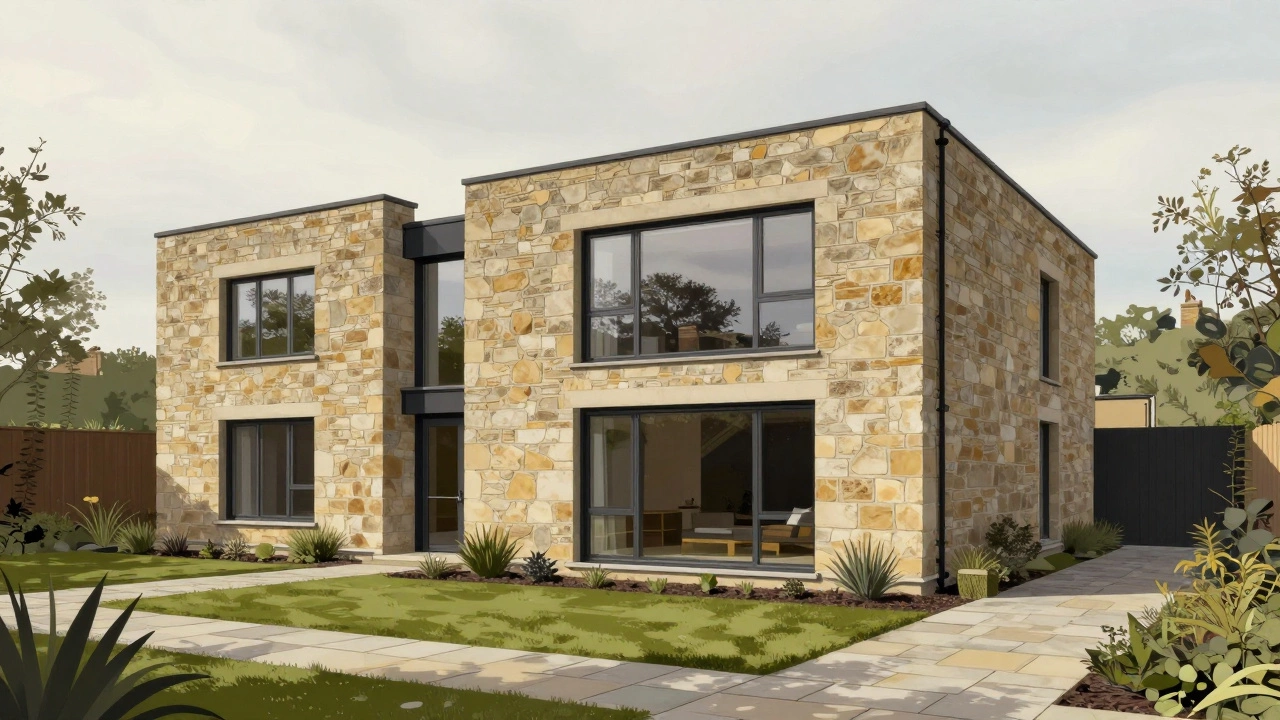
Absolutely. Modern stone homes use thinner stone veneers over structural frames, or full stone walls with advanced insulation and energy-efficient windows. Many high-end homes in Australia, the UK, and the U.S. combine stone exteriors with open-plan interiors and smart systems. Stone doesn’t mean outdated-it means enduring.
What’s better for insulation: stone or brick?
Neither stone nor brick is a great insulator on its own. Both have high thermal mass, meaning they absorb and slowly release heat. That’s good for temperature stability but not for energy efficiency. To insulate properly, you need to add insulation behind or within the walls. Modern stone homes often use insulated concrete forms with stone cladding, or cavity walls with spray foam. The material itself isn’t the insulator-it’s the system around it.
Do stone houses need more maintenance than other materials?
Less. Stone doesn’t need painting, sealing, or pest control. The only maintenance is checking the mortar every 20-30 years and making sure gutters and drainage are working. If water is kept away from the foundation, a stone house needs almost no upkeep. Compare that to wood, which needs staining or repainting every 5-10 years, or steel, which can rust if the coating fails.
Is stone fireproof?
Yes. Natural stone has a fire rating of Class A-the highest possible. It won’t burn, melt, or release toxic fumes. Even in a major house fire, stone walls often remain intact while everything inside is destroyed. That’s why historic stone barns and churches still stand after fires. It’s one of the safest materials you can build with.