Kitchen Appliance Placement Analyzer
Configuration Settings
Layout Safety Rating
Impact Analysis
- Energy Efficiency --
- Fire/Safety Risk --
- Warranty Status --
- Appliance Lifespan --
Select your configuration and click Analyze.
Configure your kitchen layout on the left to see potential risks and efficiency impacts.
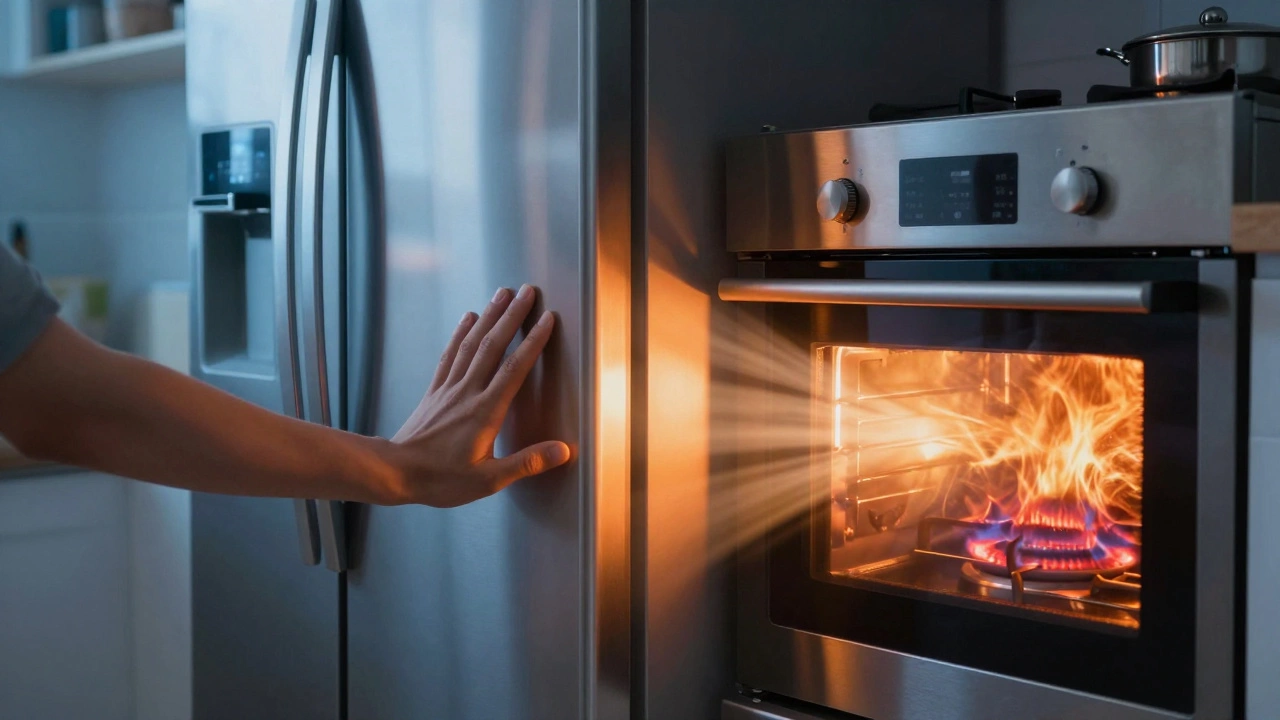
Picture this: you’re cooking dinner. The oven is roaring at 200°C (400°F). You turn around to grab butter for your sauce, and your hand brushes against the side of a refrigerator that’s been working overtime to keep its contents frozen. It’s warm. Uncomfortably warm. That moment of friction isn’t just annoying; it’s a sign that your kitchen layout might be fighting against physics.
The short answer to whether a stove should be next to a refrigerator is no. Most professional designers, building codes, and appliance manufacturers strongly advise against placing these two heavy-duty machines directly side-by-side without significant separation. But why? And what happens if your small apartment or older home doesn’t give you much choice?
The Physics of Heat and Cold
To understand why this placement is problematic, we have to look at how these appliances actually work. A Refrigerator is a large appliance designed to maintain low internal temperatures by removing heat from inside the unit and expelling it outside. This expelled heat usually comes out through vents on the sides or the back of the unit. If you place a hot oven right next to those vents, you are essentially forcing the fridge to work harder to cool down air that is already being heated by the stove.
This creates a vicious cycle. The refrigerator’s compressor runs longer and more frequently to combat the external heat source. This leads to higher electricity bills and increased wear and tear on the motor. In extreme cases, the temperature inside the fridge can rise enough to compromise food safety, causing perishables to spoil faster than they should. According to energy efficiency standards, keeping refrigerators away from direct heat sources like ovens, dishwashers, and direct sunlight is crucial for optimal performance.
Conversely, the Kitchen Stove is a cooking appliance that generates intense localized heat, often exceeding 200 degrees Celsius during baking or boiling. When placed too close to a fridge, the ambient temperature around the fridge rises. This isn't just about energy costs; it's about mechanical failure. Compressors are not designed to operate in high-heat environments for extended periods. Over time, this stress can lead to premature breakdowns, costing you hundreds or even thousands in repairs or replacements.
Safety First: Fire Risks and Accidents
Beyond energy efficiency, there is the matter of physical safety. Kitchens are high-traffic zones where accidents happen quickly. Imagine pulling a hot tray out of the oven. Your natural instinct is to step back or turn slightly. If a refrigerator is immediately adjacent, you risk bumping into it while carrying something scalding hot. This can lead to spills, burns, or knocking over items stored on top of the fridge.
There is also the issue of flammable materials. While modern refrigerators are built with fire-resistant materials, the plastic components, wiring, and insulation within the unit are still vulnerable to prolonged exposure to high heat. Although rare, there have been documented cases where excessive heat from nearby appliances contributed to electrical faults or fires. Building codes in many regions, including Australia and the US, specify minimum clearance distances between heat-generating appliances and other cabinetry or units to mitigate these risks.
Building Codes and Manufacturer Guidelines
If you are renovating or building a new kitchen, you cannot ignore the rulebook. Most major appliance manufacturers, such as Samsung, LG, Bosch, and Miele, explicitly state in their installation manuals that refrigerators should not be installed next to ovens or cooktops. They typically recommend a minimum gap of 10 to 15 centimeters (about 4 to 6 inches) if side-by-side placement is unavoidable, but ideally, they should be separated by other cabinets or counters.
In Australia, the Australian Standard AS/NZS 3000 (Wiring Rules) and local council planning schemes often reference general safety principles regarding appliance placement. While there may not be a single law that says "no fridge next to stove," compliance with manufacturer guidelines is often required for warranty validity. If your fridge breaks down because it was installed in violation of the manual’s heat clearance instructions, the warranty claim will likely be denied. This is a costly oversight that many homeowners make when trying to maximize counter space.
| Placement Scenario | Energy Efficiency | Safety Risk | Warranty Impact |
|---|---|---|---|
| Fridge Directly Next to Stove | Poor (High Energy Use) | High (Burns/Fire) | Voided if damage occurs |
| Fridge Separated by Cabinet | Good | Low | Valid |
| Fridge Across Room | Excellent | None | Valid |
| Fridge Next to Dishwasher | Moderate | Low | Usually Valid |
The Work Triangle: Why Flow Matters
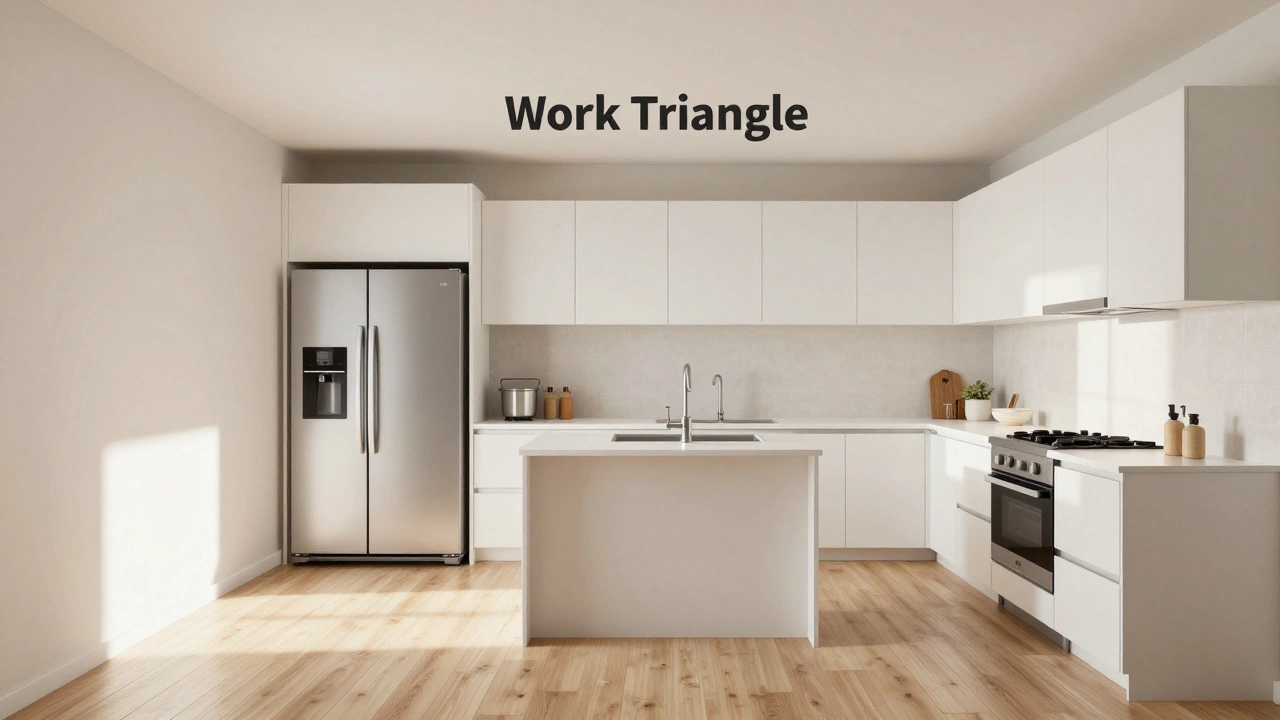
Kitchen design isn’t just about safety; it’s about workflow. The concept of the Kitchen Work Triangle is a design principle that connects the three main work areas: the sink, the stove, and the refrigerator. The goal is to minimize steps and movement while cooking. Ideally, the total distance between these three points should be between 3.6 and 6.7 meters (12 to 22 feet).
Placing the fridge right next to the stove disrupts this triangle. When you take ingredients out of the fridge, you want to move them to the prep area (usually near the sink), not straight to the heat source. Having the fridge adjacent to the stove forces you to cross paths with hot surfaces repeatedly. It creates a bottleneck. Instead of a smooth flow-store, prep, cook-you get a chaotic shuffle where you’re constantly dodging steam, heat, and open cabinet doors.
A better layout places the refrigerator opposite the stove or at least several cabinets away. This allows for a dedicated prep zone between the cold storage and the cooking zone. For example, having a section of countertop between the fridge and the sink gives you space to chop vegetables before moving them to the stove. This separation reduces clutter and makes cooking feel less like an obstacle course.
What If You Have No Choice? Small Space Solutions
Let’s be real: not everyone has a sprawling gourmet kitchen. Many people live in apartments, tiny homes, or older houses where square footage is premium. If your floor plan dictates that the fridge must go next to the stove, don’t panic. There are ways to mitigate the risks.
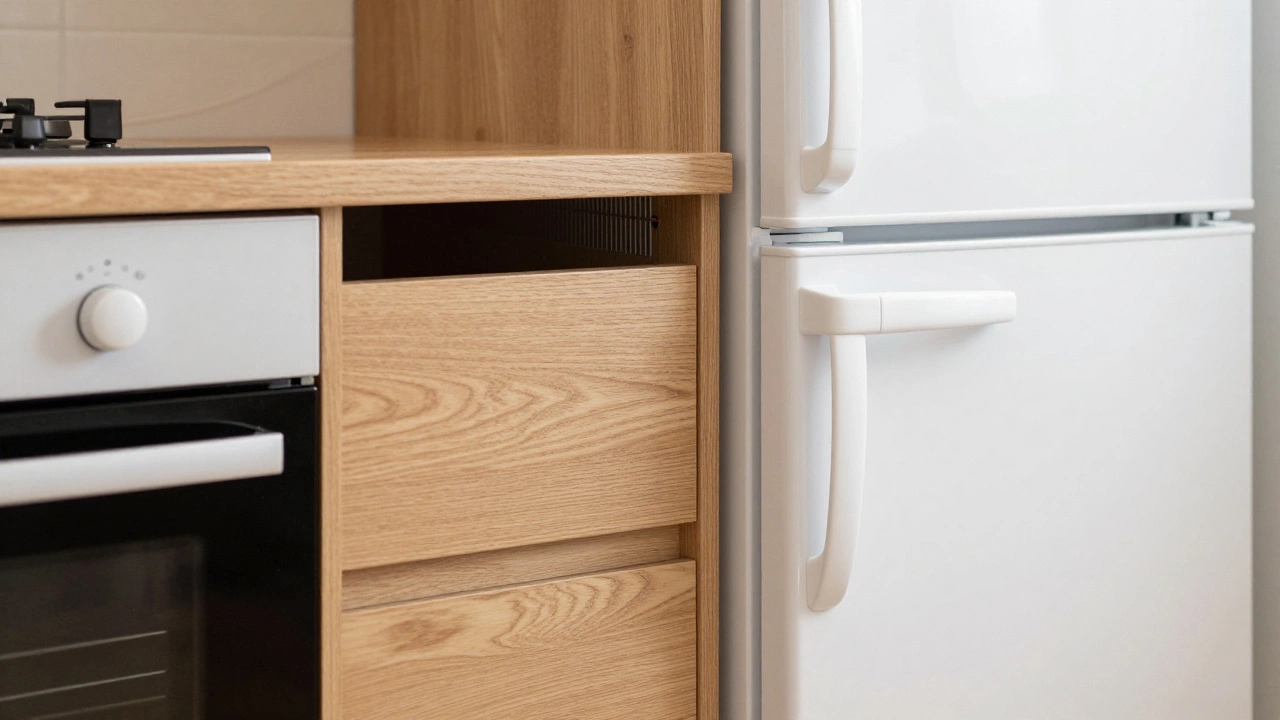
- Add a Buffer: Install a narrow cabinet or a drawer unit between the two appliances. Even a 15-30 cm gap can significantly reduce heat transfer. This buffer acts as an insulator, protecting the fridge from the oven’s radiant heat.
- Use Insulation: If you can’t add furniture, consider adding thermal insulation panels to the side of the refrigerator facing the stove. High-quality reflective insulation can help deflect some of the heat.
- Choose Side-Vent Fridges: Some modern refrigerators vent heat from the bottom or front rather than the sides. Check the specifications before buying. A bottom-vent model will be safer to place near a stove than a traditional side-vent one.
- Leave Clearance: Ensure there is adequate air circulation around both appliances. Do not push them flush against each other. Follow the manufacturer’s recommended minimum clearance, which is usually at least 10 cm on all sides.
- Monitor Temperature: Keep an eye on your fridge’s internal temperature. If you notice it struggling to stay cold, consider using a thermometer to monitor it. Adjusting the thermostat slightly lower might help, but watch your energy bill.
Alternatives to Consider
If you are designing a new kitchen or doing a major renovation, think creatively about placement. Here are some common layouts that avoid the fridge-stove clash:
- The Galley Kitchen: Place the fridge on one wall and the stove on the opposite wall. This maximizes the work triangle and keeps heat sources separate.
- The L-Shaped Kitchen: Put the fridge in one corner and the stove along the perpendicular wall. This provides a natural break between the two zones.
- The Island Setup: Move the stove to a central island and place the fridge against a perimeter wall. This is ideal for social cooking, as the chef faces the room while keeping the fridge accessible but distant.
- Pantry Integration: If space is tight, consider a column-style fridge or integrating it into a tall pantry cabinet. This can allow for better airflow management compared to a standard freestanding model.
Long-Term Implications
Ignoring these guidelines might seem like a minor compromise now, but the long-term costs can add up. A refrigerator that works twice as hard will consume significantly more electricity over its 10-15 year lifespan. In Melbourne, where summer temperatures can soar, this effect is amplified. You’re paying for cooling your house and cooling your fridge simultaneously, with the latter fighting a losing battle against the oven next door.
Moreover, resale value matters. Home buyers and inspectors are increasingly knowledgeable about efficient design. A poorly laid-out kitchen can be a red flag during inspections, potentially lowering the perceived value of your home. Investing in proper layout now saves money on energy, repairs, and potential future renovations.
Can I put my fridge next to the stove if I use a microwave instead of an oven?
While microwaves generate less radiant heat than conventional ovens, they still produce warmth and electromagnetic fields. It is still not recommended to place a fridge directly next to a microwave for the same reasons: energy inefficiency and potential interference with the fridge’s electronics. However, the risk is lower than with a full-sized oven. Always check the manufacturer’s guidelines for both appliances.
How far should a refrigerator be from a heat source?
Most manufacturers recommend a minimum clearance of 10 to 15 centimeters (4 to 6 inches) between a refrigerator and any heat source, including stoves, dishwashers, and radiators. Ideally, you should separate them by at least one cabinet or counter space to ensure proper ventilation and heat dissipation.
Does putting a fridge next to a stove void the warranty?
It depends on the brand and the specific terms of the warranty. Many warranties include clauses that state coverage is void if the appliance is installed in violation of the user manual. If the manual explicitly warns against placing the fridge next to a heat source and you do so anyway, and the compressor fails due to overheating, the claim will likely be denied. Always read the fine print.
Is it worse to put a fridge next to a dishwasher or a stove?
A stove is generally worse because it generates higher and more consistent heat. Dishwashers do produce heat during drying cycles, but it is intermittent and usually lower in intensity than an oven. However, neither is ideal. Both appliances benefit from separation to ensure longevity and efficiency. If forced to choose, a dishwasher is the lesser evil, but a buffer cabinet is still recommended.
Can I install a panel-ready fridge next to a stove?
Panel-ready fridges are designed to blend into cabinetry, but they still require proper ventilation. The panel itself does not block heat transfer. You must follow the same clearance rules as standard fridges. Often, these models require specific venting configurations (top or bottom) that need to be planned during the cabinet design phase. Consult with your installer to ensure the panel doesn’t trap heat against the stove.