Bedroom Furniture Selector
Answer these quick questions to find the perfect piece for your room.
You walk into a furniture store or scroll through an online catalog, and you see two pieces of wood that look suspiciously similar. One has a mirror attached to the top. The other doesn't. Or maybe they both have mirrors. Maybe one is low and wide, the other tall and narrow. You're trying to buy bedroom furniture, but suddenly you're stuck in a semantic loop: Is this a dresser? A chest of drawers? A dressing table? A vanity?
Here's the truth: In modern Australian homes, these terms are often used interchangeably, which causes massive confusion when you're trying to match your style or measure your space. But there are distinct functional and historical differences. Knowing them saves you from buying a piece that looks great in the photo but fails at its primary job-whether that's storing socks or applying eyeliner.
The Core Definition: Storage vs. Grooming
Let's cut through the noise. The fundamental difference lies in the primary purpose of the item.
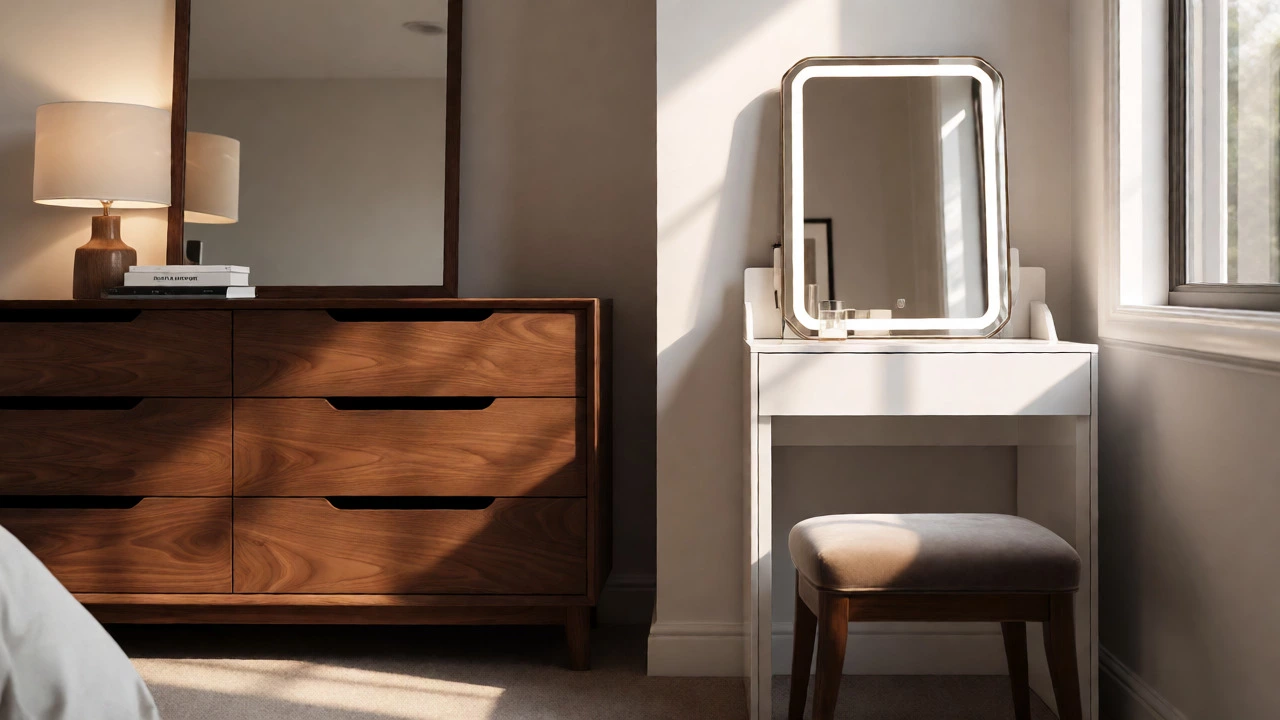
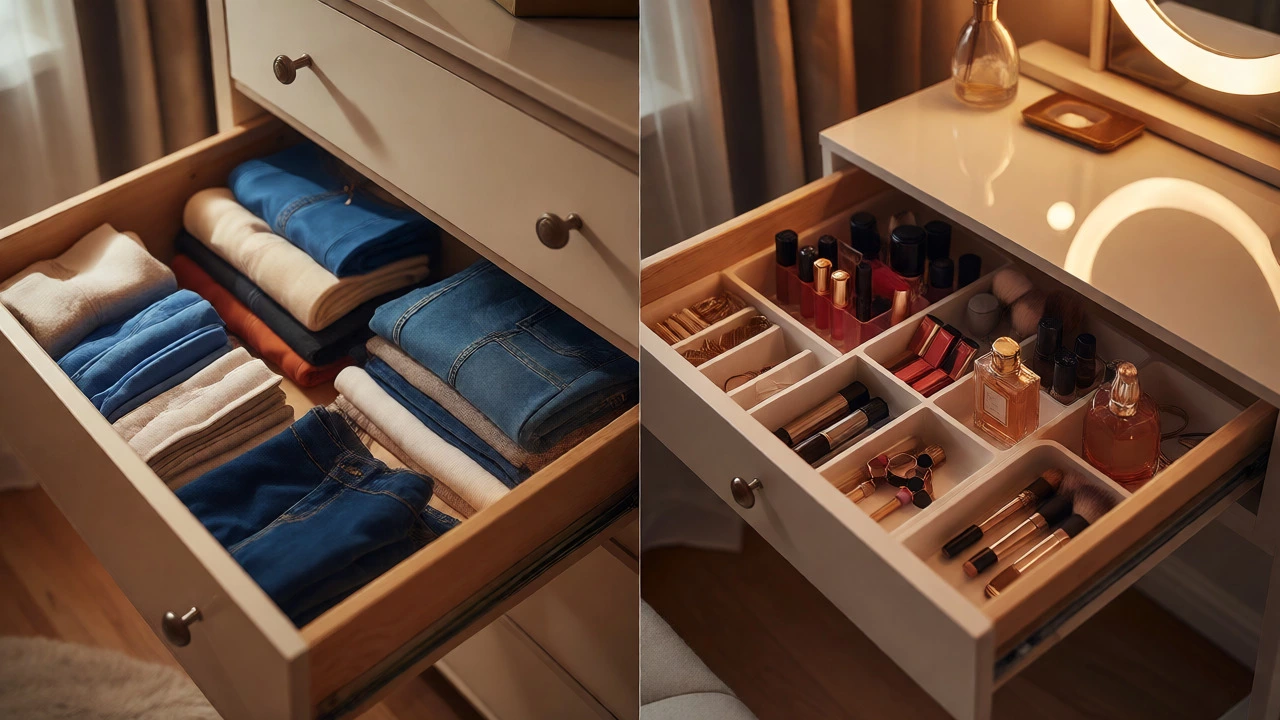
A Dresser is defined as a low, wide chest of drawers primarily designed for clothing storage. Its DNA is built around capacity. It usually features multiple rows of shallow drawers (for underwear, socks, folded shirts) and sometimes deeper bottom drawers for jeans or jumpers. While many dressers come with a large mirror on top, that mirror is an accessory, not the core function. If you remove the mirror, it’s still a perfectly good dresser.
In contrast, a Dressing Table is a specialized desk-like unit designed specifically for personal grooming, makeup application, and hair styling. Often called a Vanity in North America, its design prioritizes the user's experience while sitting down. It typically includes a smaller footprint, a dedicated chair or stool, and storage optimized for small beauty products rather than bulk clothing. If you remove the mirror from a dressing table, you’re left with a weird little desk that isn’t very good at storing clothes.
Anatomy of a Dresser
Think of a dresser as the workhorse of the bedroom. It’s broad, stable, and meant to hold weight. Historically, dressers were placed against a wall so people could "dress" in front of them-hence the name. Today, they are central to bedroom organization.
- Dimensions: Typically 120cm to 180cm wide and only 75cm to 90cm high. This height allows you to easily reach the top surface without stretching.
- Drawer Configuration: Usually six to eight drawers. The top row might be divided into three small compartments for accessories, while the lower rows are wider for folded garments.
- Surface Area: The top is flat and expansive. It’s perfect for stacking books, placing lamps, or displaying decor. Because it’s low, it doesn’t visually overwhelm a room.
- Mirror Integration: Optional. Many modern minimalists skip the mirror entirely to keep lines clean.
If you have a lot of clothes and limited closet space, a dresser is non-negotiable. It replaces the need for hanging every single item. In Melbourne apartments where built-in wardrobes can be surprisingly shallow, a deep dresser becomes a lifeline for bulky winter knits.
Anatomy of a Dressing Table
A dressing table is intimate. It’s designed for one person to sit and spend time. Unlike the dresser, which serves the whole household’s storage needs, the dressing table serves the individual’s routine.
- Dimensions: Narrower width (60cm to 90cm) but often taller due to the attached mirror. Depth is sufficient to allow elbows to rest comfortably while working on makeup.
- Storage Type: Drawers are shallower and more numerous. Why? Because you’re storing lipsticks, brushes, and jewelry-not sweaters. Some models feature open shelving or glass-topped surfaces to display perfumes.
- Seating: Essential. You cannot use a dressing table effectively while standing. It requires a matching stool or chair tucked underneath when not in use.
- Mirror Function: Critical. The mirror is usually larger relative to the table size and often angled for optimal lighting. Some include built-in LED lights to simulate daylight.
This piece is about ritual. It’s where you start your day. If you value having a dedicated spot for skincare and makeup away from the bathroom sink (which is often cluttered with toothpaste and towels), a dressing table is a luxury worth considering.
Head-to-Head Comparison
When you’re standing in the showroom, here is how to decide quickly based on your specific needs.
| Feature | Dresser | Dressing Table |
|---|---|---|
| Primary Purpose | Clothing storage | Grooming & Makeup |
| Typical Width | Wide (120cm+) | Narrow (60-90cm) |
| Height | Low (Waist-height) | Taller (Desk-height + Mirror) |
| Seating Required | No | Yes |
| Storage Capacity | High (Bulk items) | Low (Small accessories) |
| Best For | Master bedrooms, shared spaces | Smaller rooms, dedicated beauty routines |
When to Choose Which
Don’t just follow trends. Follow your lifestyle.
Choose a Dresser if:
- You have significant clothing volume that doesn’t fit in your wardrobe.
- You share the bedroom with a partner who also needs storage.
- You prefer a minimalist aesthetic where fewer visual elements (like chairs) are visible.
- You need a surface for a TV or large decorative objects.
Choose a Dressing Table if:
- Your makeup and skincare collection is extensive and needs organized, accessible storage.
- You have a spare corner in the bedroom or a separate walk-in robe area.
- You want a designated "me-time" zone for getting ready.
- You live in a small apartment where a full-width dresser would block traffic flow.
What if you want both? In larger master suites, it’s common to pair a dresser for storage with a separate dressing table for grooming. However, in smaller Australian homes, this double-up eats up valuable floor space. A hybrid solution exists: some manufacturers make "vanity dressers"-wide units with a central section featuring a pull-out mirror and shallow drawers, flanked by deeper clothing drawers. These are clever compromises but often compromise on depth for either function.
Common Misconceptions and Pitfalls
One major error people make is assuming all chests of drawers are dressers. Technically, a "chest of drawers" is the generic term. A dresser is a type of chest of drawers that is wide and low. A tall, narrow chest of drawers is often called a "tallboy" or "highboy." Don’t let salespeople confuse you. If it’s over 100cm high and under 80cm wide, it’s likely a tallboy, not a dresser. Tallboys are great for tight spaces but terrible for displaying items on top because everything falls off.
Another pitfall is ignoring electrical requirements. If you’re buying a dressing table with integrated lights, check if it needs a power point nearby. Most bedrooms don’t have outlets positioned at vanity height. You’ll end up with ugly extension cords trailing across the floor unless you plan ahead.
Style Matters: Matching Your Home
These pieces dictate the vibe of the room. A dark walnut dresser feels grounded and traditional. A white lacquer dressing table feels airy and modern. In Melbourne, we see a mix of Victorian heritage styles and sleek contemporary builds.
For heritage homes, antique-style dressers with brass handles add character. For new builds, floating dressers (wall-mounted) create a sense of spaciousness. Dressing tables offer more stylistic freedom because they are focal points. A gold-framed round mirror on a marble-top table signals glamour; a rattan-backed stool with a wooden frame signals boho-chic.
Final Thoughts on Placement
Where you put these items affects their usability. Place a dresser along the longest wall to anchor the room. Ensure there’s at least 60cm of clearance in front so you can fully extend the drawers without hitting the bed.
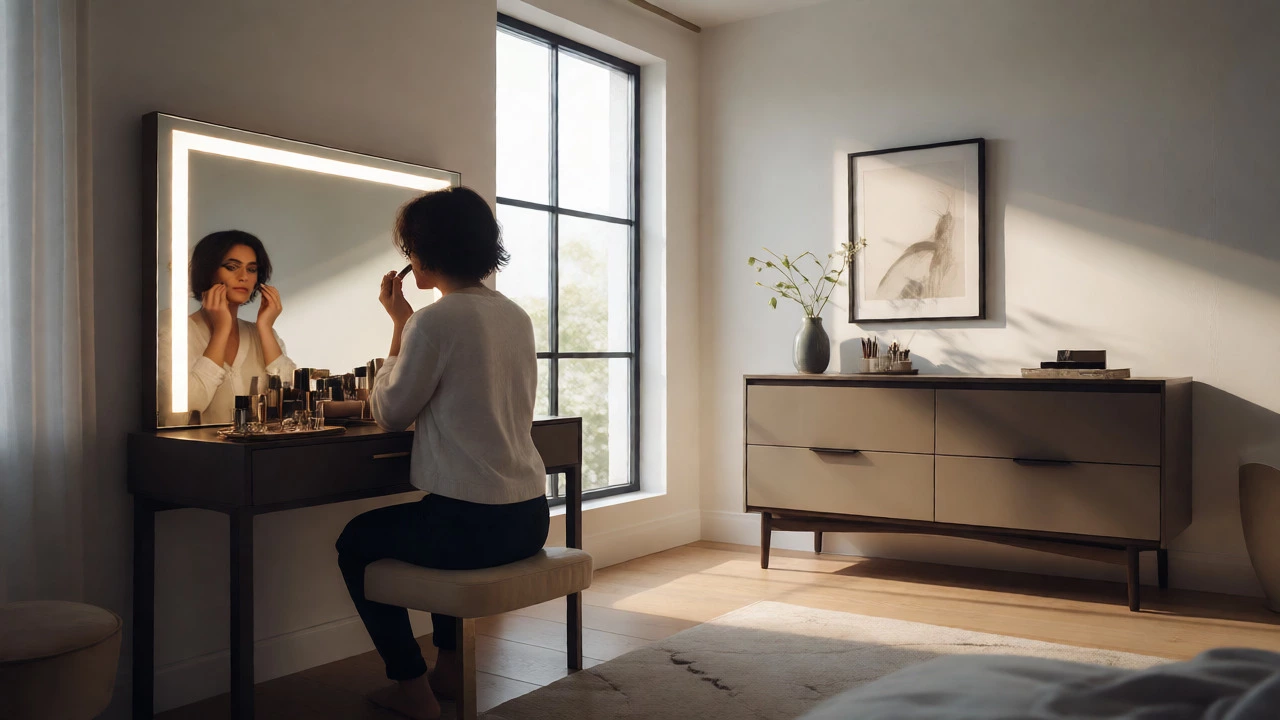
Place a dressing table near natural light sources. Morning sun helps you apply makeup accurately. Avoid placing it directly opposite a window, though, as glare can make it hard to see yourself. A perpendicular position to the window is ideal. Also, consider privacy. If your dressing table faces the door, you might feel exposed while changing or grooming. Positioning it in a nook or behind a screen can solve this.
Ultimately, the difference between a dresser and a dressing table comes down to what you do most in your bedroom. Do you spend more time folding laundry or blending foundation? Answer that, and the right choice becomes obvious.
Can I use a dresser as a dressing table?
Yes, but with limitations. You can place a tabletop mirror on a dresser and use it for grooming. However, dressers are often too low for comfortable seated grooming, leading to poor posture. Additionally, dresser drawers are usually too deep for organizing small makeup items efficiently, requiring extra organizers inside the drawers.
Is a vanity the same as a dressing table?
In Australia and the UK, "dressing table" is the common term. In North America, "vanity" is the standard term for the same piece of furniture. They refer to the identical concept: a desk-like unit with a mirror for personal grooming. There is no functional difference between the two terms.
How much space do I need for a dressing table?
You need approximately 1 meter of width for the unit itself, plus at least 60-70cm of clearance in front for the chair and your legs. Total space required is roughly 1.7m x 1m. If you have less than this, consider a wall-mounted fold-down vanity instead.
Do dressers always have mirrors?
No. Mirrors on dressers are optional accessories. Many modern interior designs omit mirrors to maintain clean lines. If you buy a dresser without a mirror, you can hang a separate mirror on the wall above it, which offers more flexibility in size and shape.
Which is better for small bedrooms?
It depends on your priorities. A tallboy (vertical chest of drawers) saves floor space compared to a wide dresser. A compact dressing table takes up less width than a dresser but requires seating space. For very small rooms, a combination unit or a wall-mounted shelf system might be superior to either standalone piece.