
Room Mood & Lighting Designer
Mood Preview
Quick Takeaways:
- Warmth is key: Stick to temperatures between 2700K and 3000K for a welcoming vibe.
- Layer your light: Combine ambient, task, and accent lighting to avoid the "hospital look."
- Avoid overhead glares: Use lamps and wall sconces to soften the atmosphere.
- Control is everything: Install dimmers to shift the mood from "cleaning day" to "date night."
The Secret of Color Temperature
If you want to know what lighting is most attractive, you have to start with the Color Temperature is the characteristic of visible light that affects the perceived color of the light, measured in Kelvins (K). This is where most homeowners go wrong. They buy "daylight" bulbs for every room, resulting in a sterile, blue-ish tint that feels more like a pharmacy than a home.
For a truly attractive environment, you want Warm White light. In a residential setting, bulbs rated between 2700K and 3000K mimic the soft glow of a sunset or a fireplace. This spectrum triggers a relaxation response in the brain and makes skin tones look healthier and warmer. When you use 5000K bulbs in a bedroom, you're essentially telling your brain it's noon in the middle of July, which kills the mood and disrupts your sleep cycle.
Think about the difference between a cozy cafe and a dentist's office. The cafe uses warm, low-Kelvin lighting to make you linger. The dentist uses high-Kelvin, cool lighting so they can see every detail with clinical precision. Unless you're performing surgery in your kitchen, lean toward the warmer end of the scale.
Stop Relying on the "Big Light"
We've all done it: walking into a room and flipping the single switch on the wall that turns on one giant, blinding ceiling fixture. Designers call this "the big light," and it is almost never attractive. Why? Because it creates harsh shadows under the eyes and flattens the dimensions of the room.
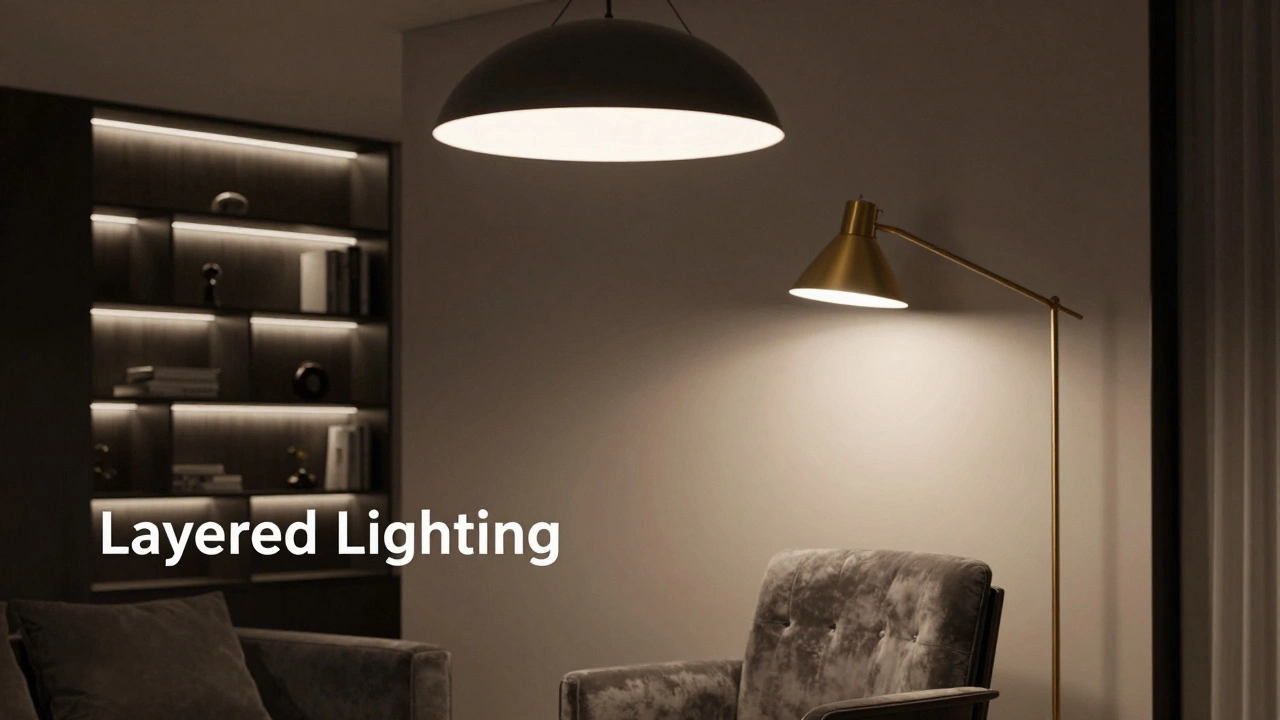
To fix this, you need to implement Layering Light, which is the practice of using multiple light sources at different heights. This creates depth and visual interest. Instead of one bright source, you distribute the light across the room.
| Layer Type | Primary Purpose | Common Examples | Vibe Created |
|---|---|---|---|
| Ambient | General visibility | Pendant lights, recessed cans | Foundation/Base |
| Task | Focused activity | Reading lamps, under-cabinet LEDs | Functionality |
| Accent | Highlighting features | Art lights, LED strips, sconces | Drama and Luxury |
When you combine these, you get a balanced look. For example, in a living room, your ambient light might be a dimmed ceiling fixture, your task light is a sleek floor lamp by your favorite chair, and your accent light is a small LED strip behind the TV or illuminating a bookshelf. This variety tricks the eye into perceiving the space as more expensive and thoughtfully designed.
The Power of Indirect and Diffused Light
Direct light-where the bulb is visible or the beam hits a surface head-on-is often jarring. Attractive lighting is almost always diffused. This means the light is bounced off a surface or passed through a material that softens the edges of the beam.
Consider Diffused Lighting as a filter for your home. Using a lampshade, a frosted glass globe, or even pointing a spotlight toward a white wall instead of into the center of the room creates a soft glow. This removes the "hot spots" of light and creates a seamless transition between light and shadow.
A pro move here is using Cove Lighting. This involves placing LED strips in a recessed ledge along the ceiling. The light reflects off the ceiling and washes down the walls. It mimics natural skylights and makes a room feel taller and airier without the glare of a traditional fixture.
Matching Lighting to the Room's Purpose
Not every room should be lit the same way. What's attractive in a bathroom is completely different from what's attractive in a bedroom. You have to balance the "mood" with the "mission" of the space.
In the Bedroom, the goal is sanctuary. Use low-wattage lamps on nightstands and avoid ceiling lights entirely when winding down. The most attractive bedroom lighting is low-level and warm, often utilizing a Dimmable Switch to transition from morning wake-up to evening relaxation.
In the Kitchen, you need a mix. Bright, cool-white lights under the cabinets are great for chopping vegetables (task lighting), but a set of warm Pendant Lights over an island adds a touch of elegance and warmth (accent/ambient lighting). The contrast between the high-function task areas and the cozy social areas is what makes a kitchen feel professional yet inviting.
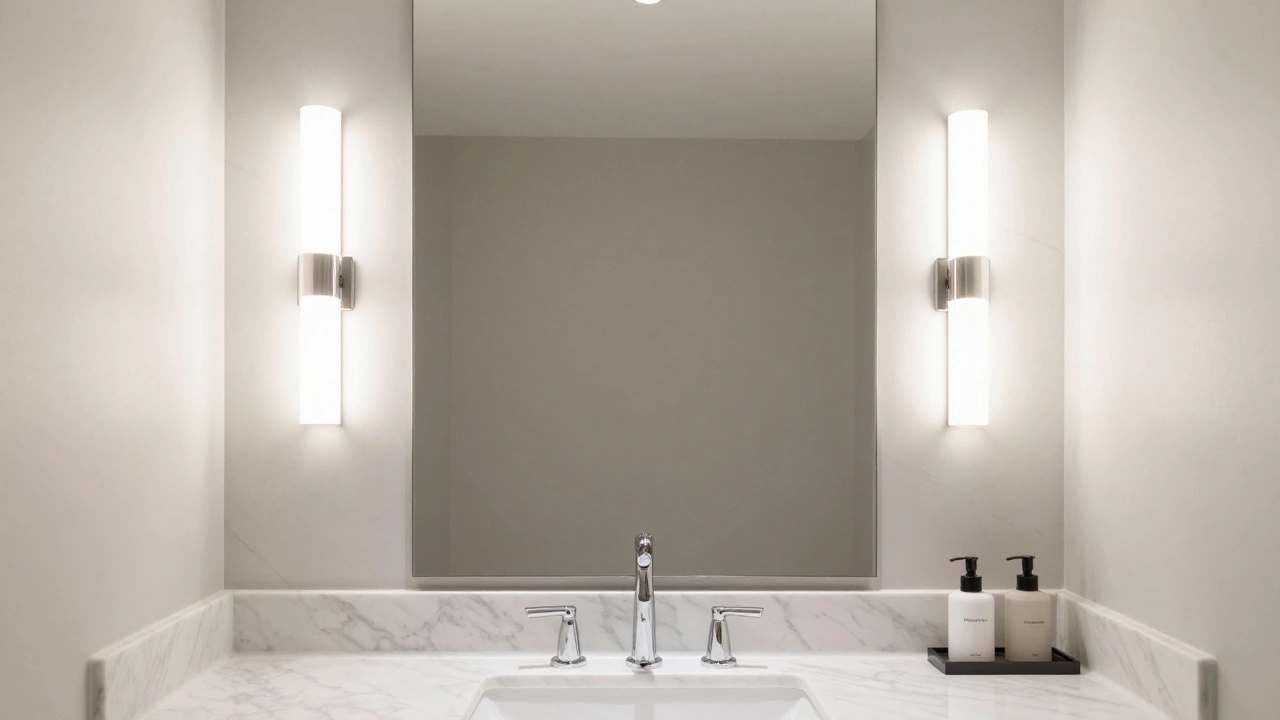
The Bathroom is the trickiest. If you put a single light overhead, you'll get dark circles under your eyes in the mirror. The most attractive bathroom lighting uses vertical sconces on either side of the mirror. This fills in the shadows on your face, creating a flattering, even glow that makes you look better in the mirror-which, let's be honest, is the only lighting that actually matters in a bathroom.
Common Lighting Mistakes That Kill the Vibe
Even with the right bulbs, a few common errors can ruin the aesthetic. First, beware of "the shadow gap." This happens when you have a bright light in the center of the room but the corners are pitch black. This makes a room feel smaller and slightly eerie. Use a small table lamp in a far corner to "push" the light outward and open up the space.
Second, ignore the Color Rendering Index (CRI). CRI is a measure of how accurately a light source reveals the true colors of objects. Cheap LEDs often have a low CRI, which can make your expensive navy blue sofa look slightly green or your skin look gray. Look for bulbs with a CRI of 90 or higher. It's the difference between a room that looks "okay" and one that looks like a professional photo shoot.
Lastly, don't forget about the hardware. A beautiful light fixture with a terrible bulb is a waste; but a great bulb in a plastic, dated fixture can also bring down the energy. Choose fixtures that complement your style, but prioritize the light quality first.
What is the best bulb for a cozy living room?
Go for a "Warm White" LED bulb in the 2700K to 3000K range. Look for one with a high Color Rendering Index (CRI 90+) so your furniture colors look natural. Avoid "Daylight" or "Cool White" bulbs, as these can make a living room feel cold and clinical.
How do I stop my room from looking too dark without using the ceiling light?
The best way is to add "points of light" around the room. Place a floor lamp in a dark corner, add a small table lamp on a sideboard, and use LED strips behind a TV or under a shelf. By spreading the light sources, you eliminate dark pockets and create a more balanced, attractive glow.
Are smart bulbs actually better for mood lighting?
Yes, primarily because they allow you to adjust the color temperature and brightness on the fly. You can set a "Bright White" mode for cleaning the house and a "Warm Amber" mode for evening relaxation without needing to change physical bulbs or install multiple switches.
Why does my bathroom mirror make me look washed out?
This usually happens because your light source is coming from directly above. Overhead lighting creates shadows under the eyes and nose. To fix this, install wall sconces at eye level on both sides of the mirror to provide cross-lighting that fills in those shadows.
What is the difference between Lumens and Watts?
Watts measure how much energy a bulb consumes, while Lumens measure the actual brightness of the light. Since LEDs use very little energy, you should ignore the wattage and look at the Lumens to determine how bright the light will be in your space.
Next Steps for a Better Home
If you're not ready to rewire your whole house, start with the low-hanging fruit. Swap out your most-used bulbs for 2700K warm white LEDs. Then, buy one single lamp for a corner that currently feels dark. Once you see the difference a single point of soft light makes, you'll probably find yourself wanting to ditch "the big light" for good.
For those looking to upgrade further, consider adding plug-in dimmers to your existing lamps. This gives you instant control over the atmosphere without needing an electrician. Finally, experiment with the placement of your lights-sometimes moving a lamp just two feet to the left can completely change how the shadows fall and make the whole room feel more attractive.