Wallpaper Style Recommender
Your Room
Recommended Wallpaper Style
Select your room type and style to see your personalized recommendation.
Wallpaper isn’t coming back-it never left. But in 2025, it’s doing something new: talking louder, feeling deeper, and looking more alive than ever. No more boring floral prints or beige grids. This year’s wallpaper isn’t just a backdrop. It’s a statement, a texture, a mood. And if you’re thinking about updating your walls, you need to know what’s actually happening on the ground-not just what’s trending in magazines.
Texture Is the New Pattern
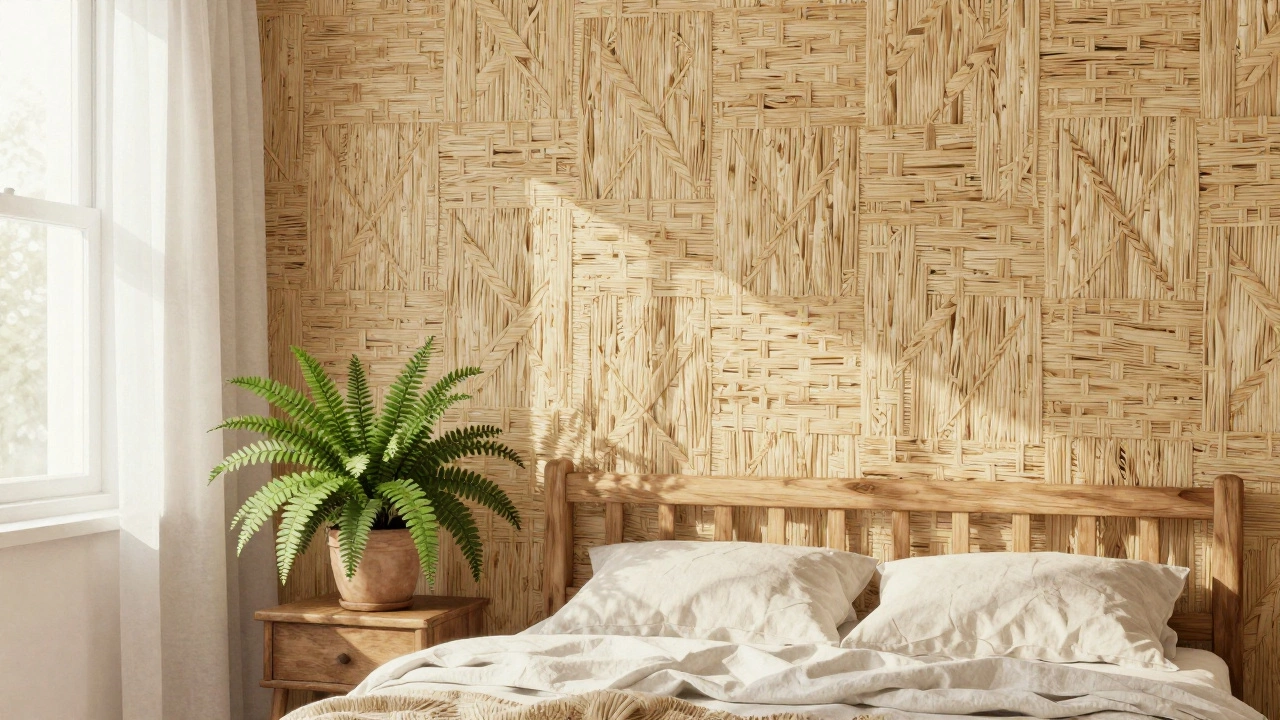
In 2025, wallpaper isn’t about what’s printed on it-it’s about what it feels like. Designers are skipping flat surfaces entirely. Instead, you’re seeing walls covered in deep, tactile textures: woven grasscloth, hand-poured plaster finishes, embossed linen, and even recycled paper that mimics the roughness of stone. These aren’t just decorative-they’re sensory. Walk into a living room with textured wallpaper and you don’t just see it. You want to touch it. That’s the point.
Brands like Zoffany and de Gournay have pushed this forward with collections that use natural fibers and hand-applied techniques. One popular material? Seagrass. It’s durable, eco-friendly, and adds a subtle, organic rhythm to any space. It works best in bedrooms, studies, or anywhere you want calm energy. Don’t expect smooth. Expect dimension.
Dark, Moody Backdrops Are Everywhere
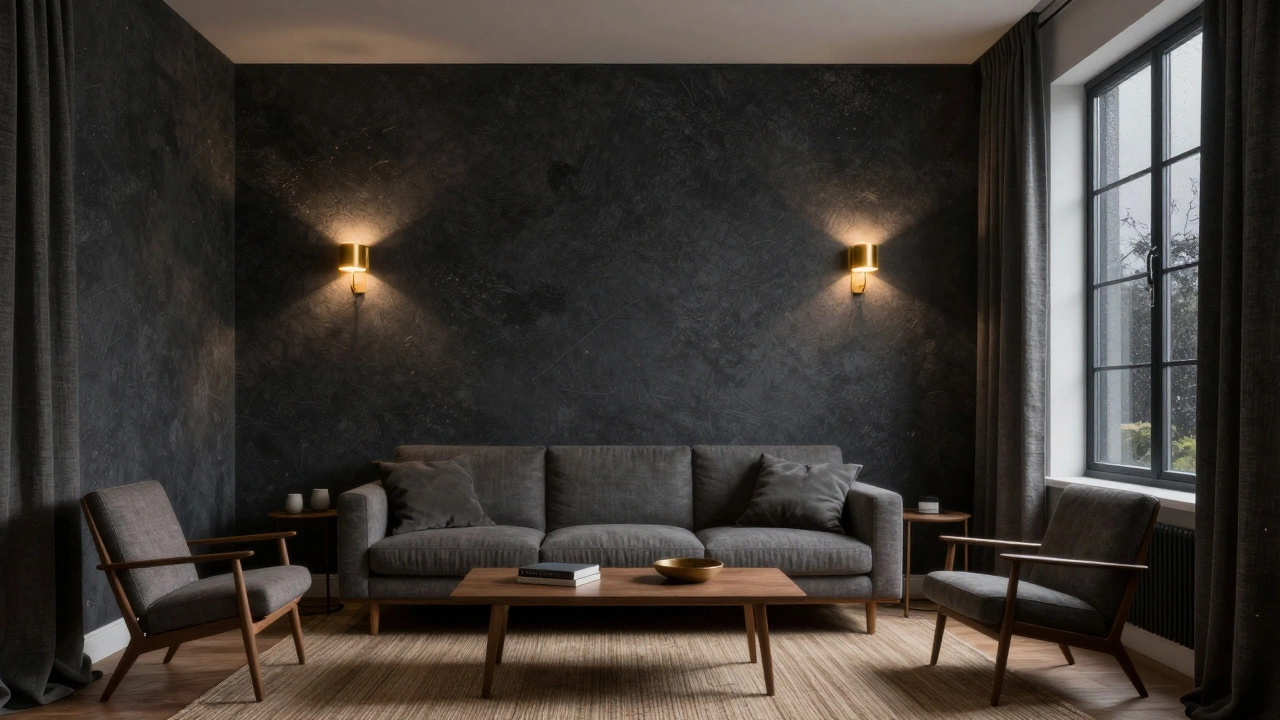
Remember when people were scared of dark walls? That’s over. In 2025, deep charcoal, forest green, and midnight blue aren’t just acceptable-they’re the default choice for feature walls. You’ll see them in living rooms, dining areas, even home offices. The trick? Pairing them with warm lighting and minimalist furniture. A dark wallpaper doesn’t make a room smaller. It makes it cozier, richer, more intimate.
One of the most talked-about wallpapers this year is a matte black with subtle metallic flecks. It looks like ink spilled on velvet. It’s not shiny. It doesn’t reflect light. It absorbs it. That’s why it works so well in spaces with large windows or high ceilings. In Melbourne, where winter days are short and gray, this trend is especially popular. People aren’t just decorating-they’re creating retreats.
Geometric Chaos, Not Clean Lines
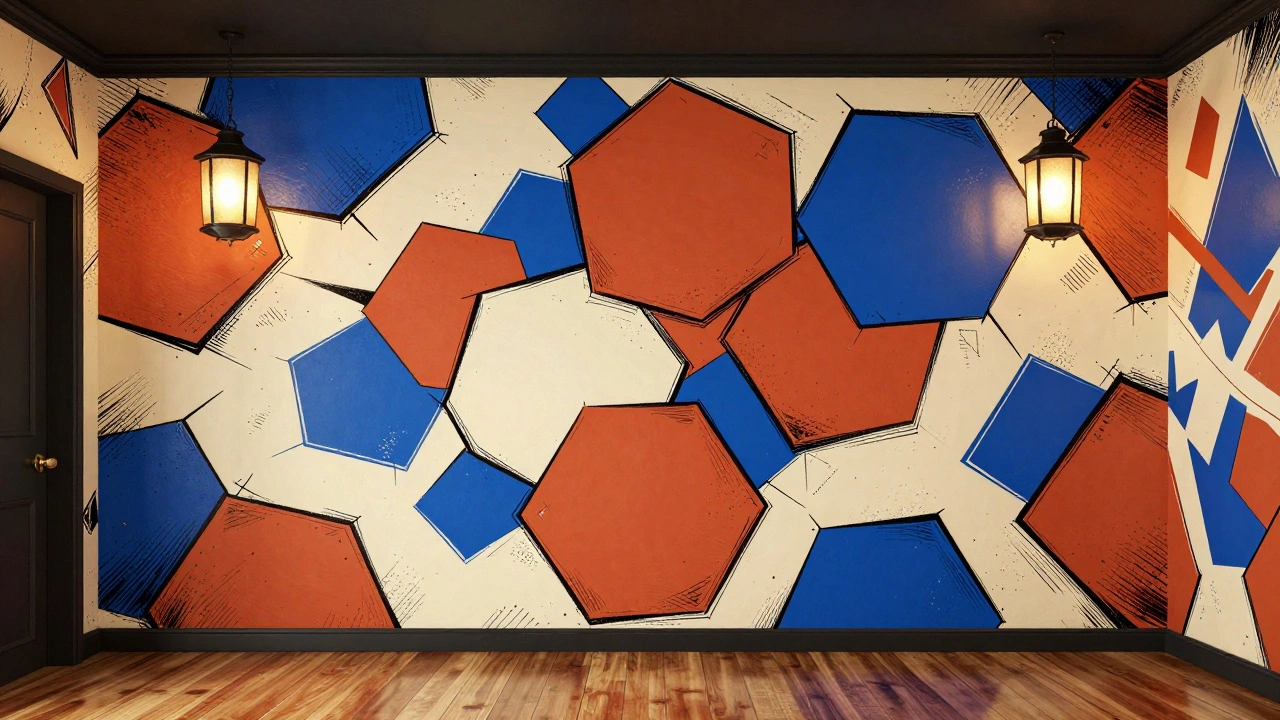
Geometry is still in, but it’s no longer neat. Think asymmetrical triangles, overlapping circles, and fractured hexagons that look like they were drawn by hand and then slightly smudged. This isn’t 1980s wallpaper. It’s more like abstract street art translated onto a wall. The effect? Dynamic, unexpected, and full of energy.
Designers are mixing these bold patterns with neutral backgrounds to avoid overwhelming the space. A single wall in a bedroom might feature a chaotic, colorful geometric design, while the rest of the room stays calm with linen curtains and wooden floors. It’s about balance. You want to feel stimulated, not attacked.
Botanicals, But Not What You Think
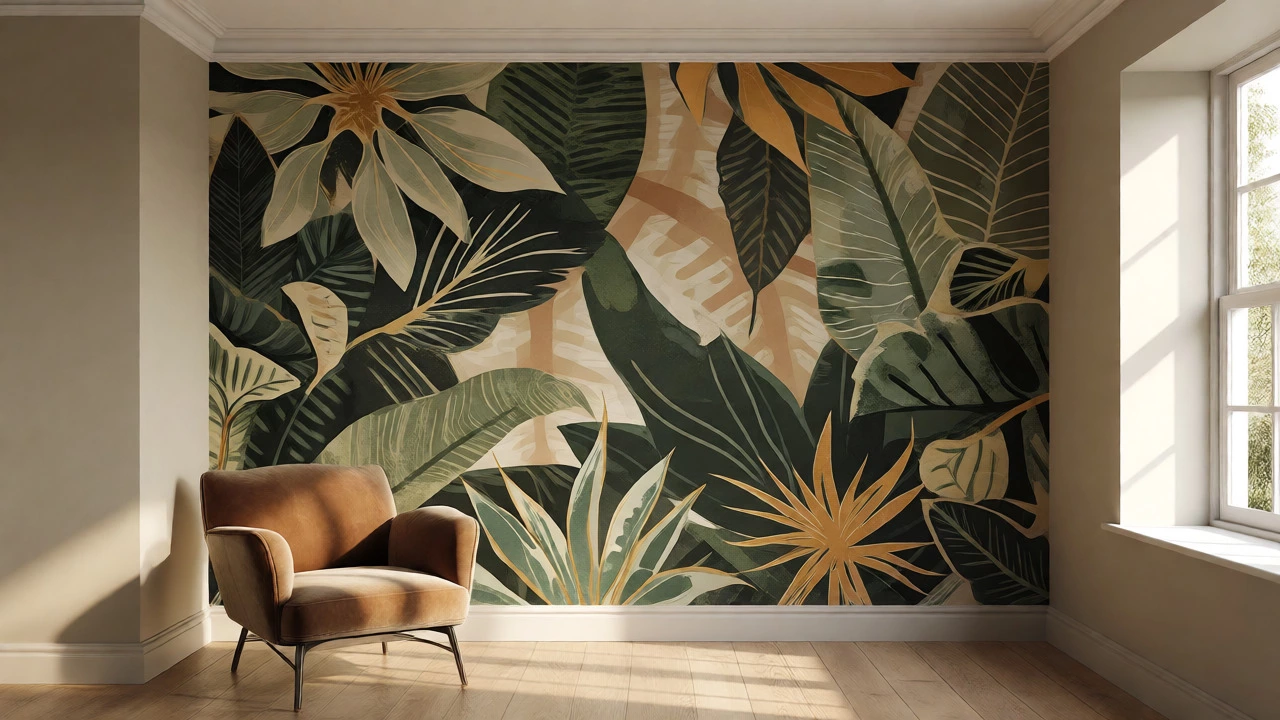
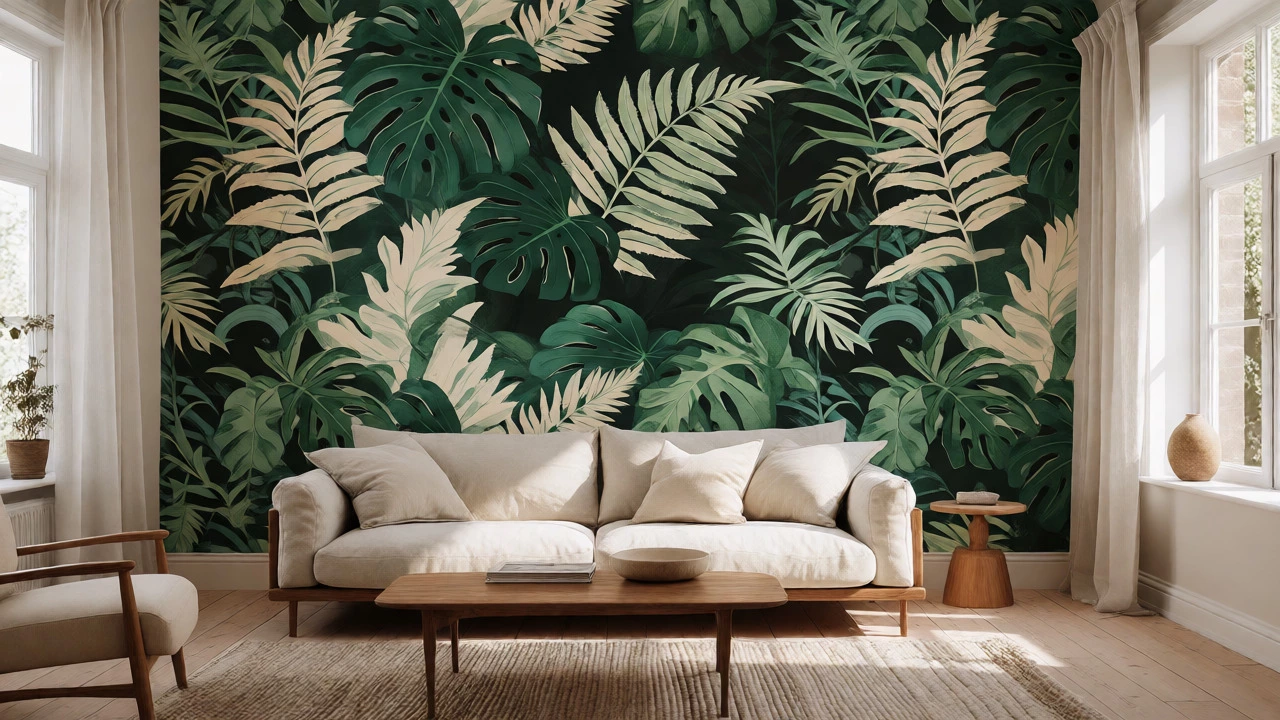
Florals aren’t gone. But they’ve evolved. Forget tiny, repetitive roses. In 2025, botanical wallpaper is big, bold, and slightly wild. Think oversized ferns, tangled vines, and leaves that look like they’re growing right off the wall. Some designs even include hand-painted insects or birds hidden in the foliage. It’s not decorative-it’s immersive.
One standout trend? Monochrome botanicals. Black-and-white leaves on a cream background. It’s dramatic, timeless, and works in both modern and traditional homes. If you’re worried about it looking too “cottage,” try it in a hallway or powder room. It’s a statement that doesn’t demand attention everywhere.
Pattern Layering Is the New Rule
Here’s the biggest shift: people aren’t just using wallpaper on one wall anymore. They’re layering it. A hallway might have a textured grasscloth on the walls and a geometric pattern on the ceiling. A living room might pair a dark, moody wallpaper with a subtle stripe on the trim. Even ceilings are getting the treatment.
This isn’t chaos. It’s intentional contrast. The key is using different scales and textures. A large floral pattern on the wall works with a fine stripe on the ceiling. A rough texture on the floor-to-ceiling wall pairs with a smooth, glossy pattern on the accent wall. It’s like mixing fabrics in clothing-you’re creating depth, not clutter.
What’s Out? (And Why)
Some trends from 2023 and 2024 are fading fast. The all-white, minimalist wallpaper with faint grid lines? Gone. It felt sterile. The tiny, repeating damask patterns? Too formal. The glossy, plastic-looking vinyls? Too cheap.
What’s replacing them? Materials that age well. Wallpaper that looks better over time. That’s why natural fibers, hand-printed designs, and matte finishes are dominating. People are tired of things that look new for six months and then start peeling. In 2025, wallpaper has to last-not just look good.
How to Pick the Right One for Your Space
Not every trend works in every room. Here’s a quick guide:
- Bedrooms: Go for texture or monochrome botanicals. Soft, calming, and tactile.
- Living Rooms: Dark moody tones or layered patterns. Creates depth and warmth.
- Kitchens: Avoid heavy textures. Use wipeable, non-porous wallpapers with subtle patterns-think muted geometric or abstract brushstrokes.
- Bathrooms: Moisture-resistant grasscloth or waterproof matte finishes. Avoid anything too porous.
- Entryways: Bold geometric or high-contrast designs. Make a memorable first impression.
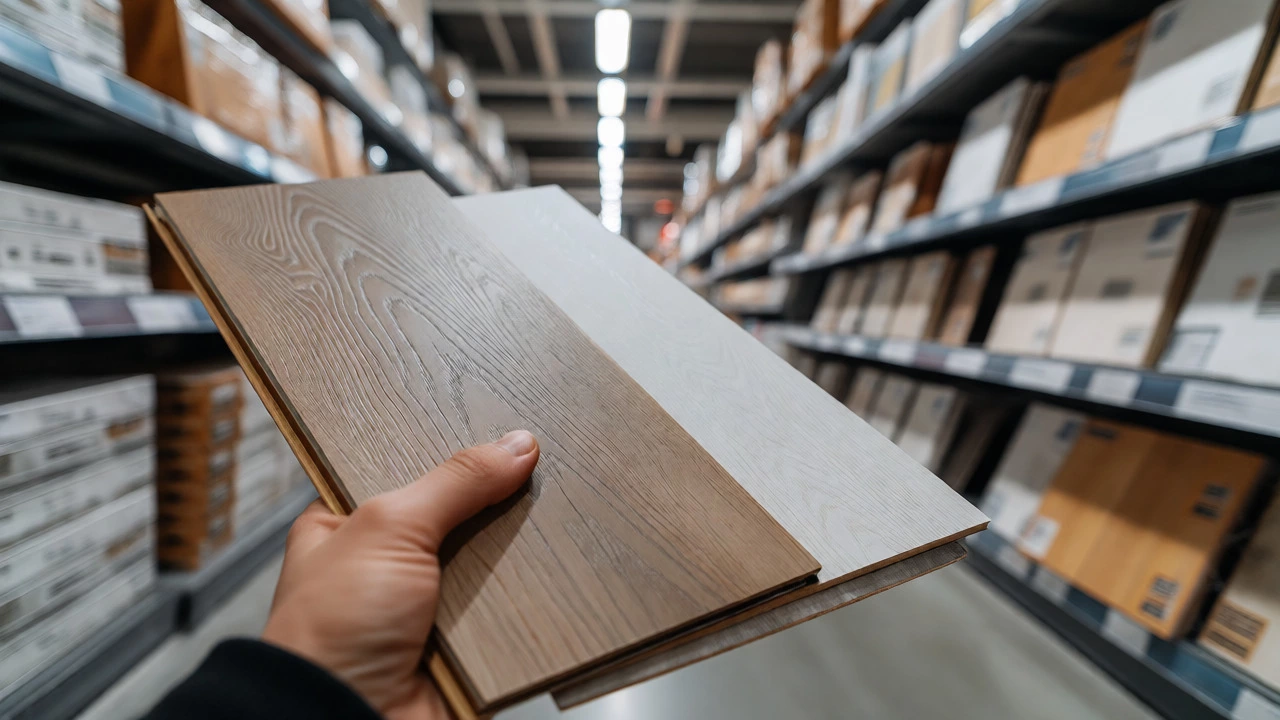
Always test a sample. Hold it up in natural light. Look at it at night. See how it changes. Wallpaper isn’t like paint-you can’t just repaint over it if you hate it. Get a swatch. Live with it for a week.
Why This Matters Now
Wallpaper in 2025 isn’t just about aesthetics. It’s about how we feel at home. After years of remote work and staying inside, people want spaces that comfort them, surprise them, and reflect their personality. A wall covered in textured grasscloth doesn’t just look nice-it feels grounding. A dark, moody background doesn’t just hide imperfections-it creates a sense of safety.
And it’s not just for luxury homes. Affordable brands like Graham & Brown and Spoonflower now offer high-quality, eco-friendly wallpapers under $50 per roll. You don’t need a big budget to make a big change.
Final Thought: It’s Not Just a Wall
Wallpaper in 2025 is no longer a surface. It’s a character. It adds rhythm to a room. It holds emotion. It turns a house into a home. Whether you go for deep black, wild vines, or rough linen, the goal is the same: make your walls feel alive.
Is wallpaper still popular in 2025?
Yes, more than ever. Wallpaper has moved past being a nostalgic trend. In 2025, it’s a mainstream design choice used in everything from apartments to luxury homes. Sales of wallpaper in Australia increased by 37% from 2023 to 2025, according to industry reports from the Australian Home Decor Association. People are choosing it for texture, personality, and durability-not just looks.
What’s the most popular wallpaper color in 2025?
The most popular color is deep charcoal, followed closely by forest green and midnight blue. These tones create a sense of calm and sophistication. They work well with natural wood, brass accents, and warm lighting. Lighter colors like cream or soft gray are still used, but mostly as backgrounds-not as the main feature.
Can I use wallpaper in a bathroom?
Yes, but only if it’s specifically designed for moisture resistance. Look for wallpapers labeled as "washable," "vinyl-coated," or "moisture-resistant." Natural fibers like grasscloth are not recommended unless sealed properly. Brands like Cole & Son and York Wallcoverings now offer high-performance bathroom wallpapers that mimic stone, linen, or tile without the maintenance.
How much does wallpaper cost in 2025?
Prices vary widely. Budget options from brands like Spoonflower or Graham & Brown start at $35-$50 per roll. Mid-range designer wallpapers (like Zoffany or Farrow & Ball) range from $80-$150 per roll. High-end hand-painted wallpapers from de Gournay or Schumacher can cost $300-$600 per roll. A typical room (10x12 feet) needs about 4-6 rolls, so budget $200-$900 depending on quality.
Should I hire a pro to hang wallpaper?
It depends. If you’re using a simple, non-textured, pre-pasted wallpaper, you can DIY it with patience and a good level. But if you’re working with heavy textures, pattern-matching designs, or uneven walls, hiring a pro is worth it. A professional installation ensures no bubbles, no misaligned seams, and no wasted material. Most designers recommend hiring someone for wallpapers over $80 per roll.
Wallpaper in 2025 isn’t about following a trend. It’s about choosing something that makes you feel something. That’s the real difference.