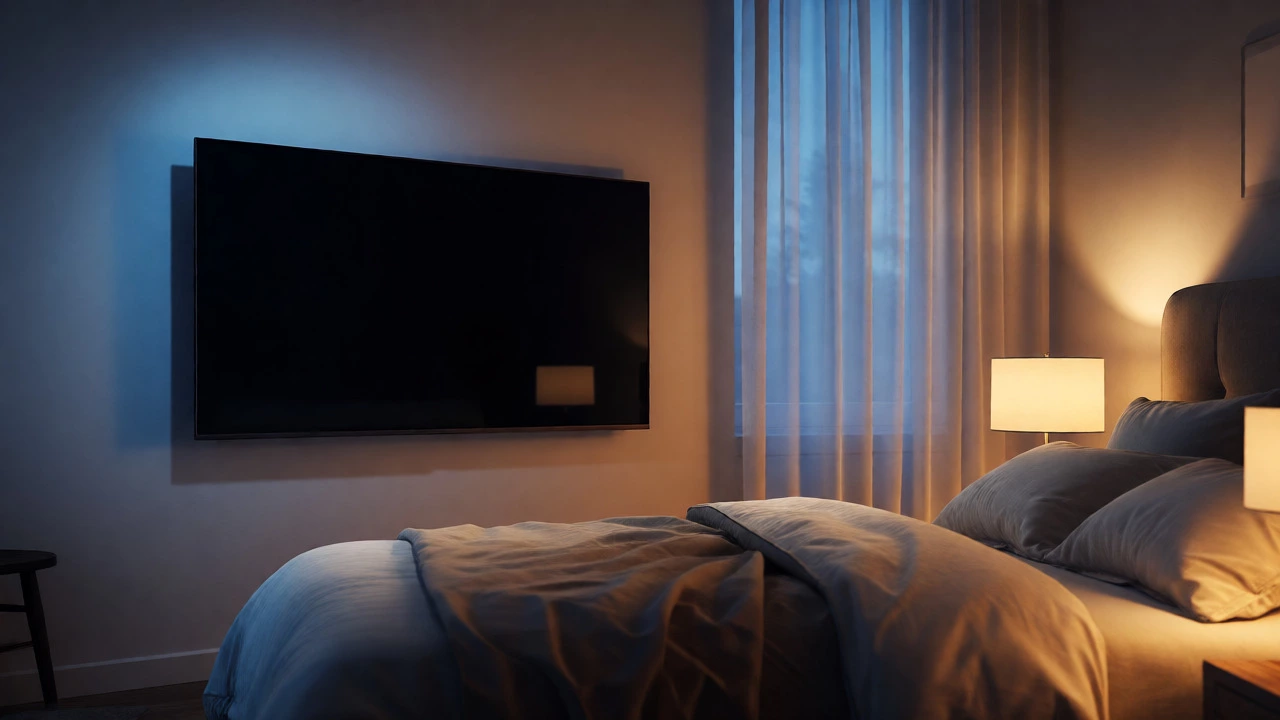
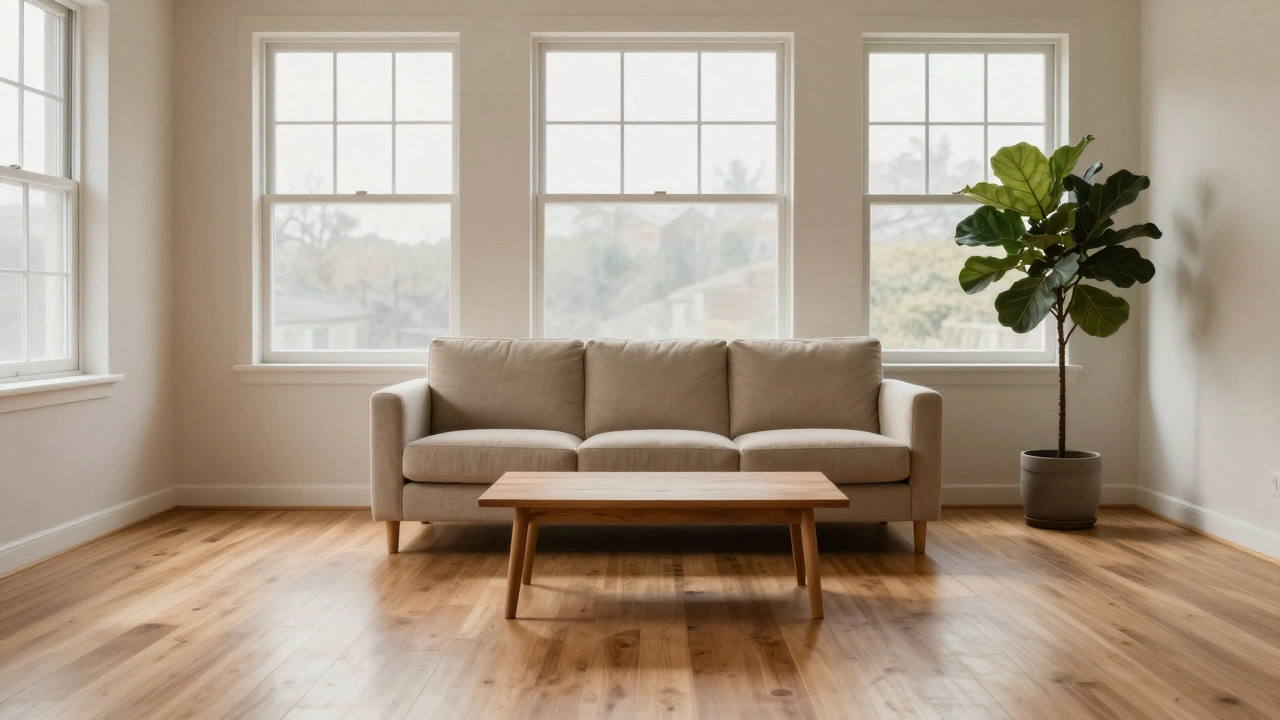
Most people feel overwhelmed in their living room-not because it’s too small, but because it’s too full. There’s the TV stand with three remotes, the coffee table buried under magazines, the sofa piled with throw blankets you never use, and that one armchair that’s been there since 2018 because you ‘might need it someday.’ Sound familiar? Simplifying your living room isn’t about making it look like a showroom. It’s about creating a space that actually feels calm, useful, and yours.
Start by removing everything
- Take every single item out of the living room-cushions, books, decor, electronics, plants, even the rug if you can.
- Put everything in a central spot: the kitchen, the hallway, even the driveway if it’s not raining.
- Now, walk back in. Look at the empty space. Breathe.
This isn’t a trick. It’s the only way to see what you actually own. When everything’s out, you stop thinking in terms of ‘where it goes’ and start thinking in terms of ‘do I need this?’
One Melbourne homeowner, Sarah, did this last year. She ended up donating 47 items-half of them were gifts she never liked but felt guilty getting rid of. The other half were duplicates: three coffee tables, five throw pillows, two side lamps that did the exact same job. After three days of sorting, she only put back 18 things. Her living room hasn’t felt this open since she moved in.
Keep only what you use or love
Ask yourself two questions for every item you’re thinking of putting back:
- Do I use this at least once a week?
- Does this bring me real joy-not just nostalgia, not just ‘it looks nice’?
That ceramic vase from your aunt? If you haven’t touched it in five years and don’t even remember where you got it, it’s not joy. It’s clutter. That oversized ottoman you thought would be ‘perfect for movie nights’? If you’ve only used it twice in two years, it’s taking up space you could use for walking around.
Here’s what works: one functional coffee table, one comfortable sofa, one or two chairs you actually sit in, and one lamp you turn on regularly. Everything else is decoration-and decoration should be intentional, not accidental.
Reduce visual noise
Color and texture matter more than you think. A living room full of patterned cushions, mismatched rugs, framed prints, and knick-knacks creates mental static. Your brain is always trying to process it, even when you’re just watching TV.
Try this: pick one dominant color for your main furniture (like charcoal, beige, or deep green). Then pick one accent color for smaller items-cushions, a single rug, a vase. Stick to those two. No more than three tones total. That’s it.
Textures are fine-linen, wool, wood-but keep them in the same family. A jute rug, a cotton throw, and a teak side table work together. A velvet pillow, a shiny metal lamp, and a plastic plant? That’s visual chaos.
Wall decor? One large piece beats five small ones. A single framed print, a simple shelf with one plant, or a textured wall panel says more than a gallery wall full of random photos. Less is louder.
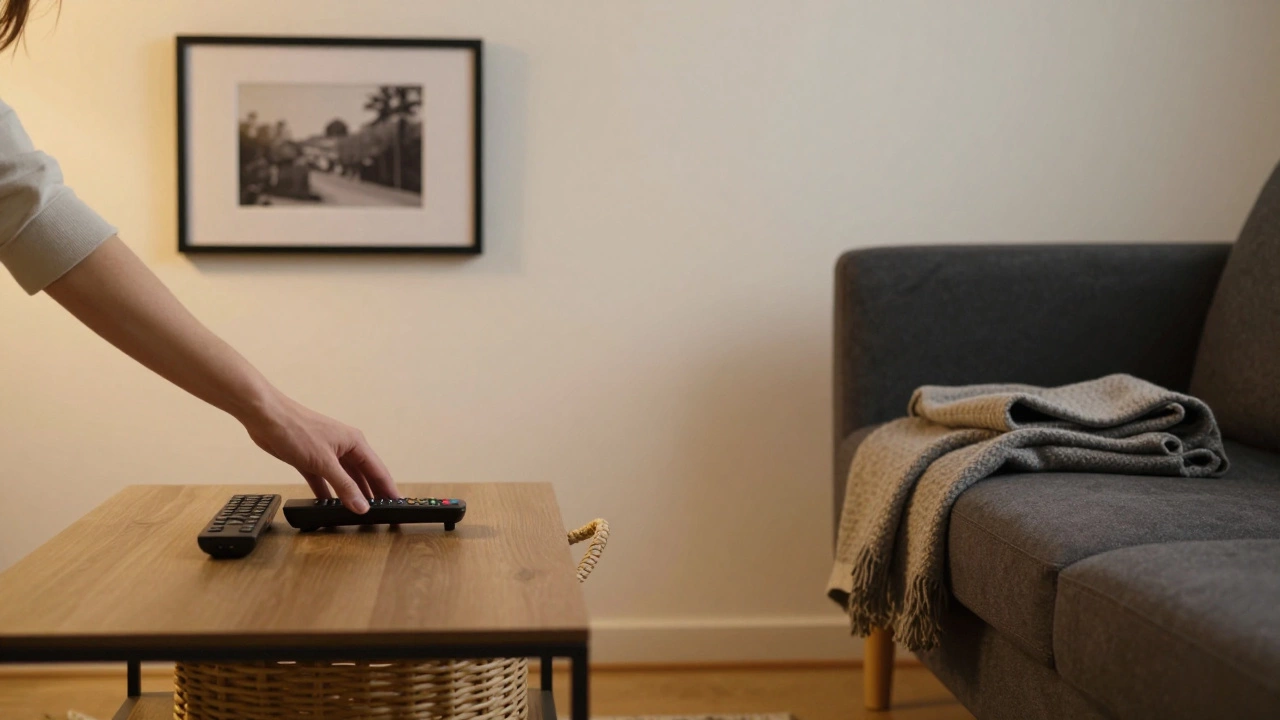
Hide what you don’t need to see
Remote controls? Put them in a basket under the coffee table. Cables? Use a cable sleeve or a box with holes. Books? One shelf, not three. Kids’ toys? A low, closed bin they can reach. You don’t need to see everything all the time.
Storage doesn’t have to be ugly. A woven basket looks better than a plastic bin. A wooden console with drawers hides clutter better than open shelves. Even a simple bench with storage inside can double as seating and a catch-all.
One rule: if you can’t close it, hide it. Open shelves are great for displaying a few things you love-but not for storing your entire DVD collection, half-used candles, or last year’s holiday decorations.
Let the space breathe
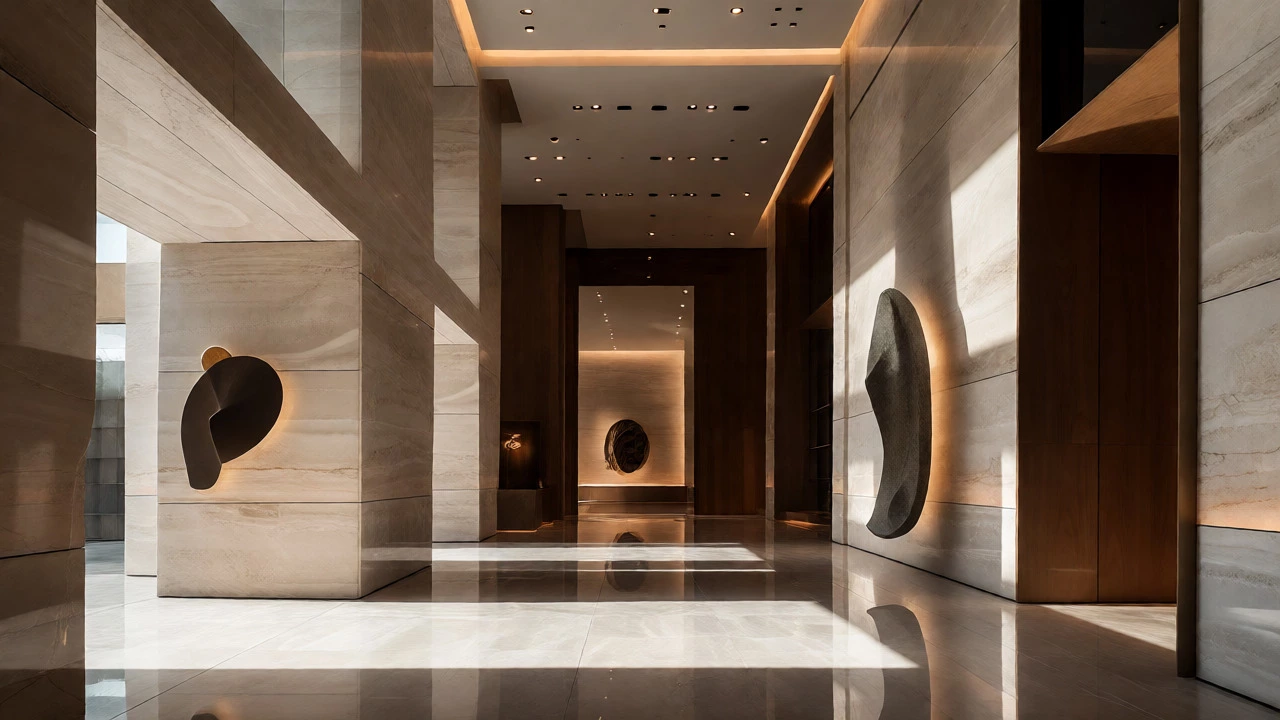
Empty space isn’t wasted space. It’s rest space. Your living room doesn’t need to be packed to feel full of life. In fact, the opposite is true.
Move your sofa away from the wall by six inches. That small gap creates a sense of depth. Leave at least 18 inches of walking space around your main seating. If you have to squeeze past a chair to get to the kitchen, you’ve overfilled the room.
Plants help. One large indoor plant-like a fiddle-leaf fig or a monstera-adds life without clutter. Small plants on every surface? That’s a jungle. One well-placed plant feels intentional. Two? That’s a statement.
Lighting matters too. One overhead light is rarely enough. Add a floor lamp near your reading chair, or a small table lamp on the side table. Warm light (2700K-3000K) feels cozy. Harsh white light feels like an office.
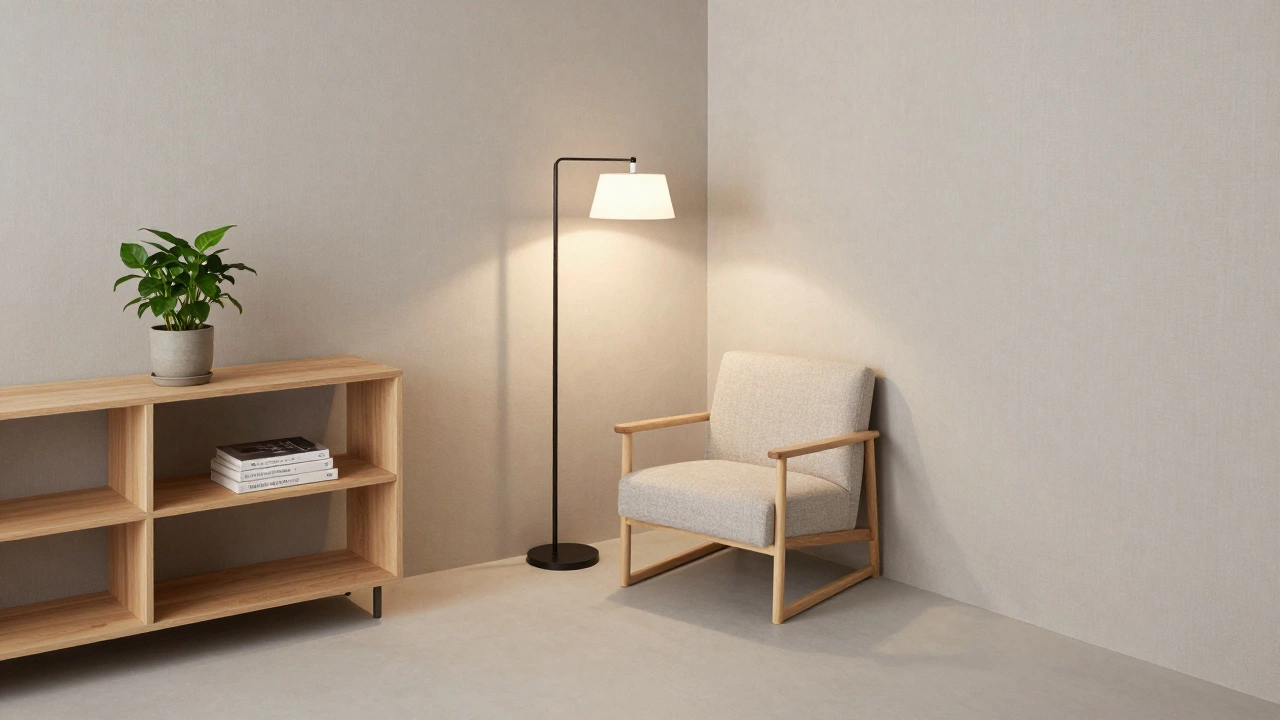
Live in it for a week
After you’ve simplified, don’t rush to buy new things. Live in the space for seven days. Notice what feels off. Do you keep reaching for a remote and not finding it? Maybe you need a small tray on the side table. Do you feel like the room is too cold? Add a single wool blanket folded at the end of the sofa.
Don’t fix problems with more stuff. Fix them with small adjustments. A different placement. A different light. A different angle.
After a week, you’ll know what truly belongs. And you’ll also know what you were just holding onto out of habit.
What you don’t need
Here’s a short list of things that rarely belong in a simplified living room:
- Multiple TV stands or media consoles
- More than two throw pillows per seat
- Decorative trays with random objects (candles, crystals, trinkets)
- Large, ornate mirrors that reflect clutter
- Stacks of magazines or books you never read
- Plastic storage bins that look like storage bins
These items don’t add comfort. They add pressure. They make the room feel like a museum of ‘shoulds’-should have, should look, should be.
Keep it simple, keep it real
Simplifying your living room isn’t about buying expensive minimalist furniture. It’s about letting go. It’s about choosing comfort over decoration, function over form, peace over perfection.
You don’t need a designer. You don’t need a budget. You just need to ask: ‘Does this help me feel better when I’m here?’ If the answer isn’t yes, it doesn’t belong.
Start small. One shelf. One corner. One day. The rest will follow.
How do I simplify a small living room?
Start by removing anything that doesn’t serve a clear purpose: extra chairs, bulky side tables, decorative items you don’t interact with. Use multi-functional furniture like a storage ottoman or a sofa with hidden drawers. Keep the floor as clear as possible-this makes the room feel bigger. Stick to light colors on walls and large furniture, and use mirrors to reflect light. One well-placed plant or piece of art adds character without crowding the space.
Can I still have a cozy living room if it’s simple?
Absolutely. Coziness comes from texture, warmth, and personal touches-not from clutter. A soft wool blanket, a wooden side table with a single lamp, a few well-chosen cushions, and warm lighting create a cozy feel. The key is intentionality. One meaningful item feels warmer than ten random ones.
What’s the biggest mistake people make when trying to simplify?
They think they need to buy new things-like a ‘minimalist’ sofa or a white rug-to make it work. You don’t. Simplifying is about removing, not replacing. Most people have everything they need already. The problem isn’t what’s missing-it’s what’s extra.
How do I stop myself from buying more stuff after simplifying?
Wait 30 days before buying anything new. If you still feel like you need it after a month, then consider it. Most impulses fade. Also, when you see how good your space feels without clutter, you’ll naturally crave less. The calm becomes the standard-not the chaos.
Should I get rid of family photos?
No-but be selective. Instead of a wall full of small frames, choose one or two meaningful photos and frame them simply. A single large print on a neutral wall feels more personal and less chaotic than a collage. Your memories don’t need to be on display everywhere to be cherished.