Space Planning Calculator
Furniture Clearance Calculator
Calculate minimum room size required based on 36-inch clearance rule for safe movement paths.
The hardest thing in interior design isn’t choosing paint colors or picking out a fancy sofa. It’s not even working within a tight budget. The real challenge? Space planning-figuring out how to make every square foot work for the people who live there, without making the place feel like a museum or a storage unit.
Most people think design is about looks. It’s not. It’s about function. A room can look like it came out of a magazine, but if you can’t walk through it without bumping into furniture, if the kitchen sink is too far from the stove, or if the living room has no clear path to the door, then it’s failed. And that failure isn’t because the colors clashed or the rug was too big. It’s because the layout doesn’t serve the people in it.
Think about a typical family home. You’ve got a mom who needs a quiet corner to answer work emails, a teenager who wants to zone out with headphones, a dog that needs room to stretch, and guests who show up unannounced. All of them need space. But the house is only 1,800 square feet. How do you give everyone what they need without turning it into a maze?
That’s where space planning comes in. It’s the invisible backbone of every good interior design project. It’s the reason some homes feel open and calm, even when they’re small. And it’s why others feel cramped and chaotic, even with high-end finishes.
Why Space Planning Is So Hard
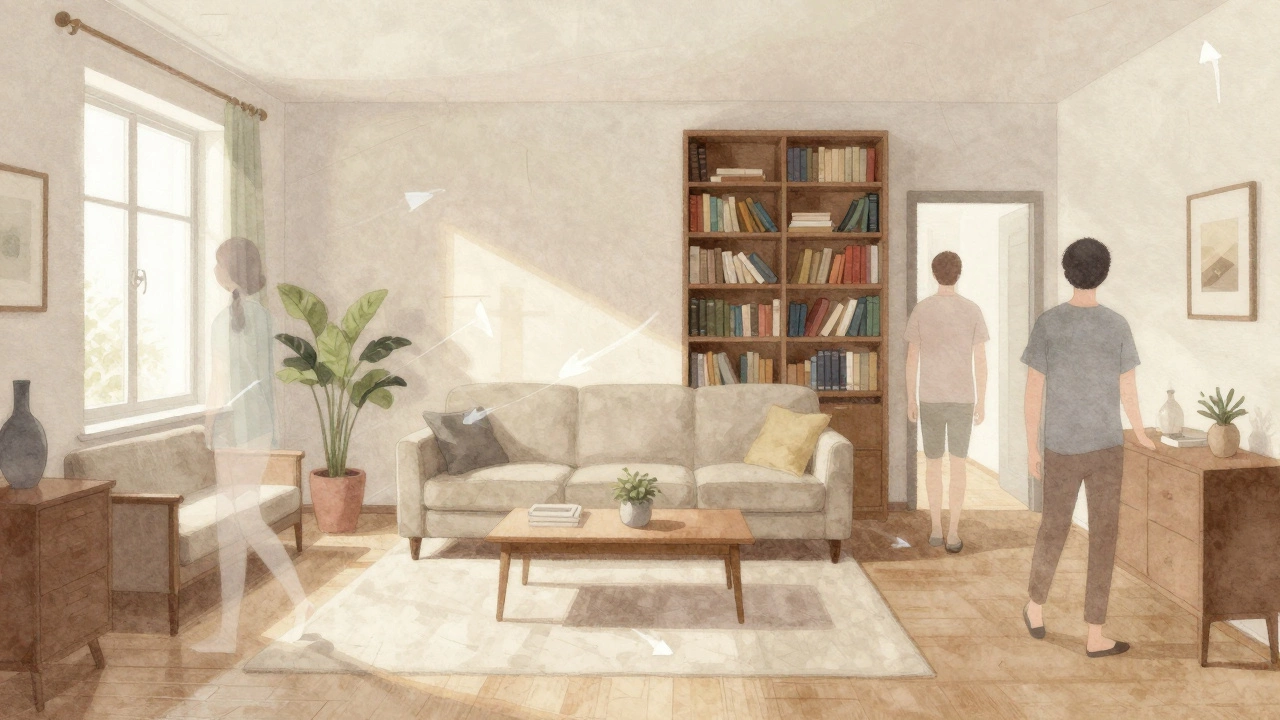
Space planning isn’t just drawing boxes on a floor plan. It’s understanding human behavior. People don’t move in straight lines. They drift. They pause. They cluster. They avoid certain areas because the lighting’s bad or the chair’s too hard. A designer has to predict those movements before the furniture even arrives.
Take a living room. The average person walks at about 2.5 feet per second. But they need at least 36 inches of clear space to move comfortably between pieces. If you shove a sofa too close to the coffee table, someone’s going to trip. If you put a chair facing away from the TV, no one’s going to sit in it. These aren’t opinions-they’re physics and psychology combined.
And it gets worse when you add storage. People don’t realize how much stuff they have until they try to fit it all in. A coat closet that looks big on paper becomes useless when you realize you need room for boots, winter coats, umbrellas, and backpacks. A kitchen cabinet that holds 12 plates? Great-until you realize your family owns 24, plus serving dishes, mixing bowls, and holiday china.
That’s why the best designers start with a lifestyle audit. They ask: Who lives here? What do they do every day? Where do they get frustrated? What do they hate about their current space? Then they map out the flow-like traffic patterns in a city.
The Most Common Mistakes
Even experienced homeowners make the same space planning errors over and over. Here are the top three:
- Centering everything. People think a sofa should face the TV, and the coffee table should sit exactly in the middle. But that creates a rigid, stage-like setup. Real living happens in corners, near windows, beside bookshelves. Let furniture follow natural traffic paths, not symmetry.
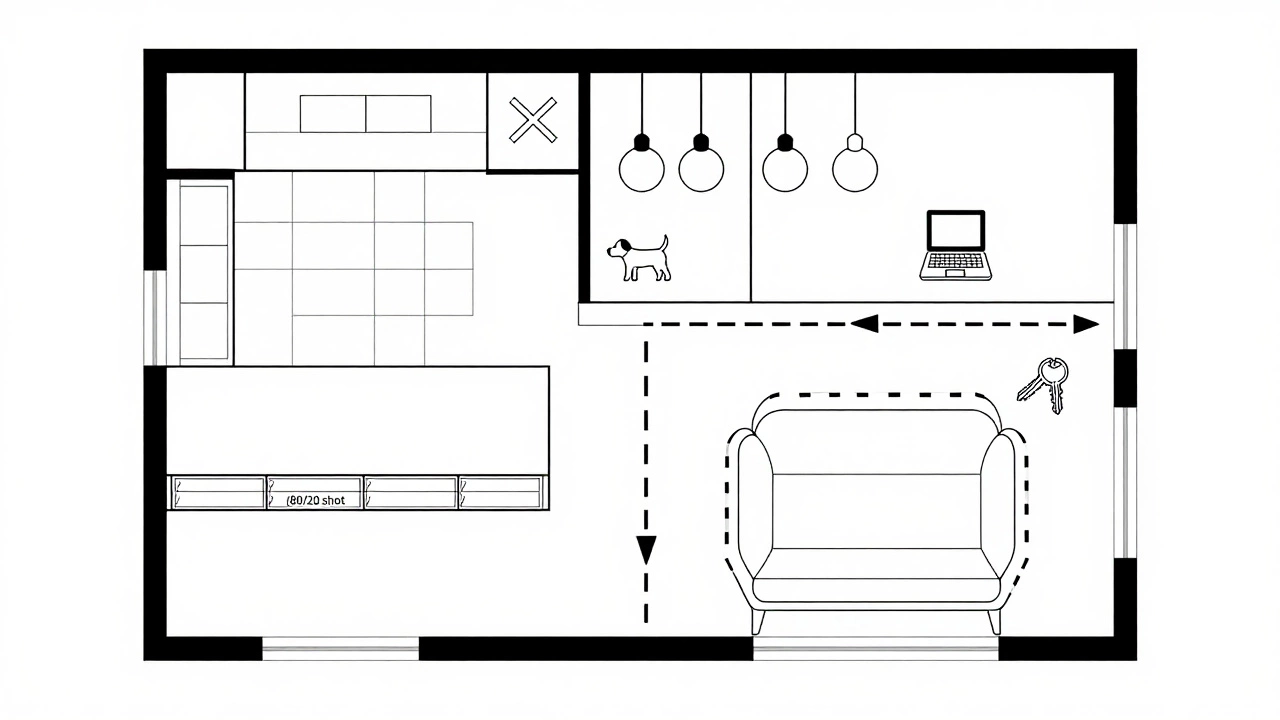
- Ignoring the 80/20 rule. You use 20% of your space 80% of the time. Maybe it’s the kitchen island, the reading nook by the window, or the spot right by the front door where you drop your keys. Design for those spots first. The rest can be flexible.
- Forgetting vertical space. Most people think of floor space only. But walls are storage. Ceilings are light. Corners are corners for a reason-don’t waste them. A tall bookshelf can define a zone without blocking sightlines. A hanging lamp can make a low ceiling feel taller.
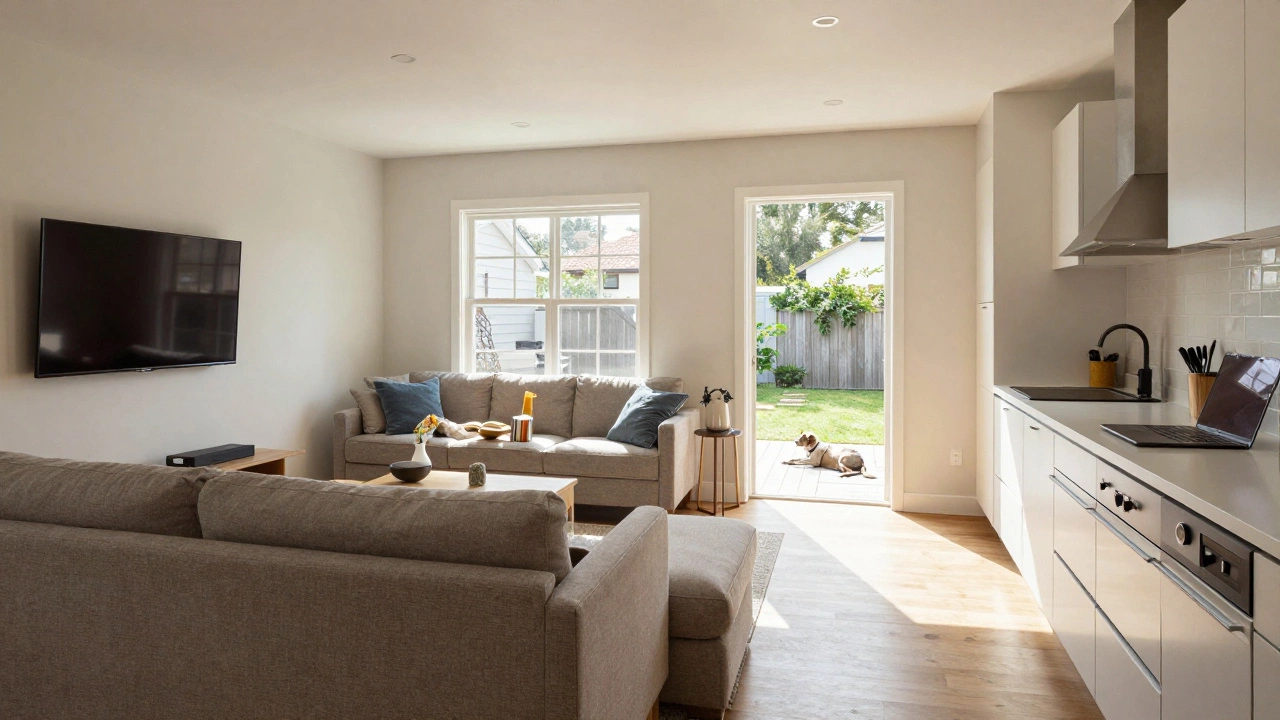
One client I worked with had a 12x12 living room. She wanted a sectional, a recliner, a side table, a floor lamp, and a media console. I said no. Not because it wouldn’t fit-it would. But because there’d be no room to breathe. Instead, we used a low-profile loveseat, a small ottoman that doubled as storage, and mounted the TV on the wall. We opened up the floor. She could walk from the kitchen to the patio without turning. And suddenly, the room felt twice as big.
How to Get It Right
You don’t need a degree in architecture to plan space well. You just need to observe and test.
- Use painter’s tape. Tape out the footprint of your couch, table, and chair on the floor. Walk around it. Sit in it. See how it feels. Move it. Try different angles. Do this before you buy anything.
- Time your movement. Spend a day tracking how you move through your home. Where do you linger? Where do you rush? Where do you feel stuck? Those are your design clues.
- Measure twice, buy once. Write down the exact dimensions of your room, windows, doors, and vents. Don’t guess. Use a laser measurer. A 2-inch difference can ruin a layout.
- Start with the door. Every room should have a clear path to its entrance. If you have to sidestep a chair to open the door, the design is broken.
Lighting and color matter, but they’re the final layer. You can’t fix bad space with a nice rug or a bold wall. You fix it by rearranging what’s already there.
When to Call a Pro
You can do a lot yourself. But if you’re remodeling a whole floor, adding walls, or dealing with awkward angles (like a slanted ceiling or a weirdly shaped alcove), you need someone who’s done this before.
Good interior designers don’t just pick colors. They bring floor plans, 3D renderings, and traffic flow studies. They know how much space a wheelchair needs. They understand building codes for egress. They’ve seen how a kitchen works when three people are cooking at once.
Don’t hire someone just because their Instagram looks pretty. Ask to see their past space plans. Ask how they handled a tight layout. Ask what they’d change if they had to do it again. If they talk about aesthetics before function, walk away.
The Real Test
The best proof of good space planning? No one notices it.
You walk into a room and it just feels right. Easy. Natural. Like it was always meant to be that way. You don’t think about the layout. You don’t wonder why the chair is where it is. You just sit down, relax, and forget you’re in a designed space.
That’s the goal. Not a showpiece. Not a trend. But a place that fits your life-quietly, perfectly, without asking for praise.
Space planning is hard because it’s invisible. But when it’s done right, everything else falls into place.