Construction Material Suitability Analyzer
Select your project parameters below to see which of the 5 primary raw materials are best suited for your build.
Project Parameters
Ready to Build?
Select your project details and click "Analyze Materials" to see the breakdown.
Every skyscraper, bridge, and suburban home starts with the same basic ingredients. Before you see polished floors or sleek glass facades, there is a messy, heavy, and essential foundation of raw materials. Understanding these five primary components-cement, steel, timber, sand, and gravel-is the key to understanding how our built environment actually works. These aren't just supplies; they are the physical limits and possibilities of modern engineering.
If you have ever looked at a building site, you might wonder why we keep using the same old stuff. Why not something lighter? Why not plastic? The answer lies in physics, cost, and availability. Let’s break down the five pillars that hold up the world.
Cement: The Glue of Modern Civilization
Cement is often confused with concrete, but they are not the same thing. Think of cement as the flour in a cake recipe. You don’t eat plain flour; you mix it with other ingredients to make the final product. Concrete is the cake. Cement is the paste that holds the sand and gravel together.
The process starts with limestone and clay. These materials are crushed, ground into a fine powder called "clinker," and then heated in massive kilns at temperatures reaching 1,450°C (2,642°F). This chemical transformation creates calcium silicates, which react with water in a process called hydration. This reaction is exothermic-it releases heat-and it hardens over time, gaining strength for decades.
- Key Attribute: Compressive strength. Concrete can handle immense weight pushing down on it.
- Weakness: Tensile strength. Concrete cracks easily if pulled apart or bent.
- Environmental Impact: Cement production accounts for about 8% of global CO2 emissions. New technologies like carbon-capture cement are emerging to mitigate this.
Without cement, we wouldn’t have dams, tunnels, or high-rise foundations. It is the most consumed material on Earth after water.
Steel: The Skeletal Structure
If cement is the muscle, steel is the skeleton. While concrete is great at resisting compression (being squashed), it is terrible at resisting tension (being stretched). Steel excels at tension. That’s why we put steel bars, called rebar, inside concrete beams. Together, they form reinforced concrete, a composite material that handles both forces.
Steel is produced in blast furnaces where iron ore, coke (processed coal), and limestone are melted together. The result is pig iron, which is then refined to remove impurities and adjust the carbon content. Low-carbon steel is ductile and easy to weld, while high-carbon steel is harder but more brittle.
- Key Attribute: Tensile strength. Steel can stretch slightly without breaking, absorbing energy from earthquakes or wind loads.
- Versatility: It can be rolled into sheets for roofing, drawn into wires for cables, or forged into beams for skyscrapers.
- Recyclability: Steel is the most recycled material on the planet. Scrap steel can be melted down and reused indefinitely without losing quality.
Imagine trying to build a suspension bridge out of pure wood or stone. It would collapse under its own weight. Steel allows us to span rivers and valleys with lightweight yet incredibly strong structures.
Timber: The Renewable Resource
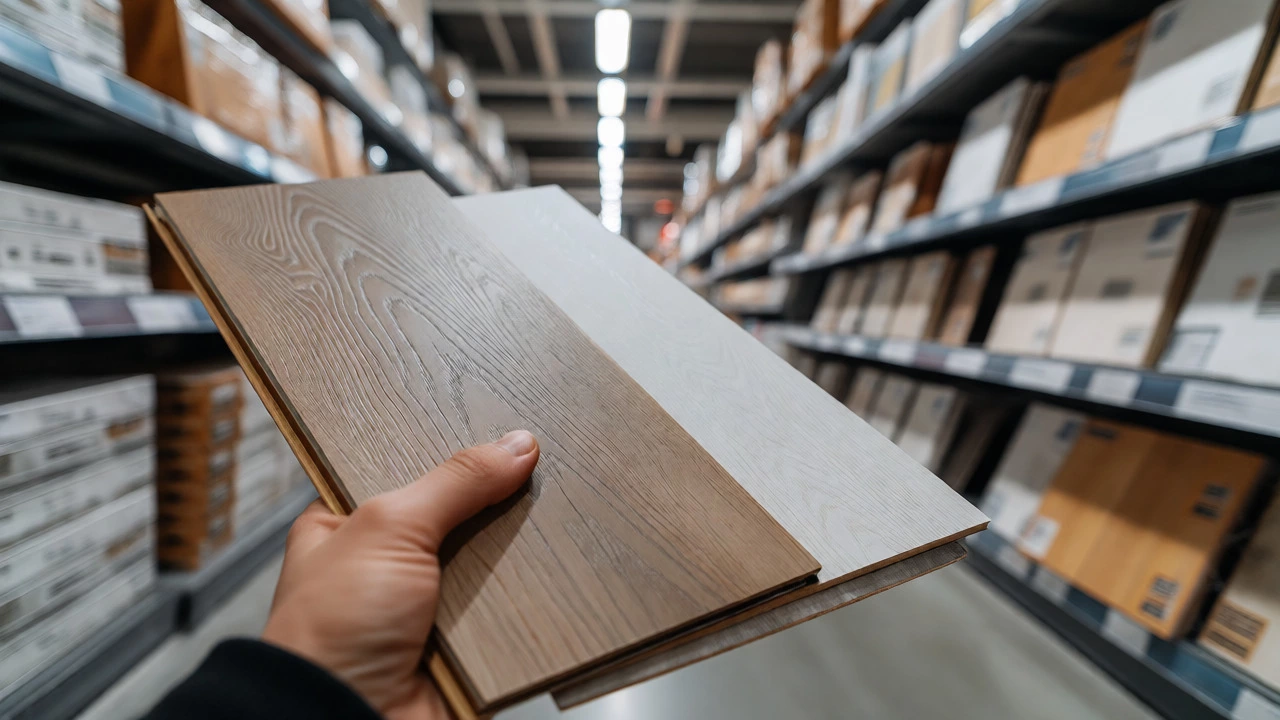
Wood feels natural because it is natural. Unlike cement and steel, which require industrial processing, timber comes directly from trees. However, not all wood is created equal. Softwoods like pine and spruce grow quickly and are used for framing houses. Hardwoods like oak and maple are denser and used for flooring and furniture.
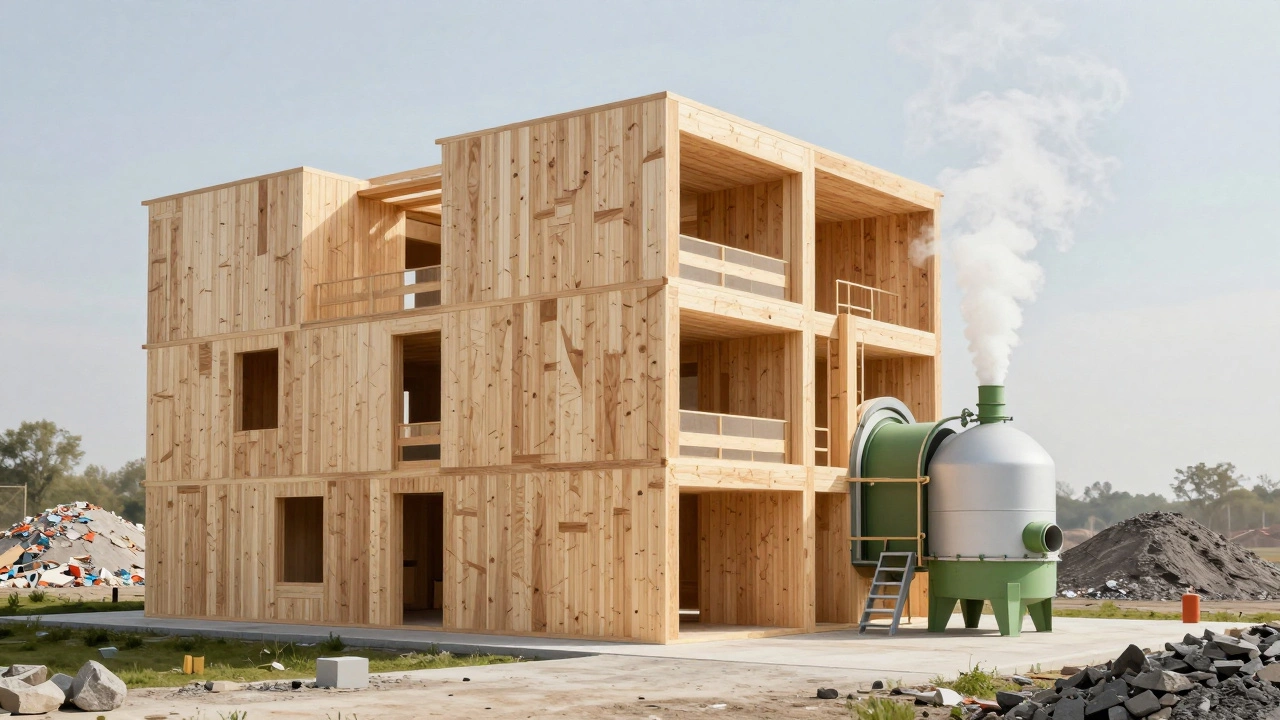
In recent years, engineered wood products have changed the game. Cross-Laminated Timber (CLT) involves gluing layers of wood together at right angles. This creates panels that are stronger than steel by weight and can be used to build multi-story buildings. CLT is also carbon-negative, meaning it stores the carbon dioxide the tree absorbed during its growth.
- Key Attribute: Insulation. Wood is a poor conductor of heat, keeping buildings warmer in winter and cooler in summer.
- Sustainability: When sourced from responsibly managed forests, timber is a renewable resource.
- Limitation: Susceptibility to rot, insects, and fire unless treated properly.
For residential construction, timber remains the dominant choice. It is easier to work with, cheaper to transport, and provides a warm aesthetic that concrete and steel struggle to match.
Sand: The Most Mined Material
You might think sand is everywhere, so why worry? Not all sand is suitable for construction. Beach sand is too smooth and rounded; it doesn’t bond well with cement. We need angular, coarse sand, usually quarried from riverbeds or mountains. This type of sand interlocks with cement paste, creating a strong matrix.
Sand is the second most consumed resource on Earth after water. We use it in concrete, asphalt, glass, and even silicon chips for computers. The demand is so high that some countries have banned sand mining to protect ecosystems. Deserts don’t help because desert sand grains are worn smooth by wind, making them useless for concrete.
- Key Attribute: Aggregate filler. Sand fills the voids between larger gravel particles, reducing porosity and increasing density.
- Quality Control: Must be free of organic matter, clay, and salts that can weaken concrete.
- Scarcity Issue: Illegal sand mining causes environmental damage, including erosion and habitat destruction.
Next time you pour a foundation, remember that half of that volume is likely sand. It’s the silent partner in every concrete mix.
Gravel: The Heavy Lifter
If sand is the filler, gravel is the structure. In concrete, gravel acts as the coarse aggregate. It takes up most of the volume and bears the load. Without gravel, concrete would shrink and crack as it dried. Gravel provides bulk and stability.
Gravel is also used extensively in road construction. Roads are built in layers, with gravel forming the sub-base. This layer drains water away from the surface, preventing frost heave in cold climates and softening in wet ones. Good drainage means longer-lasting roads.
- Key Attribute: Load-bearing capacity. Gravel distributes weight evenly across the ground.
- Drainage: Its porous nature allows water to pass through, protecting foundations from hydrostatic pressure.
- Availability: Usually sourced locally to reduce transportation costs, as gravel is heavy and expensive to ship long distances.
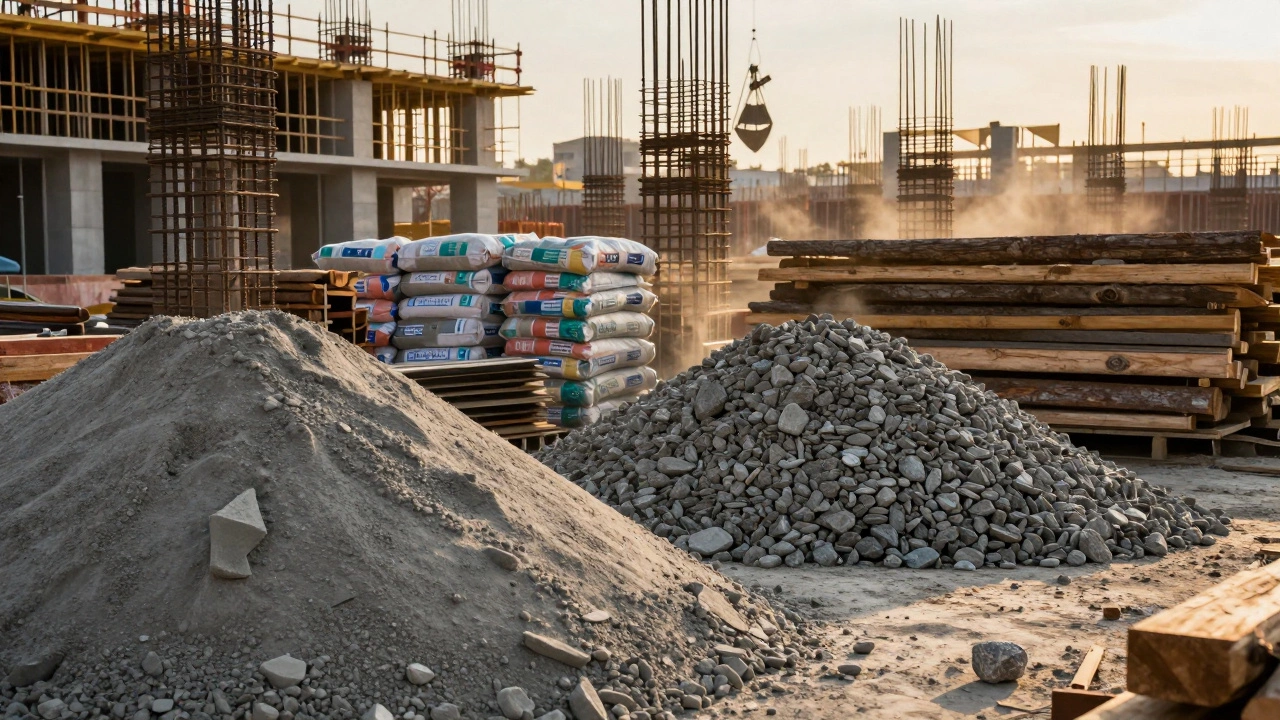
Together, sand and gravel make up about 70% of the volume of concrete. They are cheap, abundant, and essential. But their extraction impacts landscapes, leading to innovations like recycled concrete aggregate.
Comparison of Primary Construction Materials
| Material | Primary Function | Strength Type | Environmental Impact | Typical Use Case |
|---|---|---|---|---|
| Cement | Binder | Compressive | High CO2 emissions | Foundations, sidewalks |
| Steel | Reinforcement | Tensile | Energy-intensive production | Skyscraper frames, bridges |
| Timber | Framing/Finish | Both (engineered) | Carbon sequestration | Houses, interior design |
| Sand | Fine Aggregate | N/A (Filler) | Ecosystem disruption | Mortar, glass, concrete |
| Gravel | Coarse Aggregate | N/A (Filler) | Landscape alteration | Road bases, concrete |
How These Materials Work Together
No single material does it all. The magic of construction is combining these five elements to overcome their individual weaknesses. Reinforced concrete combines cement, sand, gravel, and steel. The cement binds the sand and gravel, while the steel resists tension. Timber is often used in conjunction with concrete foundations, providing a flexible superstructure on a rigid base.
Consider a typical house. The foundation is poured concrete (cement + sand + gravel + steel rebar). The walls are framed with timber studs. The roof might use steel trusses or timber rafters. The driveway is asphalt (bitumen + gravel + sand). Each material plays a specific role based on its physical properties.
Understanding these relationships helps homeowners and builders make better decisions. For example, in earthquake-prone areas, steel-reinforced concrete is preferred for its flexibility. In humid climates, treated timber or concrete is chosen to resist rot. The choice of raw materials dictates the building’s lifespan, safety, and cost.
The Future of Raw Materials
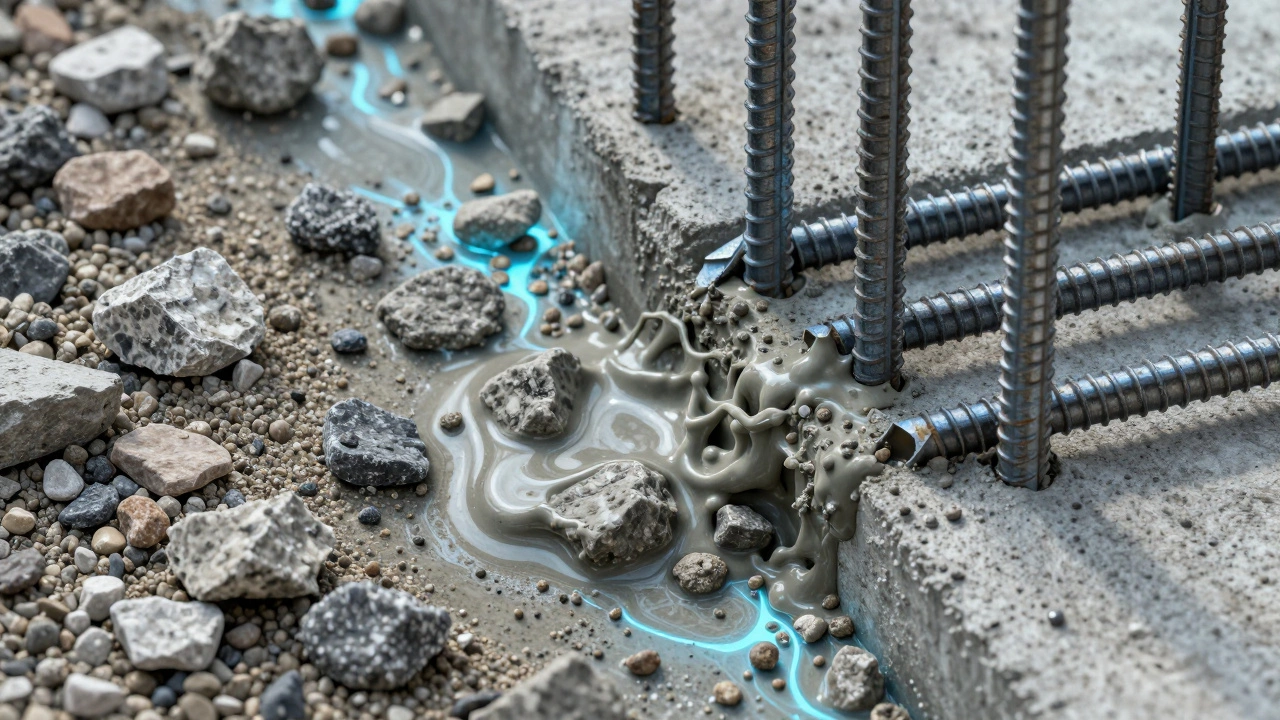
The construction industry is facing a sustainability crisis. Traditional methods consume vast amounts of resources and emit significant greenhouse gases. Innovations are emerging to address these challenges. Self-healing concrete uses bacteria to repair cracks. Green steel is produced using hydrogen instead of coal. Mass timber buildings reduce reliance on concrete and steel.
Recycled materials are also gaining traction. Crushed concrete can replace gravel in new mixes. Recycled steel reduces the need for virgin iron ore. Even plastic waste is being experimented with as a substitute for sand in non-structural applications. The future of construction will likely involve hybrid materials that combine the best properties of traditional raw materials with new, sustainable technologies.
What is the difference between cement and concrete?
Cement is a powdered ingredient, typically made from limestone and clay, that acts as a binder. Concrete is the final mixture of cement, water, sand, and gravel. Cement is to concrete what flour is to bread.
Why is steel used in concrete?
Concrete is strong under compression but weak under tension. Steel has high tensile strength. By embedding steel bars (rebar) in concrete, the composite material can withstand both compressive and tensile forces, preventing cracks and failure.
Is timber stronger than steel?
By weight, engineered timber like Cross-Laminated Timber (CLT) can be stronger than steel. However, solid steel is generally stronger and more durable than solid wood. Timber is preferred for its insulation properties, renewability, and ease of construction in residential settings.
Can beach sand be used for construction?
No, beach sand is usually too smooth and rounded to bond effectively with cement. Construction requires angular, coarse sand from quarries or riverbeds that interlock to create a strong matrix. Beach sand may also contain salt, which corrodes steel reinforcement.
What is the most environmentally friendly construction material?
Timber is often considered the most eco-friendly option because it is renewable and stores carbon. However, its sustainability depends on responsible forest management. Recycled steel and low-carbon cement are also improving the environmental profile of construction.