Furniture Placement: How to Arrange Your Pieces for Better Flow and Function
When you think about furniture placement, the strategic positioning of chairs, tables, beds, and other pieces to optimize movement and use in a room. Also known as room layout, it’s the quiet hero of any interior design project. It’s not about matching sets or filling empty corners—it’s about making your space work for you. Poor placement turns a cozy living room into a maze, or a bedroom into a storage closet. Good placement? It makes everything feel easier, calmer, and more natural.
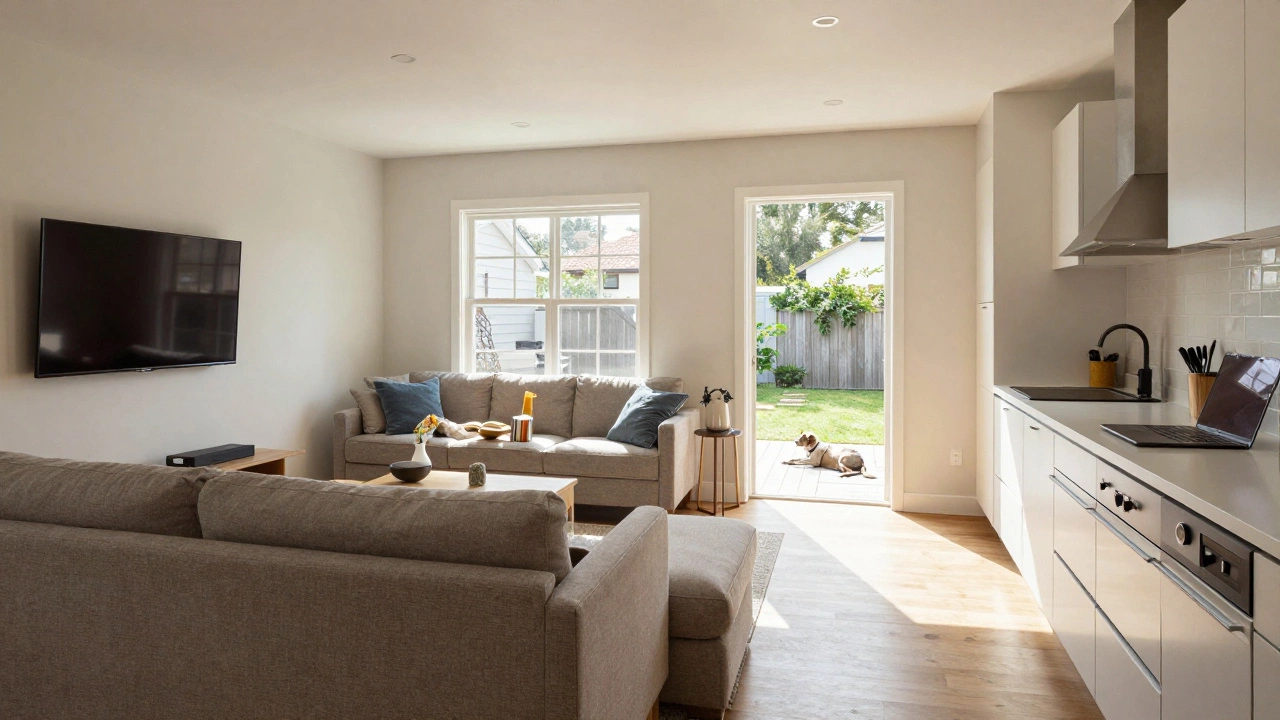
Kitchen workflow, the path you take between the sink, stove, and fridge while cooking. Also known as work triangle, it’s a classic rule that still holds up today. If your fridge is across the room from the stove, you’re wasting steps—and energy. Same goes for living room arrangement, how sofas, chairs, and tables are grouped to encourage conversation and movement. Also known as seating zone, it’s not about symmetry—it’s about connection. If your couch faces away from the TV or blocks the doorway, you’re fighting your own space. And bedroom furniture layout, where your bed, nightstands, and dresser sit to maximize calm and access. Also known as sleeping zone, it’s where comfort meets practicality. A bed shoved in the middle of the room might look bold, but if you can’t reach your lamp or walk around it easily, it’s just awkward.
Furniture placement affects everything: how much light gets in, how air moves, how loud or quiet a room feels. It’s why two identical rooms can feel totally different. One has chairs pulled close for chat; the other has a wide path for walking. One has a bed facing the window for morning light; the other has it blocking the door. These aren’t small choices—they’re daily experiences.
You don’t need a designer to get this right. Start by mapping your movement. Where do you walk most? Where do you sit longest? What do you reach for often? Then move things to support that. Keep pathways clear. Balance visual weight. Let light flow. And don’t be afraid to try something new—even if it breaks the "rules." A sofa facing the fireplace? A dresser doubling as a desk? That’s not wrong—that’s smart.
Below, you’ll find real examples from people who fixed their spaces without spending a fortune. From kitchen layouts that cut morning chaos to bedrooms that finally feel like a retreat, these posts show you exactly how furniture placement changes how you live—not just how your home looks.