Bedroom TV Impact Calculator
Answer these questions to see if a TV is right for your bedroom sanctuary.
Your Bedroom TV Compatibility Score
Personalized Recommendations:
You just bought the perfect 55-inch OLED. The picture is crisp, the sound is immersive, and you are staring at your empty bedroom wall wondering if it’s the right spot. We’ve all been there. But before you drill those holes, stop and think about what happens when you turn that screen off. Or worse, when you leave it on.
The question is it OK to have a TV in your bedroom isn’t just about aesthetics. It’s a battle between comfort and biology. For decades, designers argued that bedrooms should be sanctuaries for rest, not entertainment centers. Today, with streaming services dominating our evenings, the line has blurred. So, does having a TV ruin your sleep? Does it kill romance? Or is it simply a matter of how you set it up?
| Factor | Impact of Bedroom TV | Mitigation Strategy |
|---|---|---|
| Sleep Quality | Negative (Blue light suppresses melatonin) | Use "Night Mode" or wear blue-light blocking glasses |
| Space Perception | Negative (Can make small rooms feel cramped) | Mount on wall or use slim-profile furniture |
| Relationship Dynamics | Mixed (Shared interest vs. distraction) | Set specific "no TV" hours during conversation |
| Aesthetics | Variable (Black rectangle can clash with soft decor) | Hide behind art panels or use frame-like displays |
The Science of Sleep and Screen Time
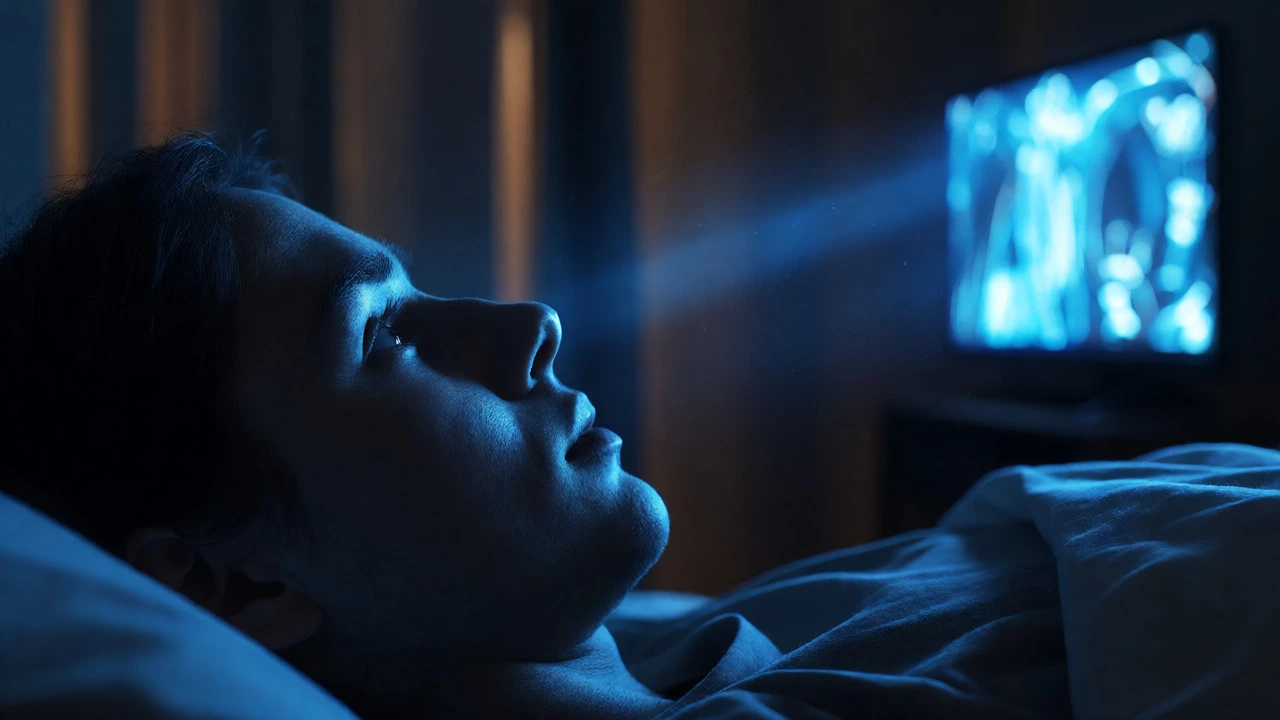
Let’s look at the biology. Your body runs on a circadian rhythm, an internal clock that tells you when to wake up and when to shut down. Light is the primary cue for this clock. Specifically, blue light-the kind emitted by LEDs, smartphones, and modern flat-screen TVs-mimics daylight. When your eyes detect this spectrum in the evening, your brain stops producing melatonin, the hormone responsible for making you sleepy.
Melatonin is a hormone produced by the pineal gland that regulates sleep-wake cycles. Studies suggest that exposure to bright screens within two hours of bedtime can delay melatonin release by up to three hours. This doesn’t just mean you fall asleep later; it means your sleep architecture changes. You spend less time in REM sleep, which is critical for memory consolidation and emotional regulation.
If you watch one episode of a thriller before bed, you might stay awake until 1 AM because your brain thinks it’s still afternoon. If you doom-scroll through news feeds, your cortisol levels spike, keeping you alert. The problem isn’t always the TV itself; it’s the content and the light it emits. A nature documentary at low brightness is vastly different from a high-contrast action movie at full volume.
Design Dilemmas: Aesthetics and Space
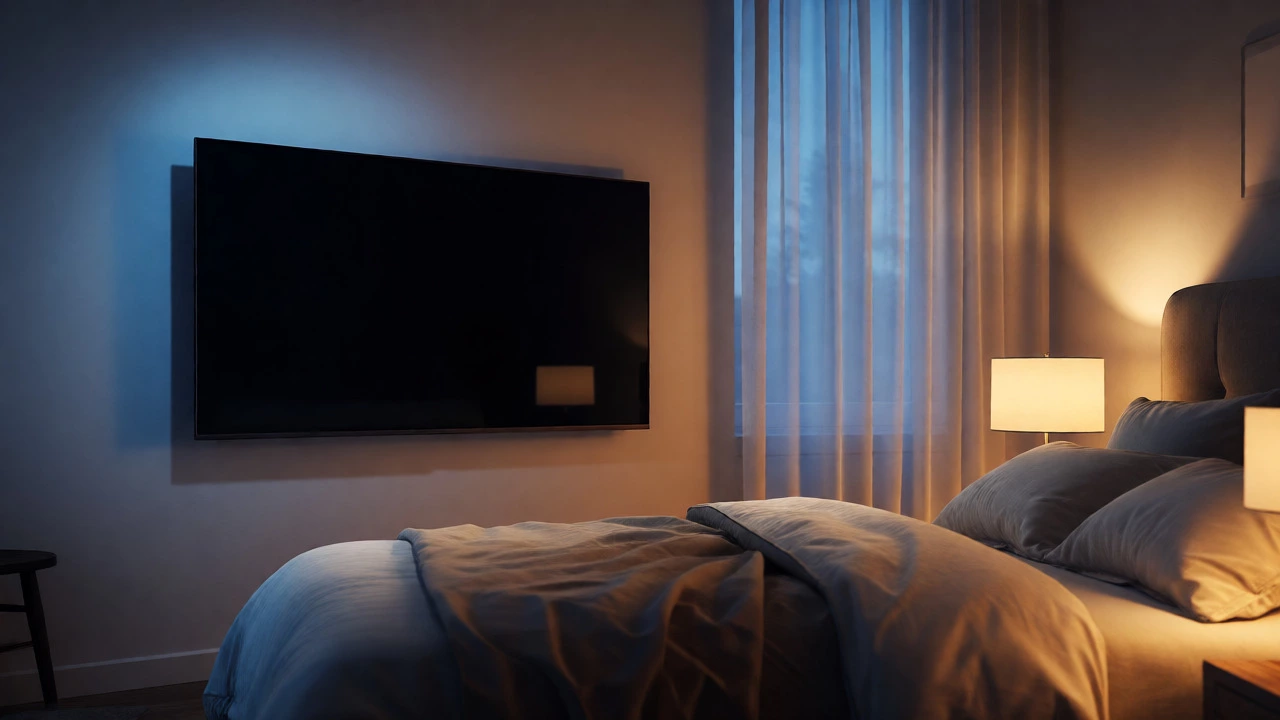
From a design perspective, a television is a large, black, rectangular void. In a room designed for softness-think plush rugs, linen bedding, and warm lighting-a hard black box can feel jarring. Interior designers often advise against placing a TV directly opposite the bed because it dominates the visual field. You wake up looking at a mirror of your own cluttered thoughts rather than a calming view.
However, technology has evolved. Modern setups offer solutions that didn’t exist ten years ago. Consider these options:
- Art TV Displays: Brands like Samsung offer "The Frame," which looks like a digital canvas when turned off. It displays art instead of a black screen, blending into gallery-style walls.
- Hidden Mounts: Motorized lifts can raise a TV from a dresser or lower it from the ceiling. When not in use, the TV disappears completely.
- Furniture Integration: Use cabinets with doors that close over the screen. This keeps the focus on the wood grain or fabric texture of your furniture when you aren’t watching.
If your bedroom is small, a bulky TV stand eats up valuable floor space. Wall mounting is usually the best compromise here. It frees up the surface below for lamps, books, or plants, maintaining the airy feel of the room.
The Relationship Factor
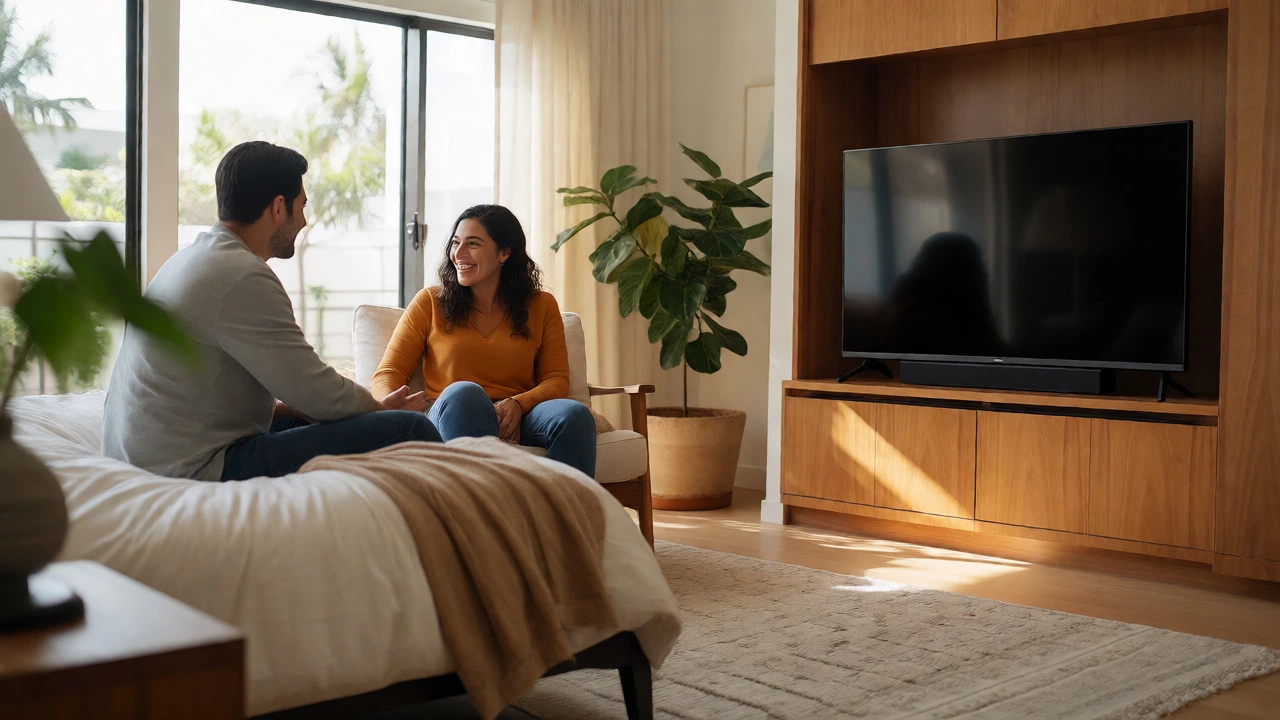
Does a TV in the bedroom help or hurt relationships? The answer depends entirely on boundaries. Couples who watch shows together often cite it as bonding time. It creates a shared ritual after a long day. However, uncontrolled TV usage can create a "third wheel" in the relationship. If both partners are scrolling on their phones while the TV plays in the background, communication drops. Intimacy suffers when attention is fragmented.
A practical rule of thumb: Keep the TV off during meals or conversations. Make the bedroom a tech-free zone for at least the first hour after getting home. If you must have the TV, agree on a cut-off time. Maybe no screens after 9 PM. This preserves the bedroom as a space for connection, not just consumption.
Health and Hygiene Concerns
Beyond sleep and style, there are physical health considerations. Electromagnetic fields (EMFs) from electronics are a common worry, though scientific consensus suggests the levels from modern LCD/OLED TVs are negligible compared to older CRT models. Still, some people prefer to minimize electronic clutter near their heads for peace of mind.
Dust is another real issue. Bedrooms collect dust mites, pet dander, and skin cells. Electronics attract static electricity, which pulls these particles onto vents and screens. If you suffer from allergies, cleaning a TV mounted above the bed is annoying but necessary. Dust buildup can trigger nighttime sneezing or congestion, disrupting sleep more effectively than any plot twist.
How to Do It Right: Best Practices
If you decide a TV belongs in your bedroom, don’t just throw it on a nightstand. Follow these guidelines to maximize comfort and minimize negative impacts:
- Adjust Brightness and Color Temperature: Most modern TVs have a "Filmmaker Mode" or "Eye Comfort Shield." Enable this automatically via your smart home system to reduce blue light after sunset.
- Manage Sound Levels: Use wireless headphones if one partner wants to watch while the other sleeps. Alternatively, invest in a soundbar with a dedicated center channel so dialogue is clear without needing high volume.
- Cable Management: Visible wires create visual noise. Use raceways painted the same color as your wall or route cables inside the wall cavity. Clutter induces stress, which is counterproductive to relaxation.
- Positioning Matters: Avoid placing the TV where it reflects sunlight during the day or streetlights at night. Glare forces you to increase brightness, exacerbating the light exposure issue.
- Create a Buffer Zone: Place a plant, a bookshelf, or a rug between the bed and the TV area. This subtle psychological separation helps signal that the sleeping zone is distinct from the entertainment zone.
When to Skip the TV Entirely
There are scenarios where a bedroom TV is a bad idea. If you struggle with insomnia, removing the temptation is the fastest fix. Out of sight, out of mind works wonders for willpower. Similarly, if you have very young children, the glow and noise from a late-night show can disturb their sleep schedules even if they are in a separate room.
Also, consider your lifestyle. If you rarely watch TV, why install it? Many people buy a bedroom TV thinking they’ll unwind with a show, only to find themselves too exhausted to press play. In these cases, a tablet or laptop used sparingly is a better alternative because it’s portable-you can take it out of the bedroom when you’re done, leaving the space clean and calm.
Does having a TV in the bedroom cause weight gain?
Indirectly, yes. Poor sleep caused by screen exposure disrupts hormones that regulate hunger (ghrelin and leptin). When you are sleep-deprived, you crave high-calorie foods and burn fewer calories throughout the day. Additionally, sedentary behavior associated with binge-watching contributes to lower activity levels.
Is it better to mount a TV or put it on a stand in a bedroom?
Wall mounting is generally superior for bedrooms. It saves floor space, reduces visual clutter, and allows you to position the screen at eye level while lying down. Stands require more footprint and can make small rooms feel crowded. However, stands are easier to move if you change your layout frequently.
What size TV is appropriate for a bedroom?
For most standard bedrooms, a 40 to 50-inch TV is sufficient. Because you sit closer to the screen in a bedroom than in a living room, a larger screen can feel overwhelming. Measure the distance from your pillow to the screen; ideally, the diagonal size should be roughly 30% of that viewing distance for comfortable immersion without eye strain.
Do feng shui principles forbid TVs in bedrooms?
Traditional Feng Shui advises against TVs in bedrooms because they represent active energy (Yang) in a space meant for rest (Yin). The black screen is also seen as a "mirror" that can reflect restless energy. If you must have one, cover it with a cloth or place it in a cabinet when not in use to neutralize its impact.
How does blue light affect children's sleep differently?
Children are more sensitive to blue light than adults due to clearer lenses in their eyes. Exposure to screens before bed can significantly delay their circadian rhythms, leading to difficulty falling asleep and shorter total sleep duration. Experts recommend turning off all screens at least one hour before a child's bedtime.